
ACRE
Hands-On With Amazon’s New 2024 Kindles, Including a New Color Kindle

While rumor had it Amazon would be releasing new Kindle e-readers this fall, we weren’t expecting it to refresh its entire Kindle line. But that’s exactly what Amazon has done. The company on Wednesday introduced four new Kindles, including its first ever color Kindle, along with upgrades to the entry-level Kindle, the Kindle Paperwhite and the Kindle Scribe.
Two of those new models — the Kindle (2024) and Kindle Paperwhite (2024) — are available today for $110 and $160 respectively. As for the new color Kindle — Amazon dubs it the Kindle Colorsoft — it’s due to ship on Oct. 30 with a hefty $280 price tag. Meanwhile, the second-gen Kindle Scribe ($400) is scheduled for a Dec. 4 release date. I had a chance to play around with all of them at Amazon’s Kindle launch event in New York. Here are some early impressions.
Watch this: New 2024 Kindles Just Announced: Hands-On With All of Them
New entry-level Kindle (2024): $110
Let’s start with the least expensive model. That’s the entry-level Kindle, which Amazon simply calls the Kindle. Weighing only 158 grams and equipped with a 300 ppi 6-inch E Ink display, it’s the smallest and lightest Kindle in the line. The specs are similar to the previous Kindle, but you now get slightly faster page turns, a higher contrast ratio and a front light that’s 25% brighter at its max setting (Amazon says the light is now as bright as the Paperwhite’s). Also, this model now comes in a new matcha green color that I thought had a nice look to it.

The entry-level Kindle in the new matcha color.
Many people prefer e-readers with bigger screens, but I like the entry-level Kindle’s more compact size (it can fit in a coat pocket). Ever since Amazon improved the sharpness of its screen with a 300 ppi display and added a built-in light in 2022, it’s sort of become a Paperwhite mini (minus a few features) that costs significantly less than the real Paperwhite. That said, at $110 (£95, AU$199), this new model, which has 16GB of storage, costs $10 more than the previous-generation Kindle. So the price is creeping up a bit.
New Kindle Paperwhite (2024): $160
At $160 (£160), the new Kindle Paperwhite also costs $10 more than the previous Paperwhite base model. But the changes to the Paperwhite seem more substantial. Amazon has reduced the size of the bezel around the screen, so instead of a 6.8-inch diagonal E Ink display in a similar-sized chassis, you get a larger 7-inch screen. The device itself is also thinner and has 25% faster page turns. Amazon is touting it as the fastest Kindle yet and the page turns and refresh rates seem noticeably quicker.
Amazon says the display uses a new oxide thin-film transistor, which gives it the highest contrast ratio of any Kindle. This does make text and images pop a bit more. Even with its slightly thinner size, the new Paperwhite is rated for up to three months of battery life.

The new Paperwhite has a larger 7-inch screen and comes in three colors.
Aside from the larger screen and more advanced lighting scheme than the entry-level Kindle, the Paperwhite is fully waterproof while the Kindle isn’t. The Paperwhite also comes in a Signature Edition, which offers 32GB of storage, wireless charging and an autoadjusting front light for $200. Both the standard Paperwhite (16GB of storage) and Signature Edition come in metallic raspberry, metallic jade and metallic black colors.
The new Paperwhite does seem like a legitimate upgrade from the Paperwhite (2021), and I suspect people who’ve used that previous-gen Paperwhite will be tempted to make the jump to this model.

The new Kindle Paperwhite (left) next to the smaller entry-level Kindle (right).
Kindle Colorsoft: $280
The Kindle Colorsoft is Amazon’s first ever color Kindle. A lot of people have been waiting for Amazon to add color to its e-reader line, especially after Kobo introduced the Kobo Clara Colour and Kobo Libra Color, which also use new color E Ink displays.
I’m not quite sure why Amazon went with the Colorsoft name — maybe because the color does appear a little soft and muted. That said, it brings book covers, graphic novels and comic books more to life than a monochrome screen. But a tablet with an LCD or AMOLED screen offers much richer color.

The Kindle Colorsoft is Amazon’s first color e-reader.
It’s worth noting that while these E Ink displays are inherently more sluggish than LCD technology, you can pinch and zoom to get a closer look at images and text (there’s a bit of lag as the screen refreshes). It’s also nice that you can highlight text in various color options rather than just gray.
Based on my first impression, I think Amazon’s color e-reader offers slightly more vibrant color than Kobo’s e-readers, as well as better overall performance. But I’ll need to compare them side by side (after I get a review sample) before confirming that gut reaction.
The Colorsoft uses the same oxide backplane with custom waveforms as the new Paperwhite. And Amazon says the custom display includes a new light-guide with nitride LEDs that, when combined with custom algorithms, enhances color and increases brightness.
In all other respects the Kindle Colorsoft is similar to the Kindle Paperwhite Signature Edition, though its battery life is rated for up to eight weeks instead of three months. In fact, the Colorsoft only comes in a Signature Edition. Priced at $280 (£270), it too is fully waterproof and has wireless charging.
By comparison, the Kobo Libra Colour, which also has a 7-inch screen, costs $220. An optional stylus pen is available for the Kobo for $70.

The Colorsoft is good for graphic novels and comic books.
Kindle Scribe (2nd gen): $400
Filling out the Kindle line is a new second-gen Kindle Scribe. The base model with 16GB of storage costs $400 (£380), or $20 more than the original. It will also be available in 32GB and 64GB configurations. It has three main upgrades.
First, the 10.2-inch, 300 ppi E Ink display has new white borders and a new flush-front display with a coating that gives the screen a more paper-like feel. Second, the included stylus, Amazon’s new Premium Pen (still battery-free), is an upgrade over the original Premium Pen.
The combination of the new texture on the screen and new tip and better weighting of the pen makes it feel more like your writing on actual paper. Also, the new soft-tip eraser gives you the sensation that you’re using an actual pencil eraser. And yes, using the new pen and eraser does feel more analog.

The 2nd-gen Kindle Scribe’s 10.2-inch has white borders.
Amazon is also touting a few new AI-enhanced features for the new Scribe. While you still can’t directly mark up a Kindle ebook like you can with a PDF file — by that I mean write notes directly on the ebook as you would write on a paper book and leave overlayed on top — Amazon has enhanced its ebook annotation features with its new Active Canvas feature, which allows you to easily attach hand-written notes to the text and save hand-written comments in the margin. Additionally, a new summarize feature quickly condenses several pages of notes you’ve saved in a digital notebook into a concise bulleted script. And last but not least, there’s a new feature that cleans up your handwriting and converts it into legible, easy-to-read script.
Not everything was quite working perfectly when I demoed some of the new Scribe features. But the new software is still in beta, as the device doesn’t ship till December. I asked Amazon whether those new Scribe AI features will be available for the original Scribe. The answer was yes, so that’s good news for anyone who bought the original Scribe.
Those are the new Kindles in a nutshell. While some of the changes aren’t major, it’s good to see the whole line turn over. And while the prices are fairly high for some of the new Kindles, they do go on sale at various points during the year, including the holiday buying season.
We’ll have full reviews of all the new Kindles in the coming days.


O curso de Licenciatura Indígena, do campus Floresta da Ufac, realizou o 1º Seminário Acadêmico de Apresentação de Trabalhos de Conclusão de Curso (TCCs). O evento possibilitou a defesa de 16 trabalhos nas aldeias Barão, da terra indígena Puyanawa, em Mâncio Lima (AC), e Morada Nova, na terra indígena Katukina/Kaxinawá, em Feijó (AC). As atividades ocorreram entre 25 de setembro e 2 de outubro, envolvendo estudantes, professores, egressos do curso, pós-graduandos e as comunidades locais.
Os TCCs defendidos nas aldeias são de autoria de discentes que ingressaram na Ufac em 2023 e deverão colar grau no início de 2027. Os temas das pesquisas contemplaram variados aspectos da vida indígena, abrangendo história, biografia, mitologia, organização política, território, medicina tradicional, grafismos, gênero, terminologias linguísticas, educação especial, atividade cinegética e rituais tradicionais.
A viabilização das defesas nas aldeias ocorreu pela primeira vez em 18 anos de existência da graduação e está de acordo com a pedagogia da alternância, pela qual parte da carga horária do curso é realizada nas comunidades indígenas dos alunos, por meio de pesquisa e extensão. Os recursos para realização do evento foram provenientes de projeto de extensão com o mesmo nome do seminário.
As bancas de avaliação foram compostas por docentes do curso, egressos de outras turmas da Licenciatura Indígena e egressos indígenas de outros cursos da Ufac, inclusive da pós-graduação. Também compuseram algumas bancas pessoas reconhecidas por suas comunidades com “notório saber”, expediente previsto no regulamento de TCC do curso. Além de familiares dos estudantes e moradores das aldeias, indígenas de outras etnias estiverem presentes no seminário.

Organização
A atividade no município de Mâncio Lima, que é vizinho ao campus Floresta, em Cruzeiro do Sul (AC), ocorreu num só dia, em 25 de setembro, com a defesa de dois TCCs. Já para o evento em Feijó foi necessário um deslocamento de ônibus, com duração de quase seis horas, em 30 de setembro, até o porto da cidade. E, à noite, uma embarcação levou cerca de 20 pessoas até a aldeia Morada Nova, onde houve uma recepção musical para o grupo. Na manhã do dia seguinte começaram as defesas, que prosseguiram até 2 de outubro.


ACRE
Ufac retoma Semana Acadêmica de Física após 6 anos, com planetário — Universidade Federal do Acre

A Universidade Federal do Acre (Ufac) realiza até esta sexta-feira, 23, a 3ª Semana Acadêmica de Física, no prédio do curso, no campus-sede, em Rio Branco. Iniciado nessa segunda-feira, 19, o evento retoma as atividades presenciais da semana acadêmica após seis anos de interrupção, causada pela pandemia de covid-19 e pela reorganização do calendário universitário.
A programação tem atrações abertas ao público, como oficinas de astronomia, observação do Sol com telescópio e um planetário móvel, instalado no segundo andar do prédio de Física. Há ainda palestras, apresentações de pesquisas de estudantes e minicursos práticos de elaboração de material didático, física experimental, criação de mapas, processamento de dados e sismologia.
Organizada em três eixos temáticos, a semana é voltada aos estudantes da licenciatura e do bacharelado em Física e do curso de Física Aplicada às Ciências da Terra. Os primeiros dias tiveram debates e palestras sobre o ensino de física e a formação docente. Em seguida, a programação trata de física pura, como mecânica quântica, relatividade e física de partículas, e termina com geofísica, astronomia e fenômenos naturais.
Segundo o coordenador do evento e professor do curso de Física, Victor Carreira, a retomada presencial reaproxima o curso da comunidade externa e das escolas de educação básica. Turmas do Instituto Federal do Acre visitaram a semana, e escolas da rede pública foram convidadas.
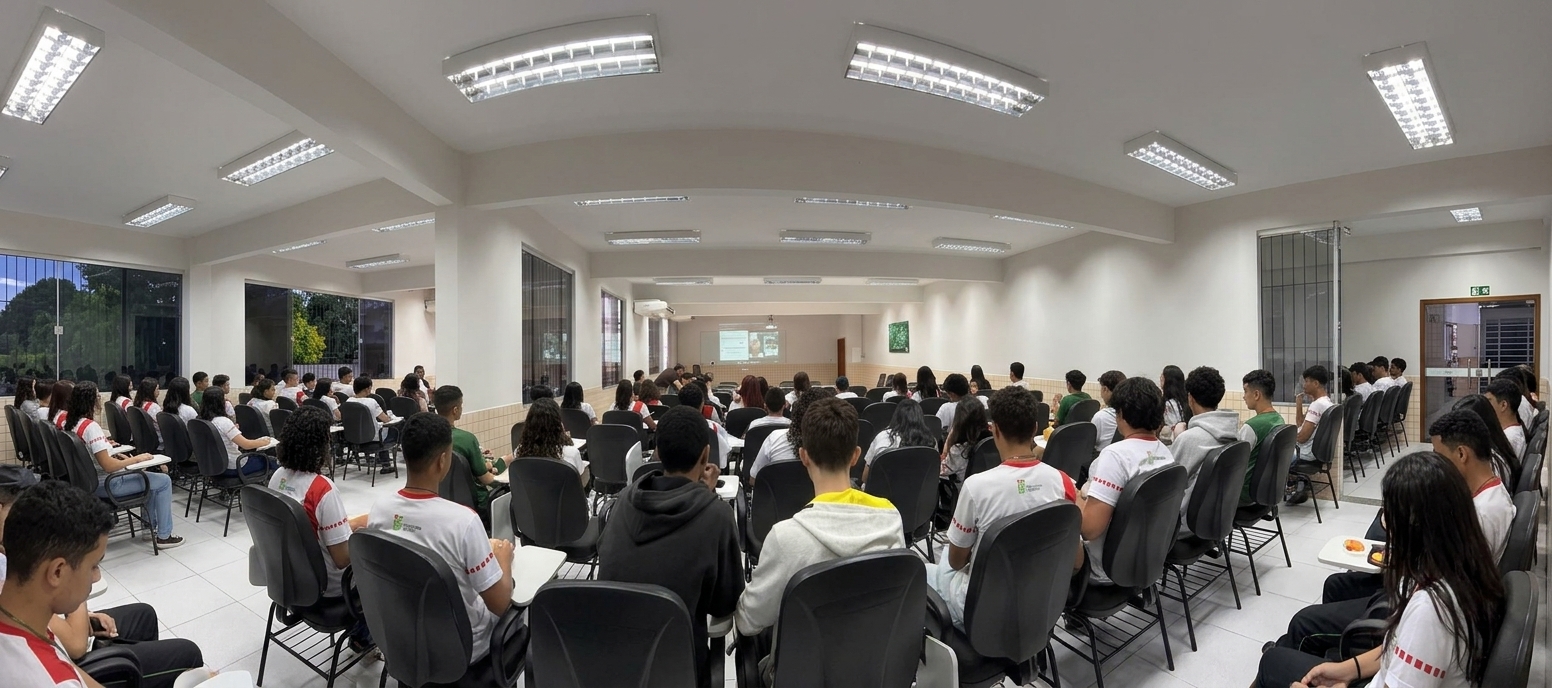
“A semana acadêmica é muito importante tanto para os nossos alunos quanto para a comunidade em geral de Rio Branco”, disse Carreira. “É uma oportunidade para jovens do ensino médio conhecerem a universidade e vivenciarem a ciência na prática.”
A cerimônia de encerramento ocorre nesta sexta-feira, 23, à tarde.
(Fhagner Soares, estagiário Ascom/Ufac)


 ACRE6 dias ago
Ufac abre 1ª Conferência Internacional Amazônia Nexus — Universidade Federal do Acre
 ACRE5 dias ago
Pavic-Lab da Ufac apresenta seis trabalhos em congresso internacional de computação — Universidade Federal do Acre
 ACRE4 dias ago
Ufac retoma Semana Acadêmica de Física após 6 anos, com planetário — Universidade Federal do Acre
 ACRE2 dias ago
Licenciatura Indígena realiza defesa de TCCs em aldeias no Juruá — Universidade Federal do Acre


Warning: Undefined variable $user_ID in /home/u824415267/domains/acre.com.br/public_html/wp-content/themes/zox-news/comments.php on line 48
You must be logged in to post a comment Login