
ACRE
How the old Zverev weighed down the new Zverev in the Masters semi-finals

Even if Fritz had extraordinary stats against Zverev – three consecutive victories before the semi-final including a round of 16 victory at Wimbledon and a quarter-final triumph at the US Open – the very strong impression left by the German over the last three weeks placed him as the odds-on favorite to handle Fritz and reach a third the title round at the ATP Finals for a third time. Three victories in straight sets in group play, including one on Friday against Carlos Alcaraz, a title at the Rolex Paris Masters: this autumn we have seen a version of Zverev that is hitting on all cylinders.
At the top of his game? Not quite yet…
The German, who is accumulating extra hours of training in addition to his matches these days, is already focused on the 2025 season and his quest to finally win (at least) a Grand Slam title. This technical-tactical project is underway and his match against Fritz, which was decided by the smallest of margins (6-3, 3-6, 7-6 on the score; 97-97 on the number of points; one break point converted each), demonstrated this.
Zverev: “That’s how matches get lost”
Zverev said : “I thought, to be honest, the second and third set I thought I played better than him. I did everything to extend maybe better than him, except to win in the important moments, the break points, the tiebreak. That’s how you lose a match in the end.
In other words, he lost this semi-final the way he loses most of the big matches that have kept him from his goals for many years now: by being too cautious in key moments, by failing to maintain his exceptional average tennis level at the most tense moments of the match.
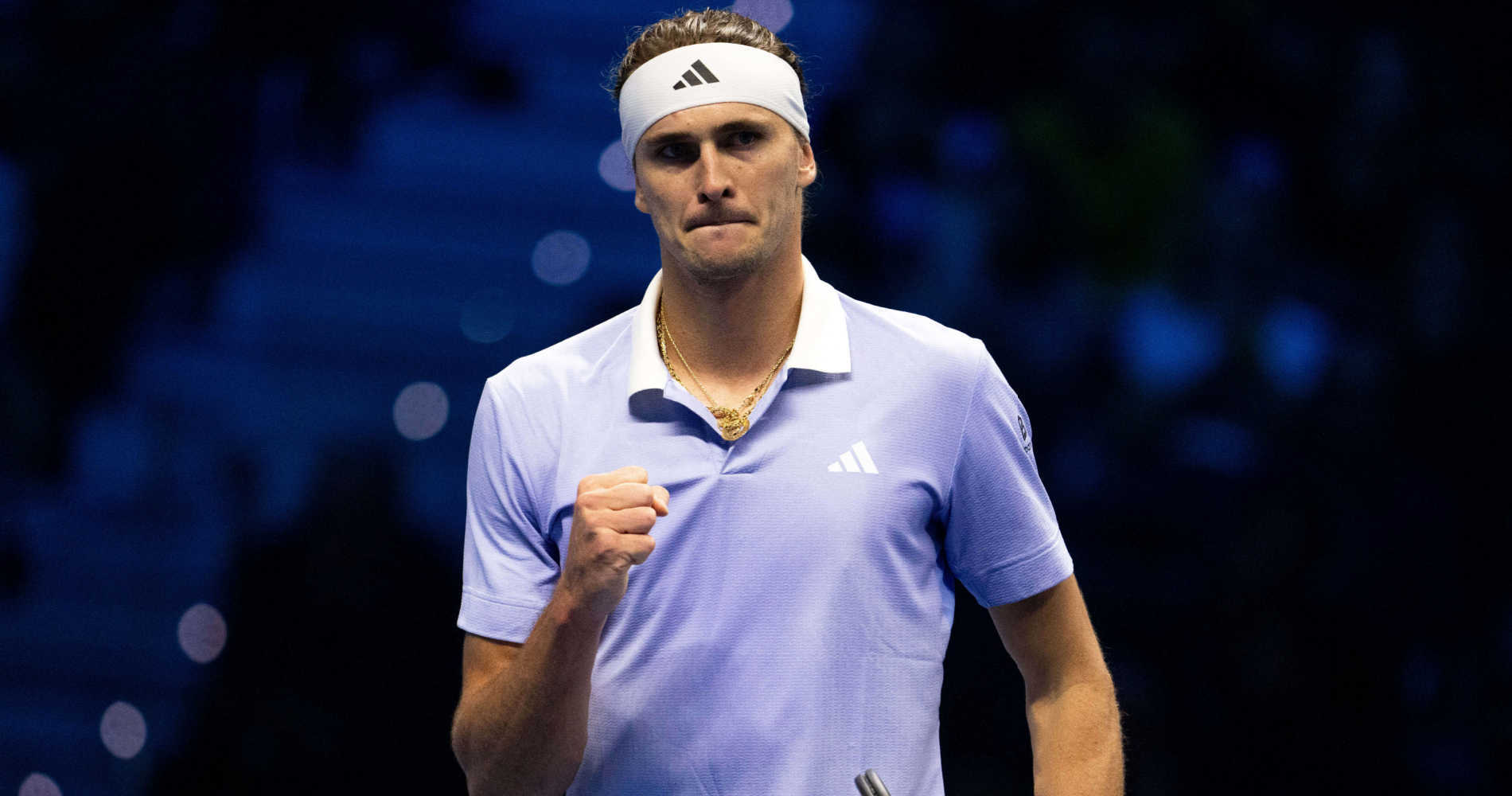
“I didn’t use my chances in the third set at all. I feel like I had more than enough. Played a below-average tiebreak, I would say. A lot worse than what the level was throughout the third set from my end.”
In a rather surprising scene, Zverev could not say anything other than “I don’t know what to answer to that,” to the following question: “You won 3 tie-breaks out of the 11 played against the top players this season. Can this be worked on in training, to play your best tennis during “pressure moments?”
Zverev now has an entire off-season to think about it.
Zverev’s four projects
We must decode the exact details of the undertakings that Zverev has started with his staff in order to reach his highest goals in 2025. He seems to have understood, watching his matches and listening to his answers, that he had to develop his game in four capacities, after having already resolved one of his biggest issues, his number of double faults:
- Becoming a better returner. “The best players in the world now are the best returners”, he said on Freiday. “Jannik is one of the best returners. Novak has been one of the best returners for decades now. Carlos is one of the best returners. So it’s not necessarily the best serve anymore, it’s the best returners.” However, Zverev himself ranks 23rd in this critical statistic according to the ATP Tour;
- Being more aggressive, earlier in the rally, even attacking the net on short balls, and generally “knocking off rallies” more than he was able to do in the past;
- Maintaining a more aggressive mindset, especially in important moments, where oftentimes his passivity, the dark side of extraordinary consistency, has caught up with him – notably in his two Grand Slam finals, losses in 2020 at the US Open (Thiem) and in 2024 at Roland-Garros (Alcaraz).
- Equipping himself with a forehand as formidable as his backhand, or at least reducing the gap, mainly on the return. Carlos Alcaraz on Friday said how much it changed his opponents’ lives. “Zverev, he has a better backhand than the forehand. Today it was kind of, like, both shots were equal. It is really difficult to find the hole. It was very difficult to find his weakness side.”
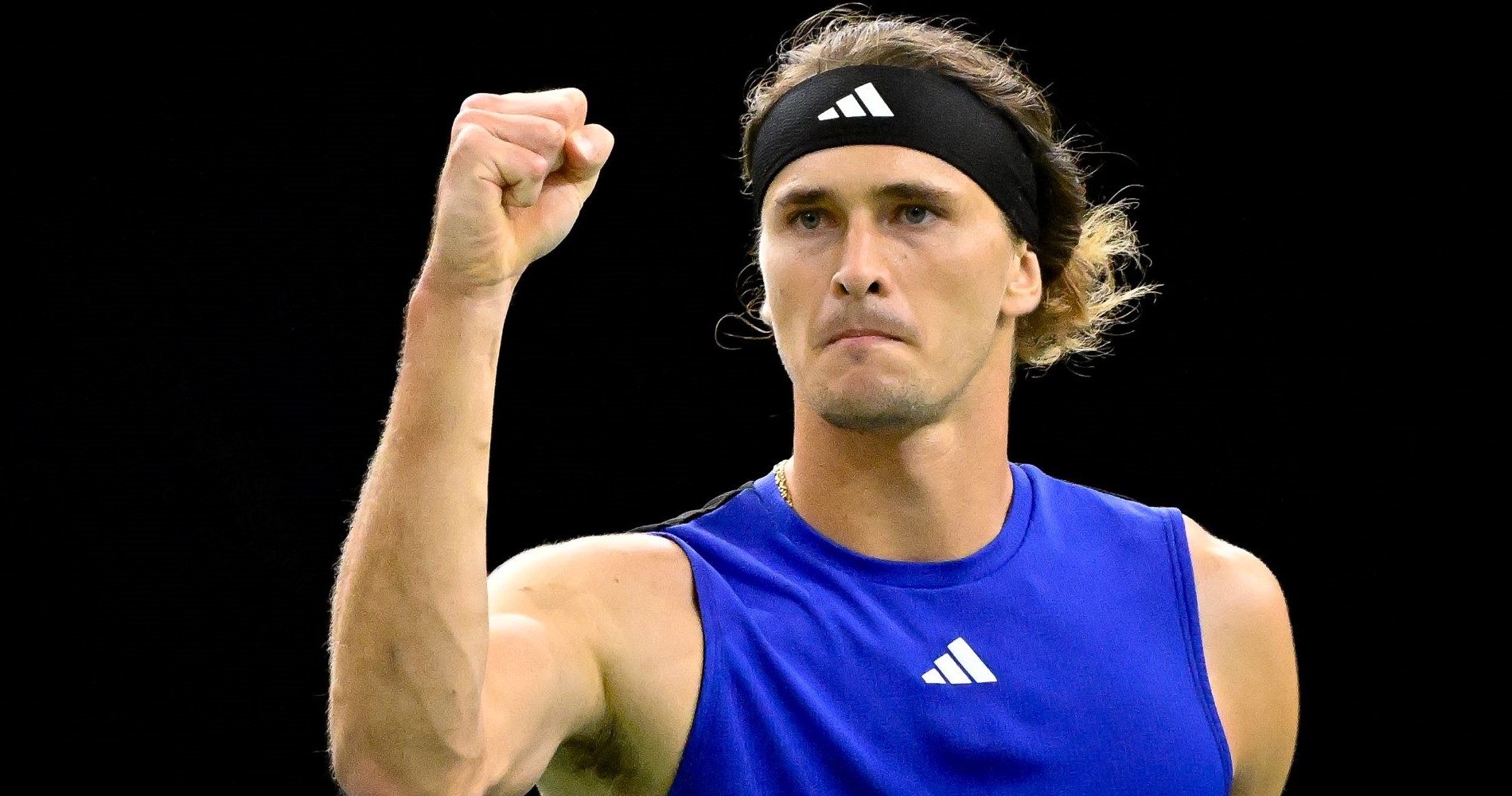
Zverev, however, showed in the semi-final that he was still in a state of limbo between what he is and what he wants to be. We can sense his intentions, they contribute to his superb end to the season, but the recurrence of these mini-failures did not allow him to turn this match around. Where Fritz played a very good tie-break by being solid and intractable on his fundamentals, this famous “serve + 1” which will have led him to a career-high finish of No 4 in the world this year, Zverev faltered at two key moments of the match:
- First at 4-3 Fritz in the third set, where he had to save three break points, notably because of what he himself called a “shaky forehand.”
- Then in this famous decisive tiebreak, lost with hardly a bright spot.
The relapse tie-break
Let’s start with that critical decisive breaker. Apart from a magnificent forehand that allowed him to come back to 3-5, Zverev has everything to regret in the way he played it, in particular a weak forehand return on a very soft second serve from Fritz. This point could have allowed him to come back to 4-5 with two serves to follow. It was punctuated by a long error from that famous shaky forehand, on his third shot of the rally.
In the game at 4-3, Zverev only got out of it because Fritz himself was too timid to seize his opportunities. But between a backhand error behind a good serve, a double fault, shots held back even in a favorable position, the German had already delivered the type of game that we have not seen him play lately.
Over the course of the season, Zverev’s progress is measurable. In a report by TennisViz for Tennis Majors, we see how the German has managed to make his game more offensive, and how he has made a lot of progress on his forehand, but that his return is stagnating and, more interestingly, the work he is undertaking on his game is pulling him a little away from the optimal performance of his strongest shot, the backhand.
The serve has progressed by the backhand has regressed
Here’s what the numbers tell us:
- Zverev was in attacking position 25% of the time in 2023, compared to 27% in 2024 and 29% in the indoor season alone (figures based on two group matches).
- Another significant improvement: his ability to switch from defense to attack saw his steal score (points gained after being in a defensive position) increase from 32% to 36%.
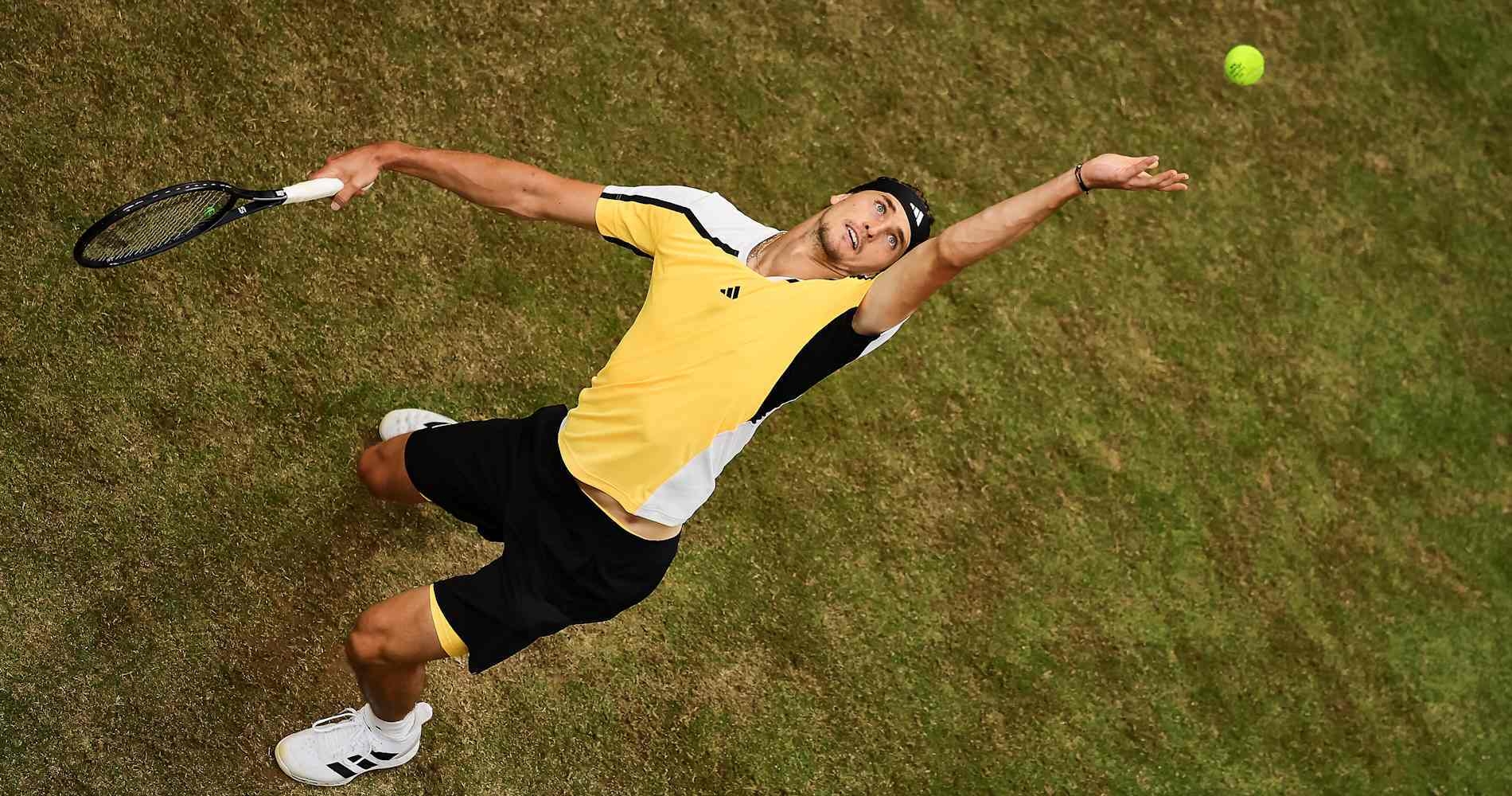
- The return remains a subject to be addressed (shot quality index went from 7.8 out of 10 to 7.6)…
- The backhand has lost impact (8.1 against 8 from season to season, 8.5 to 8.2 indoors)…
- But the serve has remained a hearty weapon. Zverev has again been able to amplify a strong point, his serve went from 8.6 to 8.9 over the entire season and from 8.8 to a stratospheric 9.2 on indoor courts. Zverev was the 41st best server on the circuit in 2020, noted Mike James, the chief analyst of the Mouratoglou Academy, this summer on the X network. He is now second behind Giovanni Mpetshi Perricard.
“2024 will have been a great year for me,” Zverev summed up after his self-criticism. “I won 69 matches (currently tied for the ATP lead with Jannik Sinner, editor’s note). But I especially remember my defeats against Daniil (Medvedev) at the Australian Open (leading two sets to zero) and Carlos (Alcaraz) in the Roland-Garros final (leading two sets to one). If I’m in the same situation again next year, I’ll do everything I can to win.”
The story remains unfinished.


Warning: Undefined variable $user_ID in /home/u824415267/domains/acre.com.br/public_html/wp-content/themes/zox-news/comments.php on line 48
You must be logged in to post a comment Login