
ACRE
The NBA’s Young Stars Are Adjusting to (Yet Another) 3-Point Boom

Anthony Edwards had a simple answer over the weekend when a reporter asked what he’d say to a critic who thinks the two-time All-Star is shooting too many 3-pointers. It’s a reasonable question: Edwards is launching north of 11 3s per game this season, far more than the 6.7 he attempted a season ago. That’s the biggest year-over-year increase in the league.
But Edwards didn’t mince words when talking about his new offensive approach. About such critics, he responded, “Fuck ’em,” and gave an assertive nod.
Edwards isn’t alone but rather represents the most extreme example of a phenomenon sweeping the NBA early in the 2024-25 season. Along with Edwards, three other young stars—Tyrese Maxey, LaMelo Ball, and Jayson Tatum—are also attempting more than 11 3s per game. Luka Doncic is in double figures. Heck, Payton Pritchard and Buddy Hield are shooting more than nine 3s per game in limited minutes off the bench. The league is full of guys like Edwards who are saying fuck it and letting loose from deep.
A season after the Celtics and Mavericks reached the Finals while ranking first and second in long-range attempts, the 3-point shot is on the rise once again.
From 2016 to 2020, as the league responded to the Warriors’ dominance and analytics gained prominence, the NBA’s collective 3-point attempt rate (the proportion of shots that are 3s) increased from 28 percent to 38 percent. Then that steady long-range growth plateaued; from 2020 to 2024, the 3-point rate rose from 38 percent to just 39 percent.
However, the early growth in 2024-25 looks like last decade’s. Look at the skyward turn at the far right of that graph—rather than level off, the NBA’s 3-point revolution has leveled up again, to 42 percent of all shot attempts.
That uptick is widespread across a range of teams and players. For the first half of the 2020s, about 15 players averaged at least eight 3-point attempts per game in the first two weeks of every season; last year, 13 players did so. But two weeks into the 2024-25 campaign, that figure has essentially doubled, as a whopping 27 players are launching at least eight 3s per game.
This concentration of extra 3-pointers among high-volume shooters is somewhat different from earlier iterations of the spacing revolution. During the 2010s, while stars like Steph Curry and James Harden explored new 3-point frontiers, the greatest push for 3s came from role players who started spotting up from 24 feet away instead of 18. By and large, go-to options like DeMar DeRozan, Kevin Durant, and Joel Embiid—the three leaders in midrange attempts last season—continued to operate from their favorite spots within the 3-point arc, where their rare efficiency shone.
But the current push for even more 3s is driven by stars who are migrating beyond the arc, too. The best chance for teams to squeeze as many 3s into their shot profiles as possible is to find more attempts from the players who most often handle the ball. “As players have gotten increasingly comfortable pulling up from beyond the arc it’s become more common for players to eschew isolation midrangers for isolation 3s,” analyst Owen Phillips wrote last week.
Several peripheral data points support this theory. For instance, the percentage of 3s that are unassisted has increased slightly this season, and the proportion of 3s that are pull-up attempts (rather than catch-and-shoot tries) has ticked up, as well.
Perhaps most striking is the split between pull-up 2s and pull-up 3s. Over the past half decade, 42.5 percent of pull-up attempts were 3s, with little year-to-year variation, according to an analysis of NBA Advanced Stats data. But so far this season, 49.6 percent of pull-ups are coming from beyond the arc.
:format(webp):no_upscale()/cdn.vox-cdn.com/uploads/chorus_asset/file/25716567/Distribution_of_Pull_Up_Attempts.jpeg)
While DeRozan and Durant are still taking most of their shots from the midrange this season, a younger generation of stars is charting a new course: Two weeks into the new season, young stars’ 3-point growth outpaces the NBA’s as a whole. Every season from 2016-17 (the start of intense 3-point growth leaguewide) through 2023-24, players age 26 and younger who scored at least 20 points per game averaged five or six 3-point attempts. In 2024-25, that number has accelerated all the way up to 8.2 3s per game from this group of young scorers.
:format(webp):no_upscale()/cdn.vox-cdn.com/uploads/chorus_asset/file/25716569/Average_3_Point_Attempts_Per_Game_From_Young_Stars.jpeg)
(The same relationship holds with 3-point attempt rate, not just 3-point volume. Young stars were taking between 30 percent and 35 percent of their shots from deep every year for a while, but they’ve pushed up to 44 percent this season.)
The only comparable spikes on this graph come from the mid-’90s, when the NBA briefly moved the 3-point line closer, and from 2012-13, when Curry, Harden, and Kyrie Irving averaged 20 points per game for the first time, heralding the arrival of a new kind of lead guard. (A year earlier, in 2011-12, the highest-scoring young guards were Russell Westbrook and Derrick Rose, who were far more comfortable slashing into the lane than shooting from deep.)
This season, nearly all of the league’s brightest young stars have increased their 3-point volume by a tremendous amount. Nineteen players age 26 or younger are averaging at least 20 points per game, and all but two of them (Zion Williamson and Ja Morant) are attempting at least six 3s per game. Nine youngsters on The Ringer’s Top 100 NBA Player Rankings have increased their 3-point output by at least two attempts per game compared with last season, led by Edwards’s 4.7-shot increase.
3-Point Increases From Young Top-100 Players
| Player | Top 100 Rank | 3PA Per Game | Last Season | Change |
|---|---|---|---|---|
| Player | Top 100 Rank | 3PA Per Game | Last Season | Change |
| Anthony Edwards | 11 | 11.4 | 6.7 | +4.7 |
| Tyrese Maxey | 28 | 11.8 | 8.1 | +3.7 |
| Jayson Tatum | 6 | 11.6 | 8.2 | +3.4 |
| RJ Barrett | 84 | 7.4 | 4.3 | +3.1 |
| Shai Gilgeous-Alexander | 4 | 6.6 | 3.6 | +3.0 |
| LaMelo Ball | 53 | 11.7 | 9.0 | +2.7 |
| Coby White | 64 | 9.3 | 7.0 | +2.3 |
| Jalen Green | 77 | 9.6 | 7.4 | +2.2 |
| Paolo Banchero | 30 | 6.4 | 4.4 | +2.0 |
For comparison, only four top-100 players older than 26 have increased their 3-point volume by at least two attempts per game, despite greater veteran representation in the Top 100, and they’re role players rather than top-tier stars: Derrick White, Brandon Ingram, Jerami Grant, and Norman Powell.
For the most part, the young, eager shooters are pursuing an analytically sound swap of less efficient 2-pointers for more efficient 3s. The pattern isn’t universal—Edwards took at least 30 percent of his shots at the rim in every previous season of his career, per Cleaning the Glass, but is down to 22 percent this season—but individual players’ shot charts tell a clear story.
Look at Tatum’s distribution for a particularly potent example. In the past, per CtG, he split his shots roughly evenly: one-third at the rim, one-third from the midrange, and one-third from beyond the arc. But this season, his midrange rate has plummeted to 19 percent, while 54 percent of his attempts are 3s.
:format(webp):no_upscale()/cdn.vox-cdn.com/uploads/chorus_asset/file/25716575/Jayson_Tatum_s_Shot_Distribution_copy.jpg)
Tatum is following a teamwide strategy. Led by coach Joe Mazzulla, Boston is pushing into previously unexplored 3-point terrain. On opening night, the Celtics tied an NBA single-game record with 29 made 3s (eight from Tatum) on 61 attempts; now they’re taking an astonishing 55 percent of their shots from distance, with more makes (152, or 19 per game) and attempts (407, or 51 per game) than any other team in NBA history through eight games.
Many of these young stars’ 3-point increases match broader boosts from their teams. Tatum’s Celtics and Ball’s Hornets (whose new coach, Charles Lee, was an assistant in Boston last season) rank first and second in 3-point attempts this season, and other teams in the top 10 include Edwards’s Timberwolves, Shai Gilgeous-Alexander’s Thunder, White’s Bulls, Jalen Green’s Rockets, and Paolo Banchero’s Magic. The Celtics were the only one of those seven teams to finish so high last season, but teams’ 3-point attempt rates stabilize very quickly, so we can already say with some confidence that the others—and most of the league, really—have undergone a meaningful shift.
A medley of factors explains this movement. The Celtics offer clear proof of concept, and the NBA is no stranger to a copycat effect when a team with an extreme approach wins the title. After all, the Warriors’ success spurred the 3-point revolution in the 2010s. And on an individual level, today’s young stars represent the first generation influenced from a young age by Curry, Harden, and the like, so they’ve grown up training from distance and learning in a league that already embraced it.
Other explanations might be more granular, applied specifically to the current crop of young lead guards. They might be welcoming more 3s into their shot diets as a sort of pseudo-load-management consideration; stars who just played the longest seasons of their careers—because of deep playoff runs and the Olympics—are easing into a new season with jump shots rather than physical drives to the rim. Gilgeous-Alexander led the NBA in drives in each of the past four seasons but has slipped down that leaderboard in 2024-25 with about five fewer drives per game.
Only a so-so shooter historically (career 34.6 percent on 3s), SGA might also be attempting to prove his chops as a pull-up threat, lest defenses duck under Oklahoma City’s high pick-and-rolls. In the league’s current spacing environment, a reliable pull-up 3 might be the most important tool in a lead guard’s belt.
That switch might be best for Gilgeous-Alexander’s long-term growth and for his team’s ability to compete for a title this season—but it also saps some of what made the MVP runner-up’s game so special and different as he rose through the ranks of NBA stardom.
The NBA remains a fantastically entertaining night-to-night product, full of stars, stakes, and jaw-dropping athletic feats. But there is value in stylistic differentiation, when SGA can slither into the lane, Edwards can charge at the rim, and Banchero can bully a defender in the post instead of primarily hoisting 3s. There is tremendous variation in the playing styles of more established stars like, say, Curry, Durant, and Giannis Antetokounmpo, but less so among all the younger stars coming up behind them.
It’s too early to predict doom, and these young talents are still finding the proper balance in their games. Heck, Edwards has attempted just 13 total 3s in two games since his Fuck ’em comment, after averaging over 13 in each game before then. But it’s clear which way the wind is blowing in the NBA this season. More and more 3s are coming.


A reitora da Ufac, Guida Aquino, participou da solenidade de inauguração da nova sede da Fundação de Apoio e Desenvolvimento ao Ensino, Pesquisa e Extensão Universitária no Acre (Fundape), da qual ela é presidente do Conselho Curador. O evento ocorreu nesta sexta-feira, 26, no campus-sede, local em que se localiza o espaço administrativo e operacional da fundação.
Guida destacou a importância da Fundape para a Ufac e para outras instituições da Região Norte. Para ela, a fundação passou por um processo de fortalecimento nos últimos anos. “A Fundape hoje nos faz realizar, na verdade, todas as parcerias de formação de docentes, de ensino, de pesquisa, de extensão, de inovação”, afirmou.
Segundo a reitora, a fundação ampliou sua atuação para além do Acre, atendendo também instituições de Rondônia, Amapá e Roraima. “Olha a grandeza disso. E nós, enquanto Universidade Federal do Acre, temos que nos orgulhar”, pontuou.
O diretor-presidente da Fundape, Ismar Bernardo de Araújo, disse que a inauguração da sede própria representa uma conquista construída com dedicação, trabalho em equipe e visão de futuro. “Hoje não celebramos apenas a abertura de um novo espaço físico; celebramos uma conquista construída com dedicação, trabalho em equipe, visão de futuro e confiança.”
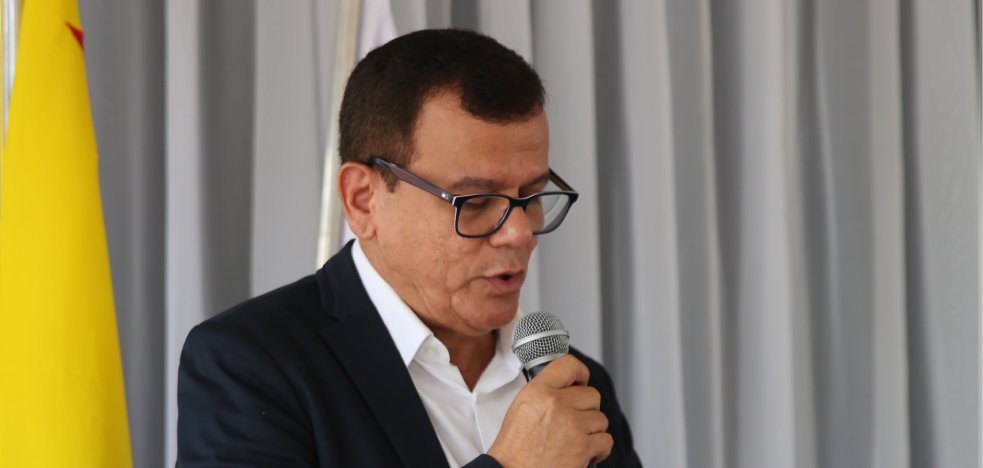
Ismar lembrou que a Fundape foi instituída em 22 de junho de 1998 e completa 28 anos em 2026. Atualmente, a fundação conta com 38 colaboradores, representa quatro universidades federais, três institutos federais e um hospital universitário, estando presente em quatro Estados da região Norte.
Membro fundador da Fundape e pró-reitor de Planejamento da Ufac, Alexandre Hid, relembrou a criação da fundação e os desafios enfrentados ao longo da trajetória institucional. “Hoje a fundação está aí forte e firme para maiores e melhores desafios.”

Também participaram da solenidade a reitora da Unir, Marília Pimentel; o procurador-geral adjunto para Assuntos Administrativos e Institucionais do MP-AC, Carlos Roberto da Silva Maia, representando o procurador-geral Oswaldo Lima Neto; o diretor técnico da Fundape, Camilo Gouveia; o diretor administrativo-financeiro da Fundape, Dionel de Araújo; Gemil Júnior, suplente do senador Alan Rick (Republicanos-AC); a pró-reitora de Inovação, Pesquisa e Pós-Graduação do Ifac, Alana Chocorosqui, representando o reitor Fábio Storch; o ex-reitor da Ufac, Minoru Kinpara; além de dirigentes, coordenadores de projetos, colaboradores e representantes de instituições parceiras.


Warning: Undefined variable $user_ID in /home/u824415267/domains/acre.com.br/public_html/wp-content/themes/zox-news/comments.php on line 48
You must be logged in to post a comment Login