Aryna Sabalenka crowns the tennis season of her life with WTA No. 1 ranking
RIYADH — This time last year, Aryna Sabalenka was at the heart of a player rebellion against the women’s tour — while being unseated as world No. 1 by Iga Swiatek.
The world’s best players were in Cancun for the year-ending WTA Tour Finals, which terrible weather conditions and a hastily constructed venue turned into a circus. Sabalenka said on social media that she felt “disrespected” by the standard of the event, which included practice courts that didn’t feel safe to play on.
Just before the event, 21 of the world’s best players, including Sabalenka, wrote a letter to then-WTA Tour chief executive Steve Simon outlining a number of grievances, demanding higher pay, a more flexible schedule and expanded childcare. Simon, who has since been replaced as chief executive by Portia Archer but remains as chairman, apologized for the debacle and said, “You have been heard.”
A year on, Sabalenka’s main lesson is the power of collective action. “We all came together. My word or Iga (Swiatek)’s word wouldn’t count on its own, it wouldn’t have any weight,” she told c in an interview in Riyadh on the eve of this year’s WTA Finals.
“Last year was about all of us fighting for our rights. A very good moment for all of us to fight for what we deserve.
“We are in better conditions where we can focus on our tennis, not on what’s going on outside of tennis.”
There is still change Sabalenka would like to see. In winning the Cincinnati Open in August, Sabalenka received exactly half the $1.05million (£805,200) prize money awarded to men’s champion Jannik Sinner. In June 2023, the WTA announced a pay equity agreement, but it will not start until 2027 for WTA 1000s like Cincinnati and until 2033 for smaller events.
An undefeated champion at the WTA Tour Finals will earn $5m (£3.8m), the highest-ever prize money at a WTA or ATP event.
“I feel like we deserve it,” Sabalenka said, before leaving a long pause.
“I’m looking forward to discussing what we want to improve and to bring it on the table for the WTA. To say: ‘Listen, this is all of us. We voted and this is what we want to improve.’
“This is the only way we can improve things — when we come together.”
Sabalenka’s growing status as a stateswoman reflects her changing position within the game.
A year ago in Cancun, Iga Swiatek was the player to beat despite Sabalenka’s No. 1 ranking. She duly destroyed the field, thrashing Sabalenka in the semifinals en route to winning the title undefeated and reclaiming the top spot. Sabalenka had been there eight weeks — even less in her memory. “It was like what, one week? Two?” she said.
Then it felt as though Swiatek had just loaned her rival the world No. 1 throne. This time, Sabalenka has a stronger claim to being the best player in the world, winning two Grand Slam titles to Swiatek’s one, but a total of four titles in 2024 to Swiatek’s five.
None of that matters to Sabalenka now. After … she will stay there into 2025, irrespective of what Swiatek does. Doing so on the court felt better than Monday 21 October, when she returned to world No. 1 after both she and Swiatek lost points for missing the WTA’s quota of playing six 500-level events per season. No one — even she and Swiatek — seemed to know it was coming. “I was like, ‘How? What happened?’ My boyfriend actually told me, like, ‘Oh, congrats, you became world No. 1.’ I’m like, ‘What?’”, she said in a news conference in Riyadh.
She’s been playing like she belongs there for some time. Sabalenka went on a 15-match winning streak in August and September and since the start of the Cincinnati Open she has won 21 of 22 matches. The 22nd of those was against Zheng on Saturday, a match in which Sabalenka showed how she has been able to separate herself from the field. Zheng is a fine player in excellent form and was roared on by what felt like a home crowd with so many Chinese spectators, but Sabalenka was that bit too good and prevailed 6-3, 6-4.
Zheng forced just one break point in Saturday’s match, and she has now lost all five of her matches against the Belarusian, winning just one set.
Sabalenka carries the aura of that kind of streak off-court, as well as on it. “I’m more experienced. I have this belief that I can be the best player in the world and I think you’re right — it’s just the way I carry myself,” she said.
“It’s not about ranking — my results show I can be the best in the world.”
Those results are built on tactical tweaks to her powerful game, with Sabalenka adding considerable variety since the Italian Open in May. Sabalenka used to deviate rarely from her prodigious ball-striking, so often enough to blow an adversary off court. Still, opponents knew that if things started to go against her, Sabalenka had a capacity to beat herself. This is largely what happened in the 2023 U.S. Open final against Coco Gauff, where Sabalenka struggled to cope with the raucous home crowd and increasing pressure from Gauff’s side of the court.
In Italy, Sabalenka started hitting drop shots. With her opponents generally pinned behind the baseline, moving backwards rather than forwards to counteract her phenomenal weight of shot, it made perfect sense — and has delivered considerable results, even when she was limited physically.
“There was this crazy match against Svitolina in Rome.
“I was injured there — I was in big pain. With Svitolina, it’s sometimes really tough to hit the winners, and I needed to cut the points,” Sabalenka said.
“I saw that she was standing way back. I thought, ‘Let’s just go for the drop shot. If it works, if it works. If not, I’m out of here.’
“I don’t know how many drop shots I did in that match, but they all succeeded. Now I’m pretty confident that I can use this shot whenever I like. Before I didn’t really know how to use it so didn’t want to risk it.”
Sabalenka won that match against Svitolina 4-6, 6-1, 7-6(7), after midnight, having saved three match points.
When a compilation of the drop shots was uploaded to X, Sabalenka joked: “Probably the first and last time in my life.”
It has since become a key part of her repertoire, most notably in the 2024 U.S. Open final, 12 months on from her implosion against Gauff. Sabalenka held her nerve against Jessica Pegula in a long, tense final game of the first set, going to the well with drop shots and short angles at crucial moments just as she had done against Emma Navarro in the semifinal.
In the final few points, she put away a volley winner, drew Pegula to the forecourt before spearing a passing shot beyond her, and then clinched the set with an angled backhand drop shot. The contrast from the Gauff final, when her only response to adversity was to keep swinging, could scarcely have been greater.
Sabalenka has no doubt that the greater variety has given her a significant edge.
“I think players now probably expect it” she says. “But before I think they never expected it. They always expected me to just overhit and that’s what they were preparing for.
“This kind of variation brings more pressure on them because now they have to guess. They see that I have the opportunity for the drop shot, I have the opportunity to hit the ball and they have to guess. And that’s what brings more errors.
“I think it’s a huge improvement in my tennis.”
Working on variety has added to her feel in tense moments, and Sabalenka believes that has contributed to her being more clear-headed on court. She has regrets about some of the finals she’s lost, like the final-set tiebreak thriller to Swiatek in Madrid, but at the Grand Slams Sabalenka has been ruthless, winning, both finals in straight sets and not dropping a set at the Australian Open. She lost just one match at the majors in 2023, suffering from a stomach bug against Mirra Andreeva in the French Open quarterfinals; a shoulder injury forced her to miss Wimbledon.
On the surface, 2024 has been a season of triumph for Sabalenka but there have been some terrible lows. In March, her ex-boyfriend Konstantin Koltsov, a former international ice hockey player and fellow Belarusian, died suddenly in Miami.
Sabalenka tried to carry on as usual, focusing on her tennis and blocking out the part of her telling her that she needed to process what happened by taking a break. The enforced break around Wimbledon proved to be a blessing in disguise; it allowed her to properly grieve and reset.
“My first reaction was to just keep going and not to think,” she said.
“I put so much stress on my body, which turned into an injury. So I had to have this break. It was really good to step back to just look at everything as a bigger picture and to understand some things. There are so many things I realised in that little break.
“I think I have really good people around me who truly care about me and who are always there for me, supporting me and who are always ready to talk whenever I need to talk. I think that’s what really helped me to keep going after some very difficult situations.”
In a time of huge transition at the top of women’s tennis, with Iga Swiatek, Coco Gauff and Elena Rybakina all changing coaches, Sabalenka’s team — helmed by Anton Dubrov and Jason Stacy — has been a constant through highs and lows, including the 2022 nadir when her serve deserted her.
Sabalenka, who has an infectious laugh and a generally positive outlook, seems to relish having fun with her team in what can be a suffocating environment on tour, constantly filming TikToks or japing around in practice in between the serious stuff. At the moment she gives off the impression of being in a good place, on and off the court.
Sabalenka’s feeling that she can focus on tennis and not things outside stand in contrast to the strength of feeling around holding the WTA Tour Finals in Saudi Arabia, given the country’s human rights record towards women and the LGBTQ+ community. Sabalenka did not discuss this in depth when asked at her press conference on Friday, focusing on the improvements for the players after the debacle in Cancun 12 months ago.
On court, she is targeting significant improvement in 2025. She wants to reverse the disappointments at Roland Garros and Wimbledon by turning some narrow losses into victories.
“I have to be mentally strong enough to close the match and not let whatever comes to my head destroy those matches.
“I love this tournament and that’s the gap for improvement.”
Those are the two Grand Slams missing from Sabalenka’s CV, but her astonishing consistency across the majors means there’s no reason she can’t be as successful at them as she has been in Melbourne and New York. Going back to the 2022 U.S. Open, Sabalenka has reached the semifinals or better at seven of the last eight majors she’s played. Overall, Sabalenka has won 55 of her 67 matches this year, a career-high ratio of 82 percent.
For now, though, the focus is on the WTA Finals and maintaining her lead over Swiatek as tennis heads into 2025.
A year on from the chaotic and disappointing end to 2023, Sabalenka has clarity now and for the future.
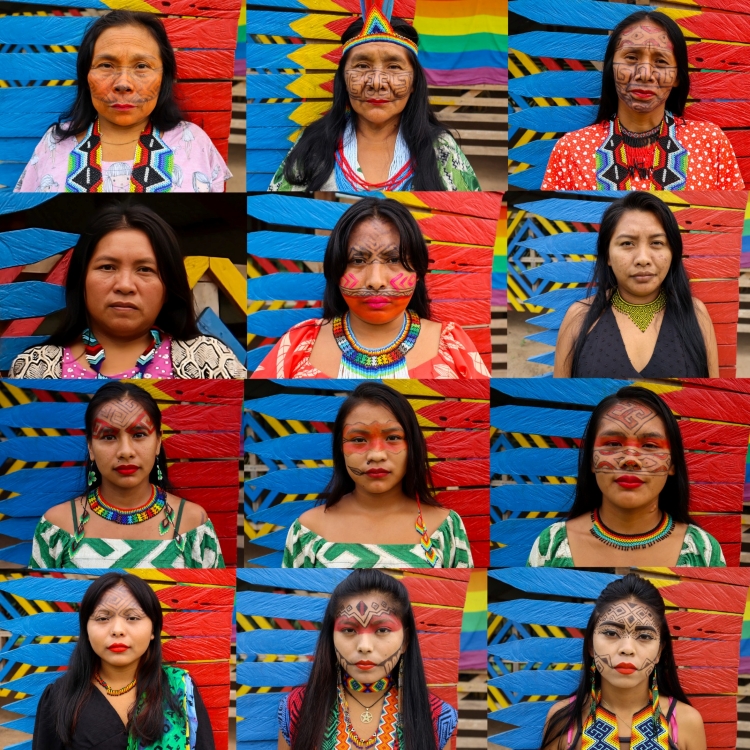
Alunas de graduação e mestrado do campus Floresta da Ufac criaram, em 2024, o projeto Biblioteca de Kene, que reúne tecelagem em algodão, pintura corporal, registros audiovisuais e uma plataforma digital acessível por celular. A iniciativa surgiu do trabalho de conclusão de curso de Txima Huni Kuin, em Licenciatura Indígena, e da pesquisa para a dissertação de Alexandra Deitos no programa de pós-graduação em Ensino de Humanidades e Linguagens.
Txima investigou a tecelagem como expressão dos conhecimentos, da arte e da espiritualidade de seu povo, sob orientação do professor Amilton Pelegrino de Mattos. Alexandra, artista visual e atualmente doutoranda, colaborou na construção do projeto por meio de uma pesquisa de autoria coletiva, desenvolvida com as mulheres da comunidade.
Desse encontro surgiu a proposta de criar um espaço onde os mais de 60 grafismos praticados pelas mulheres pudessem ser consultados, ensinados e aprendidos por jovens e mestras tecelãs. O projeto terá uma nova etapa entre 10 e 16 de outubro, com a realização da 2ª Oficina de Kene da Aldeia Arco-Íris, na terra indígena Seringal Independência, no município de Jordão (AC).
Aprendizagem no território
Durante os sete dias de oficina, mestras tecelãs e jovens aprendizes participarão de atividades de preparação de fios, cantos rituais, aplicação do Bawe e tecelagem de painéis com grafismos. Os processos serão documentados para compor o acervo da biblioteca na aldeia e seu site colaborativo, com gestão do conhecimento pelas próprias mulheres.
A proposta dialoga com a expressão “a universidade é na aldeia”, do professor e pesquisador Yube Huni Kuin, também acadêmico da Licenciatura Indígena da Ufac. A experiência reconhece o território e as práticas da comunidade como espaços de produção e transmissão de conhecimento.
A 2ª Oficina de Kene é realizada por Txima Huni Kuin, Alexandra Deitos e pela Aldeia Arco-Íris, com apoio do curso de Licenciatura Indígena, da Fundação de Cultura Elias Mansour, do governo do Acre, da Política Nacional Aldir Blanc de Fomento à Cultura, do Ministério da Cultura e do governo federal.
A Ufac sediou o 2º Encontro Regional do Projeto de Desenvolvimento da Gestão de Programas de Residência e da Preceptoria no Sistema Único de Saúde (SUS). O evento ocorreu nesta quinta-feira, 8, no anfiteatro Garibaldi Brasil, campus-sede, e reuniu profissionais e representantes de instituições de saúde para a apresentação dos resultados de sete projetos de intervenção desenvolvidos ao longo de dois anos de formação.
A iniciativa é promovida pelo Hospital Sírio-Libanês, em parceria com o Ministério da Saúde, no âmbito do Programa de Apoio ao Desenvolvimento Institucional do SUS, com participação da Ufac.
Para o reitor Josimar Ferreira, cerca de 80% das atividades dos residentes são realizadas nas unidades de saúde. Ele ressaltou o compromisso da gestão com a valorização dos profissionais que atuam na formação dos residentes. “Temos desenvolvido uma política para que os nossos preceptores possam participar dos nossos programas de pós-graduação, de forma a ter vagas garantidas para sua qualificação também.”
O encontro marcou a apresentação dos projetos de intervenção dos cursos de especialização em Gestão de Programas de Residência em Saúde e Educação na Saúde para Preceptores no SUS. Os trabalhos abordaram temas como formação e avaliação de preceptores, definição de perfis de competências, saúde mental dos residentes, reestruturação curricular e melhoria dos processos de trabalho nos serviços de saúde.
Segundo a coordenadora da Residência Multiprofissional Integrada em Saúde da Família e Comunidade da Ufac, Mariane Ribeiro, as iniciativas buscam qualificar tanto a formação dos residentes quanto as atividades desenvolvidas nos campos de prática. “Esses resultados que temos hoje proporcionam uma integração com o ensino, serviço e a comunidade, porque também têm um retorno para o usuário”, disse.
Para a representante do Hospital Sírio-Libanês e facilitadora de ensino e aprendizagem, Célia Márcia Birchler, a conclusão dos cursos representa uma etapa de um trabalho que deve continuar nas instituições de saúde. “Toda vez que fazemos um movimento de fortalecimento dos programas de residência, na realidade estamos falando de um processo de qualificação do SUS”, afirmou.
A presidente da Fundação Hospitalar Governador Flaviano Melo (Fundhacre), Sóron Angélica Steiner, disse que a formação estimula mudanças na organização do trabalho e no atendimento da população. “Essa força motriz que faz com que o serviço ande de acordo com a formação é o que faz com que o gestor seja provocado a melhorar o ambiente de trabalho, o fluxo de serviço.”
Também participaram da mesa de honra do encontro o presidente do Conselho Estadual de Saúde do Acre, Osvaldo de Souza Leal Júnior; e Pedro Henrique Macedo Leitão, representando o secretário municipal de Saúde de Rio Branco, Rennan Biths.
A Ufac realizou a cerimônia de entrega da revalidação de diplomas médicos expedidos por instituições de ensino superior estrangeiras, referentes à edição 2025.2 do Revalida. O Núcleo de Registro e Controle Acadêmico (Nurca) relaciona 67 certificados disponíveis para retirada. O ato ocorreu nesta sexta-feira, 2, no Nurca, campus-sede, e contou com a participação do reitor Josimar Ferreira.
“É inédito para nossa universidade fazer um ato que representa a entrega dos diplomas”, disse Josimar. Ele ressaltou a rapidez com que o processo foi concluído pela equipe do Nurca e pediu aos médicos que retribuam à sociedade com ética e acolhimento no atendimento, além de afirmar que a entrega demonstra o papel da universidade no reconhecimento daqueles que se formaram fora do Brasil.
Segundo o diretor do Nurca, Lucas de Araújo Moura, a Ufac realiza revalidações há alguns anos, mas as entregas dos certificados aconteciam de forma avulsa. Ele explicou que a proposta do ato simbólico foi atender os profissionais e valorizar o momento vivido por eles e por suas famílias. Os documentos são entregues juntamente com os originais apresentados pelos interessados, que devem assinar o termo de recebimento do certificado de revalidação.
A médica Nathalia Bragança de Oliveira, que recebeu o diploma revalidado 30 dias após dar entrada no processo na Ufac, disse ter escolhido a universidade pela organização e pelo prazo de entrega. “Foi muito rápido, um processo muito organizado também, desde o momento do início até agora.” Ela relatou que foi recebida com atenção pela equipe, que explicou todas as etapas do procedimento, disse esperar ingressar no mercado de trabalho e atender os pacientes com cuidado.




Warning: Undefined variable $user_ID in /home/u824415267/domains/acre.com.br/public_html/wp-content/themes/zox-news/comments.php on line 48
You must be logged in to post a comment Login