In one month, Azerbaijan will host COP29, the world’s annual climate summit, with a sense of optimism that a crucial international deal on climate finance is within reach. Despite the turbulent state of world affairs, concerns over the health of our planet rank as highly as issues of global stability, security, and peace.
Because of this confluence, Azerbaijan has called for a “COP truce.” Based on the ancient idea of the Olympic truce, this represents a plea for countries to observe a pause in conflict while nations negotiate remedies for the climate emergency on the planet we all share. Some might believe this overambitious. Maybe. But when the COP29 meeting in Baku is itself the product of a truce—one few believed possible—it would be a mistake for us not to try.
At Azerbaijan’s COP, peace and climate are intertwined—precisely because we won the right to hold the event by walking the road to peace. Late last year there was still no host country agreed. It was the turn of an Eastern European nation, yet one country had publicly announced it would veto any EU member; another group of countries pledged to veto Russia; and Armenia—our neighbour who occupied our territories for 30 years—declared they would veto Azerbaijan.
The logo for the COP29 United Nations Climate Change Conference is painted on a road on Sept. 23, in Baku, Azerbaijan. The 2024 UN Climate Change Conference (UNFCCC COP 29) will convene in November 2024… The logo for the COP29 United Nations Climate Change Conference is painted on a road on Sept. 23, in Baku, Azerbaijan. The 2024 UN Climate Change Conference (UNFCCC COP 29) will convene in November 2024 in Baku.
Aziz Karimov/Getty Images
It was bilateral peace talks between our two countries that broke the impasse. As well as a historic agreement to exchange detainees, those negotiations saw Armenia agree to back Azerbaijan’s bid, and Azerbaijan agree to back Armenia’s bid for membership of the COP Bureau of the Eastern European Group—all in the name of good will. The subsequent joint statement between the presidential administration of Azerbaijan and the prime minister’s office of Armenia, issued on Dec. 7, was historic, and defined the basic principles of interstate relations between our two countries.
These bilateral talks have, arguably, borne more fruit than the previous three years of negotiations mediated by international actors, when even those with the best of intentions come to the table with an agenda. Border delimitation commissions have been founded and have already delivered a demarcation along a portion of the border. A de-facto peace has become a reality on the ground. Peace is within reach.
Still, there remain major obstacles in our way. First is the Constitution of Armenia, which calls for a joining of Azerbaijan’s Karabakh region with Armenia. This constitutional revanchist claim has been an impediment to peace before: In 1996, Armenia’s then-president refused to sign the final declaration at an OSCE summit, arguing that the Armenian Constitution did not permit the signing of an international document recognizing Karabakh as part of the territory of Azerbaijan.
Secondly, we are also concerned over the intensive militarization of Armenia by France and other Western countries that serves not the cause of peace but the revival of irredentism. Similarly, the chorus to release warlords who committed heinous crimes against Azerbaijani civilians, while calling them ‘prisoners of war’ we consider immoral.
Azerbaijanis and those who follow events in the south Caucasus know full well there is more than one Armenia: there is its official government, there is its political opposition, and then there is the Armenian diaspora. The opposition is comprised of many warlords who sought and fought that first war of the 1990s, and today call again for a new conflict. The well-funded diaspora contains many with rose-tinted views of their long-left-behind ancestors and an ethnic hatred without compromise towards Azerbaijanis and our country. Sometimes these different Armenias work together. Sometimes they squabble with each other.
We can only negotiate with the Armenian administration. But all are free to unleash attacks on Azerbaijan, and in the run-up to COP29 they are doing just that, precisely because this is the moment when the world’s attention turns to our country and the chance for us to deliver a critical climate deal.
We are aware that most COP hosts experience a barrage of negative publicity from their geopolitical opponents before these summits. We did not expect COP29 to be any different. However, there is a difference between criticism and falsehoods: that Azerbaijan is hosting COP to burnish our international reputation—when in fact we had no plans, or ever believed, we would hold COP at all; or that Azerbaijan will not accept a climate deal that will disrupt our oil and gas industry—when in fact we are already transitioning from being a fossil fuel to an electricity exporter, powered by wind, hydro, and solar.
Azerbaijan can and will deflect these egregious attacks and more. It should not be acceptable for any country or group that cares about our environment to use the climate agenda for geopolitical gain. The Armenian lobby pay lip service to regional peace when they misuse COP for such intentions. They show little care for the natural world that Armenia shares with Azerbaijan when they seek to spoil talks on a climate emergency that touches all of us.
Azerbaijan will not be diverted from our call for a COP truce, and we intend to use all our negotiating experience, learned in the aftermath of war, to seek peace and partnership in our region and a climate deal for the world. Whether you are a friend or foe of Azerbaijan, all those possessing humanity should hope the road rises with us, and the wind be at our backs.
Hikmet Hajiyev is foreign policy advisor to the President of the Republic of Azerbaijan.
The views expressed in this article are the writer’s own.
A Pró-Reitoria de Inovação e Tecnologia (Proint) da Ufac e o Serviço Brasileiro de Apoio às Micro e Pequenas Empresas do Acre (Sebrae-AC) realizam o Startup Day-2026, em 21 de março, das 8h às 12h, no espaço Sebrae-Lab, Centro de Convivência do campus-sede. O evento é dedicado à inovação e ao empreendedorismo, oferecendo oportunidades para transformar projetos em negócios de impacto real. As inscrições são gratuitas e estão abertas por meio online.
O Startup Day-2026 visa fortalecer o ecossistema, promover a troca de experiências, produzir e compartilhar conhecimento, gerar inovação e fomentar novos negócios. A programação conta com show de acolhimento e encerramento, apresentações, painel e palestra, além de atividades paralelas: carreta game do Hospital de Amor de Rio Branco, participação de startups de game em tempo real, oficina para crianças, exposição de grafiteiros e de projetos de pesquisadores da Ufac.
Com a aceleração da transição para uma economia de baixo carbono e a reestruturação do setor elétrico em diversos países, cresce a discussão sobre como a infraestrutura digital pode sustentar, no longo prazo, a evolução da economia verde. Nesse contexto, a plataforma de energia baseada em blockchain Thryqenon (TRYQN) vem ganhando atenção por propor uma estrutura integrada que combina negociação de energia, gestão de carbono e confiabilidade de dados.
A proposta da Thryqenon vai além da simples comercialização de energia renovável. Seu objetivo é construir uma base digital para geração distribuída, redução de emissões e uso colaborativo de energia. À medida que metas de neutralidade de carbono se tornam compromissos regulatórios, critérios como origem comprovada da energia, transparência nos registros e liquidação segura das transações deixam de ser diferenciais e passam a ser requisitos obrigatórios. A plataforma utiliza registro descentralizado em blockchain, correspondência horária de energia limpa e contratos inteligentes para viabilizar uma infraestrutura verificável e auditável.
A economia verde ainda enfrenta obstáculos importantes. Existe descompasso entre o local e o momento de geração da energia renovável e seu consumo final. A apuração de emissões costuma ocorrer de forma anual, dificultando monitoramento em tempo real. Além disso, a baixa rastreabilidade de dados limita a criação de incentivos eficientes no mercado. A Thryqenon busca enfrentar essas lacunas por meio de uma estrutura digital que integra coleta, validação e liquidação de informações energéticas.
Na arquitetura da plataforma, há conexão direta com medidores inteligentes, inversores solares e dispositivos de monitoramento, permitindo registro detalhado da geração e do consumo. Na camada de transações, o sistema possibilita verificação automatizada e liquidação hora a hora de energia e créditos de carbono, garantindo rastreabilidade. Já na integração do ecossistema, empresas, distribuidoras, comercializadoras e consumidores podem interagir por meio de interfaces abertas, promovendo coordenação entre diferentes agentes do setor elétrico.
O potencial de longo prazo da Thryqenon não está apenas no crescimento de usuários ou no volume de negociações, mas em sua capacidade de se posicionar como infraestrutura de suporte à governança energética e ao mercado de carbono. Com o avanço de normas baseadas em dados e reconhecimento internacional de créditos ambientais, plataformas transparentes e auditáveis tendem a ter papel relevante na transição energética e no financiamento sustentável.
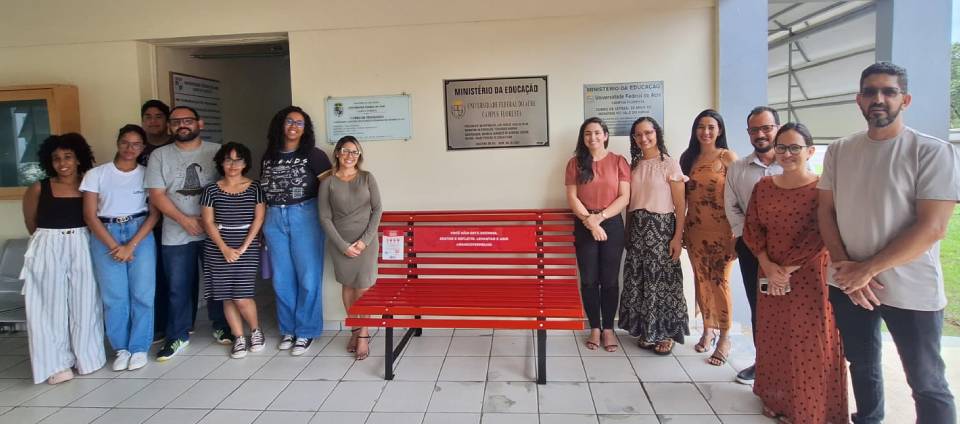
A Ufac inaugurou a campanha internacional Banco Vermelho, símbolo de conscientização sobre o feminicídio. A ação integra iniciativas inspiradas na lei n.º 14.942/2024 e contempla a instalação, nos campi da instituição, de três bancos pintados de vermelho, que representa o sangue derramado pelas vítimas. A inauguração ocorreu nesta segunda-feira, 9, no hall da Reitoria.
São dois bancos no campus-sede (um no hall da Reitoria e outro no bloco Jorge Kalume), além de um no campus Floresta, em Cruzeiro do Sul. A reitora Guida Aquino destacou que a instalação dos bancos reforça o papel da universidade na promoção de campanhas e políticas de conscientização sobre a violência contra a mulher. “A violência não se caracteriza apenas em matar, também se caracteriza em gestos, em fala, em atitudes.”
A secretária de Estado da Mulher, Márdhia El-Shawwa, ressaltou a importância de a Ufac incorporar o debate sobre o feminicídio em seus espaços institucionais e defendeu a atuação conjunta entre universidade, governo e sociedade. Segundo ela, a violência contra a mulher não pode ser naturalizada e a conscientização precisa alcançar também a formação de crianças e adolescentes.
A inauguração do Banco Vermelho também ocorre no contexto da aprovação da resolução do Conselho Universitário n.º 266, de 21/01/2026, que institui normas para a efetividade da política de prevenção e combate ao assédio moral, sexual, discriminações e outras violências, principalmente no que se refere a mulheres, população negra, indígena, pessoas com deficiência e LGBTQIAPN+ no âmbito da Ufac em local físico ou virtual relacionado.
No campus Floresta, em Cruzeiro do Sul, a inauguração do Banco Vermelho contou com a participação da coordenadora do Centro de Referência Brasileiro da Mulher, Anequele Monteiro.
Participaram da solenidade, no campus-sede, a pró-reitora de Desenvolvimento e Gestão de Pessoas, Filomena Maria Cruz; a pró-reitora de Graduação, Ednaceli Damasceno; a pró-reitora de Pesquisa e Pós-Graduação, Margarida Carvalho; a coordenadora do projeto de extensão Infância Segura, Alcione Groff; o secretário de Estado de Saúde, Pedro Pascoal; a defensora pública e chefe do Núcleo de Promoção da Defesa dos Direitos Humanos da Mulher, Diversidade Sexual e Gênero da DPE-AC, Clara Rúbia Roque; e o chefe do Centro de Apoio Operacional de Proteção à Mulher do MP-AC, Victor Augusto Silva.




Warning: Undefined variable $user_ID in /home/u824415267/domains/acre.com.br/public_html/wp-content/themes/zox-news/comments.php on line 48
You must be logged in to post a comment Login