
ACRE
Bitcoin creator hunt hits another dead-end

 BBC
BBCBitcoin underpins a two trillion-dollar cryptocurrency industry, is now traded by the world’s biggest investment houses and is even an official currency in one country.
But despite its meteoric rise, a deep mystery remains at its heart: what is the true identity of its founder, the elusive Satoshi Nakamoto?
Many have tried to answer that question, but so far all have failed. In October, a high-profile HBO documentary suggested that a Canadian bitcoin expert called Peter Todd was he. The only problem: he said he was not, and the crypto world largely shrugged it off.
So, inevitably, ears pricked up across our newsroom – and the crypto world at large – when on Thursday a call went out that the mysterious creator of Bitcoin was to, finally, unmask himself at a press conference.
There is deep interest in who Satoshi Nakamoto is in part because they are considered a revolutionary programmer who helped spawn the crypto industry.
Their voice, opinions and world view would be extremely influential on an industry with such a devoted and zealous fanbase.
But the fascination also stems from the fact that, as the holder of more than one million bitcoins, Satoshi would be a multi-billionaire, not least because the price of the coins is currently close to an all-time high.
Given that vast wealth, it was somewhat unusual to be asked by the organiser of Thursday’s press conference to pay for my seat at his grand unveiling.
A front row seat would be £100. It was another £50 if I wanted unlimited questions. Organiser Charles Anderson even encouraged me to spend £500 in exchange for the privilege of interviewing “Satoshi” on stage.
I declined.
Mr Anderson said I could come along any way but cautioned there might not be a seat for me, such was the level of anticipation.
As it happened, seating wasn’t a problem.

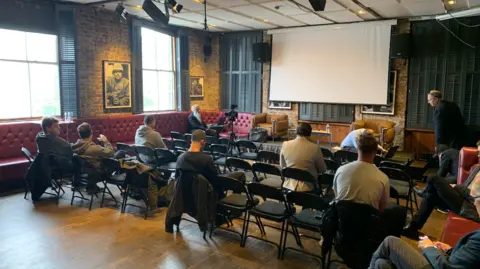
Only around a dozen reporters turned up to the prestigious Frontline Club – which interrupted proceedings at one point to stress it only provided a room, and not any official endorsement.
Very soon it became clear that all attendees were extremely sceptical.
After some digging it emerged both the organiser and the purported Satoshi were currently embroiled in a complex legal fight over fraud allegations – linked to claims to be Satoshi.
It was an unpromising start, and things only got worse from there.
Mr Anderson invited “Satoshi” to come on stage.
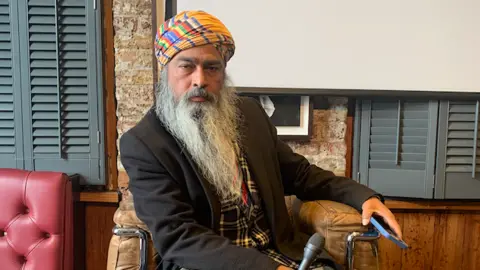
A man called Stephen Mollah, who had been sat silently on the side the whole time walked up and resolutely declared: “I am here to make a statement that yes: I am Satoshi Nakamoto and I created the Bitcoin on Blockchain technology.”
Over the following hour, reporters went from amused to irritated as he failed to provide any of the promised evidence for his claims.
Mr Mollah promised that he would make the Hail-Mary move of unlocking and interacting with the first-ever Bitcoins to be created – something that only Satoshi could do.
But he didn’t.
I departed, along with other bemused reporters, taking with us any lingering doubts that this would prove to be yet another dead-end in the quest to unmask Satoshi.
Not another one
The list of those identified – unsuccessfully – as Satoshi Nakamoto is long.
In 2014, a high-profile article in Newsweek said it was Dorian Nakamoto, a Japanese-American man living in California.
But he denied it and the claim has largely been debunked.
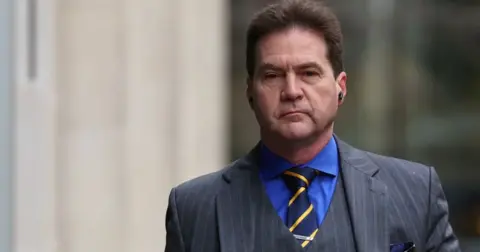
A year later, Australian computer scientist Craig Wright was outed as Satoshi by reporters.
He denied it, before saying it was true – but then failed over many years to produce any evidence.
In the spring the High Court in London ruled that Mr Wright was not the inventor.
 Reuters
Tech billionaire and crypto enthusiast Elon Musk also denied he was behind the cryptocurrency after a former employee at one of his firms, SpaceX, suggested it.
Which brings us to the question: does it really matter?
The crypto market’s current valuation means it is worth more than Google. And it seems inconceivable that the tech giant would play such a big role in our lives without people knowing who founded it, and owned a sizeable chunk of the firm.
Perhaps there’s good reason for the real Satoshi to keep schtum though. That bitcoin stash would make them worth an estimated $69bn and their life and character would no doubt be heavily scrutinised if they were found.
Peter Todd, who was named by the HBO documentary as being Satoshi, said the unwelcome attention he’s received has made him fearful for his safety.
Many in the crypto world enjoy the fact that the mystery remains unsolved.
“No-one knows who Satoshi is and that’s a good thing,” Adam Back, one of its core developers (and another potential Satoshi candidate) posted on X recently.
Natalie Brunell, a Bitcoin podcaster, thinks Satoshi’s anonymity is not only deliberate but essential.
“By concealing his true identity, Satoshi ensured that Bitcoin wouldn’t have a leader or central figure, whose personal agenda could influence the protocol,” she told me.
“This allows people to trust Bitcoin as a system, rather than placing their trust in an individual or company.”
Carol Alexander, professor of finance at Sussex University – who lectures on the history of Bitcoin – is less sure.
In her view, the circus around who Satoshi Nakamoto is distracts from people looking into – and getting to grips with – the more serious question of how cryptocurrencies might upend the way the economy works.
As I left the Frontline Club it was hard to compute the bizarre press event, beyond one obvious fact.
For now – and perhaps forever – the search for Satoshi continues.


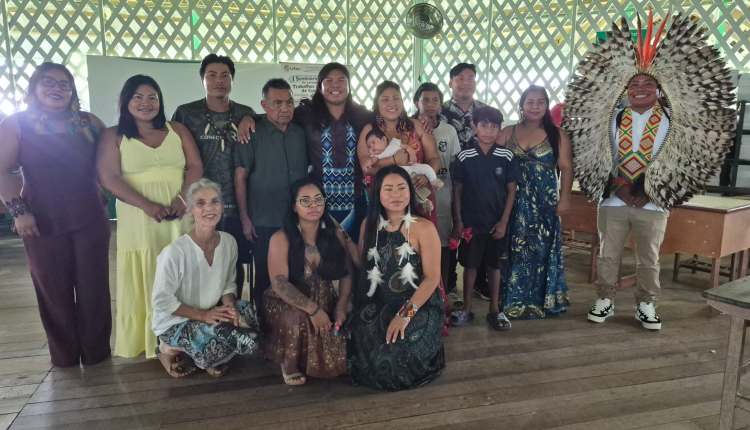
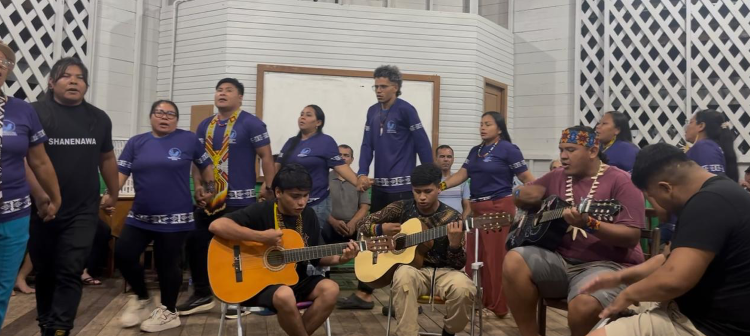
O curso de Licenciatura Indígena, do campus Floresta da Ufac, realizou o 1º Seminário Acadêmico de Apresentação de Trabalhos de Conclusão de Curso (TCCs). O evento possibilitou a defesa de 16 trabalhos nas aldeias Barão, da terra indígena Puyanawa, em Mâncio Lima (AC), e Morada Nova, na terra indígena Katukina/Kaxinawá, em Feijó (AC). As atividades ocorreram entre 25 de setembro e 2 de outubro, envolvendo estudantes, professores, egressos do curso, pós-graduandos e as comunidades locais.
Os TCCs defendidos nas aldeias são de autoria de discentes que ingressaram na Ufac em 2023 e deverão colar grau no início de 2027. Os temas das pesquisas contemplaram variados aspectos da vida indígena, abrangendo história, biografia, mitologia, organização política, território, medicina tradicional, grafismos, gênero, terminologias linguísticas, educação especial, atividade cinegética e rituais tradicionais.
A viabilização das defesas nas aldeias ocorreu pela primeira vez em 18 anos de existência da graduação e está de acordo com a pedagogia da alternância, pela qual parte da carga horária do curso é realizada nas comunidades indígenas dos alunos, por meio de pesquisa e extensão. Os recursos para realização do evento foram provenientes de projeto de extensão com o mesmo nome do seminário.
As bancas de avaliação foram compostas por docentes do curso, egressos de outras turmas da Licenciatura Indígena e egressos indígenas de outros cursos da Ufac, inclusive da pós-graduação. Também compuseram algumas bancas pessoas reconhecidas por suas comunidades com “notório saber”, expediente previsto no regulamento de TCC do curso. Além de familiares dos estudantes e moradores das aldeias, indígenas de outras etnias estiverem presentes no seminário.
Organização
A atividade no município de Mâncio Lima, que é vizinho ao campus Floresta, em Cruzeiro do Sul (AC), ocorreu num só dia, em 25 de setembro, com a defesa de dois TCCs. Já para o evento em Feijó foi necessário um deslocamento de ônibus, com duração de quase seis horas, em 30 de setembro, até o porto da cidade. E, à noite, uma embarcação levou cerca de 20 pessoas até a aldeia Morada Nova, onde houve uma recepção musical para o grupo. Na manhã do dia seguinte começaram as defesas, que prosseguiram até 2 de outubro.

ACRE
Ufac retoma Semana Acadêmica de Física após 6 anos, com planetário — Universidade Federal do Acre

A Universidade Federal do Acre (Ufac) realiza até esta sexta-feira, 23, a 3ª Semana Acadêmica de Física, no prédio do curso, no campus-sede, em Rio Branco. Iniciado nessa segunda-feira, 19, o evento retoma as atividades presenciais da semana acadêmica após seis anos de interrupção, causada pela pandemia de covid-19 e pela reorganização do calendário universitário.
A programação tem atrações abertas ao público, como oficinas de astronomia, observação do Sol com telescópio e um planetário móvel, instalado no segundo andar do prédio de Física. Há ainda palestras, apresentações de pesquisas de estudantes e minicursos práticos de elaboração de material didático, física experimental, criação de mapas, processamento de dados e sismologia.
Organizada em três eixos temáticos, a semana é voltada aos estudantes da licenciatura e do bacharelado em Física e do curso de Física Aplicada às Ciências da Terra. Os primeiros dias tiveram debates e palestras sobre o ensino de física e a formação docente. Em seguida, a programação trata de física pura, como mecânica quântica, relatividade e física de partículas, e termina com geofísica, astronomia e fenômenos naturais.
Segundo o coordenador do evento e professor do curso de Física, Victor Carreira, a retomada presencial reaproxima o curso da comunidade externa e das escolas de educação básica. Turmas do Instituto Federal do Acre visitaram a semana, e escolas da rede pública foram convidadas.
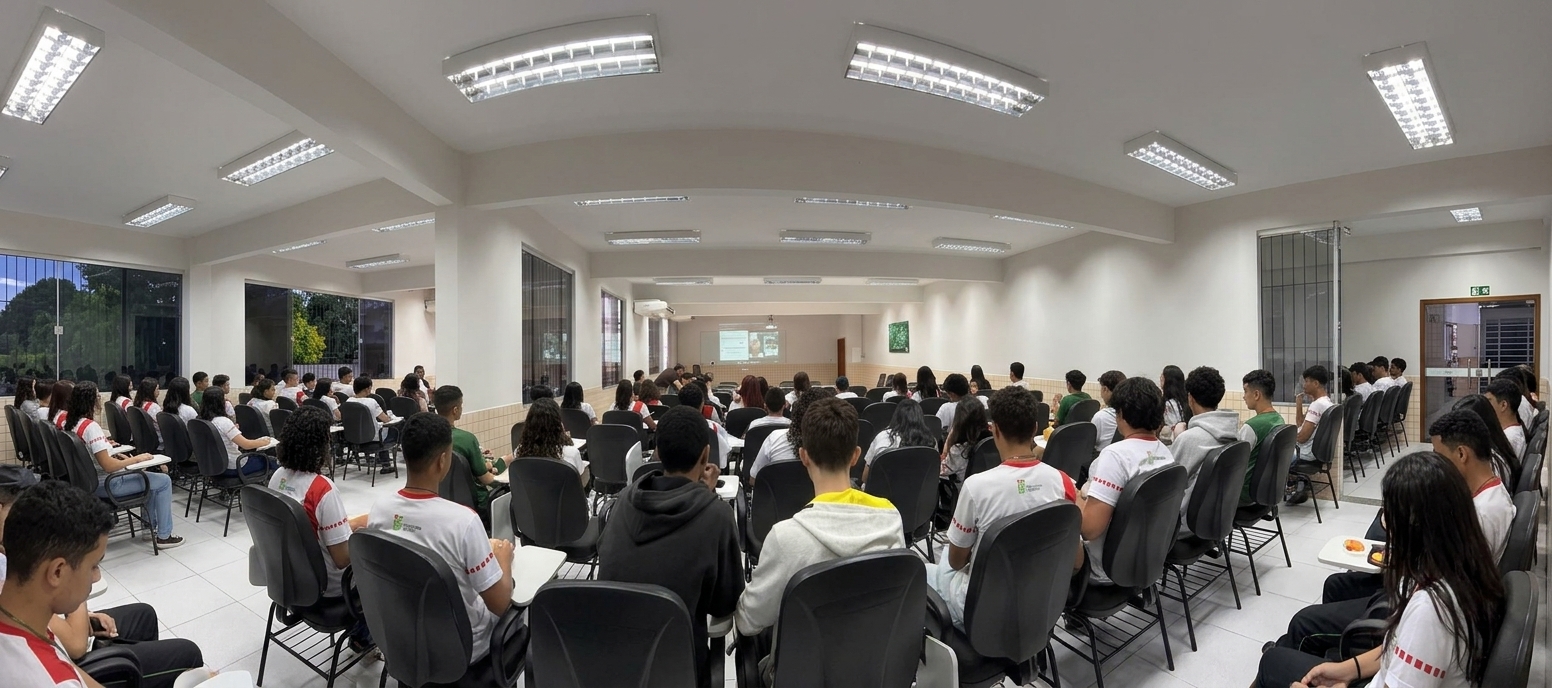
“A semana acadêmica é muito importante tanto para os nossos alunos quanto para a comunidade em geral de Rio Branco”, disse Carreira. “É uma oportunidade para jovens do ensino médio conhecerem a universidade e vivenciarem a ciência na prática.”
A cerimônia de encerramento ocorre nesta sexta-feira, 23, à tarde.
(Fhagner Soares, estagiário Ascom/Ufac)


 ACRE7 dias ago
Pavic-Lab da Ufac apresenta seis trabalhos em congresso internacional de computação — Universidade Federal do Acre
 ACRE6 dias ago
Ufac retoma Semana Acadêmica de Física após 6 anos, com planetário — Universidade Federal do Acre
 ACRE4 dias ago
Licenciatura Indígena realiza defesa de TCCs em aldeias no Juruá — Universidade Federal do Acre
 ACRE5 dias ago
Herbário da Ufac participa do 76º Congresso Nacional de Botânica — Universidade Federal do Acre


Warning: Undefined variable $user_ID in /home/u824415267/domains/acre.com.br/public_html/wp-content/themes/zox-news/comments.php on line 48
You must be logged in to post a comment Login