
ACRE
Climate: These rangers protect Palau’s Helen Reef from poachers

HELEN ISLAND, Palau (AP) — The handful of rangers who protect one of Earth’s most remote and biologically diverse reefs have only each other for company for months at a time. They worry about running out of gas for boat patrols, their drinking water can get dangerously low and rising seas are nipping away at the tiny island that hosts their station.
On the plus side, the fishing is amazing — and they’re the only people allowed to do it.
Maxson Blesson, left, and Carson Ngiralbong, a ranger for the Hatohobei State Rangers, lounge on the second level of the Ryoma, a boat that brings goods through the Pacific Ocean to Helen Island, Palau on July 17, 2024. (AP Photo/Yannick Peterhans)

Maxson Blesson sleeps on a wooden pallets on the top deck of the Ryoma, a boat that brings goods through the Pacific Ocean to Helen Island, Palau, on July 15, 2024. (AP Photo/Yannick Peterhans)
Helen Reef, a 40-square-mile atoll at the southern limit of Palau, is home to precious plants and animals that include the Napoleon wrasse, bumphead parrotfish, hawksbill sea turtles and sea cucumbers. More than 500 other fish species, giant clams, sharks, manta rays and hundreds of hard and soft coral species thrive in its protected waters. On Helen Island, the scrap of the atoll that lies a few feet above sea level, the sky fills with thousands of birds including boobies, frigate birds and terns, and green sea turtles lay their eggs on the beach during nesting season in July.
That rich sea life is a magnet for poachers, which is where the Hatohobei State Rangers come in. Four rangers at a time, generally in three-month rotations, scratch out a life on what’s little more than a sandbar as they carry out regular patrols to protect the reef in accordance with Palau national law.
Metfidza Marino, from left, Aarson Aaron and Aaron Cyrillo look out to Helen Island, Palau, as a small speed boat transports toilet paper, dog food and other goods to the remote atoll on July 17, 2024. (AP Photo/Yannick Peterhans)
“It’s a reef our ancestors used to go to and harvest food for the community back in the days,” said Hercules Emilio, a senior conservation officer and 17-year ranger. “So to us, now we are still conserving the resources that we have there, that’s why we do the enforcement.”
The rangers and their supplies — gasoline, food, toilet paper, lumber, batteries, dog food and more — arrive four times a year via a chartered boat that takes two days for the journey from Koror, some 360 miles (about 577 kilometers) to the north, where most of Palau’s people live.
Metfidza Marino, from left, Tony Chayum, Mouwanes Patris Bismark and Aarson Aaron help the Hatohobei State Rangers bring goods from the speed boats to the ranger station and living quarters on Helen Island, Palau, July 17, 2024. (AP Photo/Yannick Peterhans)
Goods that were brought to Helen Island, Palau, are carried through low tide to the ranger station on July 17, 2024. (AP Photo/Yannick Peterhans)
At low tide, boats can’t land at Helen Island’s ranger station, so goods are carried ashore. Blue paint is peeling from the two-story station, which includes living quarters, a radio room and a downstairs lounge with shutters that let in the cool ocean breeze. Across a small path in a separate building is their kitchen, with a trio of chickens who have the run of the place. A pair of 1,000-gallon drums collect rainwater for drinking, and often run dangerously low during the dry season.
When they aren’t patrolling the reef, the rangers fix the station and surrounding buildings, care for their chickens, and hunt shorebirds like bridled tern for eggs and meat. The birds are easy prey on an island where thousands make their nests and the din of their cries can be heard hundreds of yards from shore.
Brian Fidiiy and Ray Marino, the governor of Hatohobei State, carry lumber to the ranger station for maintenance repairs on Helen Island, Palau, July 17, 2024. (AP Photo/Yannick Peterhans)
Though the work can be isolating, the rangers know they’re fulfilling their role as traditional protectors of an area that has sustained their people for generations.
“It feels good,” said Emilio, who grew up on a small island in Hatohobei state and whose wife is also a ranger. “For me, I’m doing something for the people of my community.”
Palau, an archipelago of hundreds of islands, has only about 20,000 people, and Hatohobei state — which includes Helen Island and Helen Reef — has only a few dozen people. The reef is one of 39 sites in Palau’s Protected Areas Network, which get preservation help from a nonprofit fund that includes fees from tourists and visitors.
Fred Obak, a Hatohobei State Ranger stationed on Helen Island, Palau, throws a rope to a boat as they prepare to exchange fuel cans on July 17, 2024. (AP Photo/Yannick Peterhans)
Boat fuel is a major challenge for the rangers, who have to make about 100 gallons last across three months of operations. They patrol the reef regularly on small boats with a single outboard engine, and fishing within the reef for food is a unique privilege only they have.
“Sometimes we don’t have enough fuel to patrol and then go fishing. So we go (at the) same time,” said ranger Tony Chayum.
McCain Maximo runs back into the trees filled with bridled tern nests on the northern end of the sand bar on Helen Island, Palau, on July 17, 2024. (AP Photo/Yannick Peterhans)
Carson Ngiralbong, a ranger with the Hatohobei State Rangers, collects bridled tern for dinner on July 17, 2024, on Helen Island, Palau. (AP Photo/Yannick Peterhans)
There’s no cell reception on the island, so rangers rely on a spotty single sideband radio to communicate with their colleagues in Palau’s more populous islands far to the north. They can use the radio to speak with their family members on holidays and birthdays. It’s also the way they report illegal activity and summon help to the reef, as they did in 2021 when a Chinese fishing boat came to take sea cucumbers and clams.
“We didn’t allow them. They offered money and some goods, which we didn’t take,” Emilio recalled. The vessel was later taken to Koror state and fined by Palau’s Marine Law Enforcement.
These days, the threat from a warming planet is as concerning as poachers. Ray Marino, the governor of Hatohobei state, said a slow erosion seen in past years has progressed to “a lot of mass erosion.”
Bridled terns fly July 17, 2024, on Helen Island, Palau. (AP Photo/Yannick Peterhans)
Bridled terns fly over Helen Island, Palau, on July 17, 2024. (AP Photo/Yannick Peterhans)
“Of course, we can only blame it on climate change, there is no other reason for it,” he said.
The rangers plan to install wooden barriers to try to slow the erosion.
“What we are worried about is the disappearance of the island,” Emilio said.
___
The Associated Press’ climate and environmental coverage receives financial support from multiple private foundations. AP is solely responsible for all content. Find AP’s standards for working with philanthropies, a list of supporters and funded coverage areas at AP.org.


Alunas de graduação e mestrado do campus Floresta da Ufac criaram, em 2024, o projeto Biblioteca de Kene, que reúne tecelagem em algodão, pintura corporal, registros audiovisuais e uma plataforma digital acessível por celular. A iniciativa surgiu do trabalho de conclusão de curso de Txima Huni Kuin, em Licenciatura Indígena, e da pesquisa para a dissertação de Alexandra Deitos no programa de pós-graduação em Ensino de Humanidades e Linguagens.
Txima investigou a tecelagem como expressão dos conhecimentos, da arte e da espiritualidade de seu povo, sob orientação do professor Amilton Pelegrino de Mattos. Alexandra, artista visual e atualmente doutoranda, colaborou na construção do projeto por meio de uma pesquisa de autoria coletiva, desenvolvida com as mulheres da comunidade.
Desse encontro surgiu a proposta de criar um espaço onde os mais de 60 grafismos praticados pelas mulheres pudessem ser consultados, ensinados e aprendidos por jovens e mestras tecelãs. O projeto terá uma nova etapa entre 10 e 16 de outubro, com a realização da 2ª Oficina de Kene da Aldeia Arco-Íris, na terra indígena Seringal Independência, no município de Jordão (AC).
Aprendizagem no território
Durante os sete dias de oficina, mestras tecelãs e jovens aprendizes participarão de atividades de preparação de fios, cantos rituais, aplicação do Bawe e tecelagem de painéis com grafismos. Os processos serão documentados para compor o acervo da biblioteca na aldeia e seu site colaborativo, com gestão do conhecimento pelas próprias mulheres.
A proposta dialoga com a expressão “a universidade é na aldeia”, do professor e pesquisador Yube Huni Kuin, também acadêmico da Licenciatura Indígena da Ufac. A experiência reconhece o território e as práticas da comunidade como espaços de produção e transmissão de conhecimento.
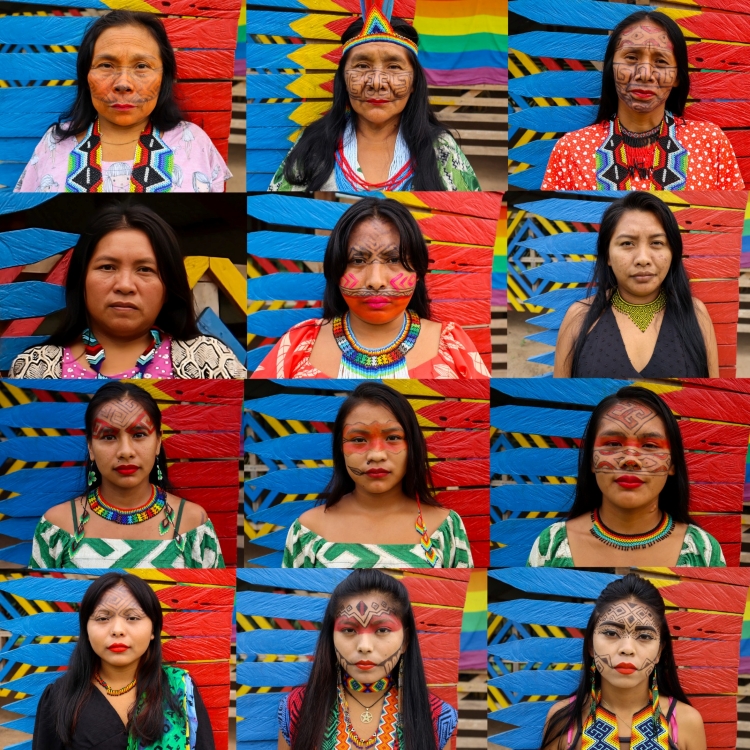
A 2ª Oficina de Kene é realizada por Txima Huni Kuin, Alexandra Deitos e pela Aldeia Arco-Íris, com apoio do curso de Licenciatura Indígena, da Fundação de Cultura Elias Mansour, do governo do Acre, da Política Nacional Aldir Blanc de Fomento à Cultura, do Ministério da Cultura e do governo federal.
ACRE
Ufac sedia encontro regional sobre residência e preceptoria no SUS — Universidade Federal do Acre


Warning: Undefined variable $user_ID in /home/u824415267/domains/acre.com.br/public_html/wp-content/themes/zox-news/comments.php on line 48
You must be logged in to post a comment Login