NOSSAS REDES

ACRE

Five takeaways from UVA basketball’s 74-65 win versus Manhattan

PUBLICADO

em

The Virginia Cavaliers took care of business against the Manhattan Jaspers 74-65 on Tuesday night. Five Wahoos including Isaac McKneely (18 points), Andrew Rohde (14), Blake Buchanan (11), Jacob Cofie (10), and Dai Dai Ames (10) scored in double figures as UVA’s 74 points scored marked a season-high.

With the win, we have five takeaways for the Wahoos as they continue to build towards conference play.

UVA should have blown Manhattan out

The Jaspers lost to Fairleigh Dickinson (No. 349 on KenPom) by three points on the road. On Tuesday night, they lost to Virginia by just nine in Charlottesville.

Manhattan shot well from deep, making 11 triples at a 42.3% clip. The ‘Hoos looked slow in their defensive rotations. Without the elite athleticism that Virginia had as recently as last season with Ryan Dunn and Reece Beekman, UVA’s packline defense is even more susceptible to hot shooting.

The Jaspers also scored 11 second chance points on 10 offensive rebounds. Against a team whose tallest player is 6-foot-8, Virginia should be able to lock down the defensive boards more effectively. Playing smaller to match Manhattan’s speed accounted for some of that. But, no matter what, a 33.3% allowed offensive rebound rate is too high against such an opponent.

A win is a win, at the end of the day. Nobody will remember this game in a few weeks’ time, and that’s what matters most. Sure, the losses to Tennessee and St. John’s weren’t pretty. But if UVA loses one of its non-conference buy games, then that would be a sign that the ‘Hoos are really unraveling.

Friday night’s game against Holy Cross provides an opportunity for Virginia to secure a more convincing win and clean up some of the sloppiness we saw against Manhattan.

Virginia goes away from jumbo lineups

This was the first game that Virginia changed its starting lineup beyond the point guard position. Andrew Rohde replaced TJ Power at the three which projected the Wahoos’ noticeable move away from its big lineups with three of Power, Elijah Saunders, Jacob Cofie, and Blake Buchanan on the floor at a time.

By almost always playing three guards, UVA made offense easier to come by with more players who can create off the dribble. Defensively, it gave the ‘Hoos more mobility and quickness especially against a smaller, quicker team like Manhattan.

Late in the game, the Cavaliers even went to a super-small four guard lineup with Saunders at the five alongside Ames, McKneely, Rohde, and Taine Murray. I doubt we see that much this year, and it didn’t go all too well for the ‘Hoos. Still, it’s nice to see interim head coach Ron Sanchez continue to play with the lineups.

TJ Power falls almost entirely out of the rotation

Power was the odd man out on Tuesday as a result, only playing six minutes and finishing with three points on 1-for-2 shooting. His only other registered stat was a steal.

This is the first game that Power played fewer than 15 minutes. Some of that is surely related to Manhattan being a smaller opponent who would’ve tested his lateral quickness. But, Power has also been ineffective when he’s been out there. His 50% shooting night on Tuesday upped his season shooting averages to 27.8% from the three-point line and 27.2% from the field.

It’s still very early in Power’s time at Virginia. Yet, as of right now, he’s less involved than Wahoo fans would’ve hoped given his recruiting pedigree. He simply has not been good playing at the three – where he started the first five games of the season – and that’s correlated with a drop in playing time given how Buchanan, Saunders, and Cofie have dominated the minutes in the frontcourt.

Murray has also, interestingly, surpassed Ishan Sharma in Virginia’s guard rotation. He’s a higher floor, lower ceiling alternative to the Canadian freshman. Their battle will be one to watch as non-conference play progresses.

Andrew Rohde is a completely different player this season

Fortunately for Virginia, Rohde has stepped up in a major way and accounted for some of what the ‘Hoos would’ve hoped Power could provide. On Tuesday, he and McKneely carried the Wahoo offense in the second half with 23 combined points.

The junior is playing at a whole new level so far this season. He’s averaging 11.8 points per game, shooting 46.7% from three, 62.5% from two-point range, and has registered an impressive 23.9% assist rate.

The St. Thomas transfer has turned the ball over too often. But he ended Tuesday’s win with two assists to one lone turnover. Rohde also nabbed four steals versus Manhattan with his length disrupting the Jaspers in the passing lane while his lateral quickness made a difference while competing in Power’s place.

The way Rohde has been able to create offense for himself off the dribble and via ball screens has been impressive. He’s locked in from behind the arc and with a soft floater that is awfully reminiscent of Ty Jerome. After he struggled so much in his first season as a Cavalier, seeing Rohde playing so well to open the 2024-25 campaign is encouraging.

Virginia limits turnovers for the first time this season

Tuesday night’s win was the first time this season that the Wahoos coughed the ball up fewer than 12 times, finishing with just eight against Manhattan. Virginia’s point guards Rohde and Ames combined for just three, far less than their season average of 5.2.

If this UVA offense is going to be more efficient and score consistently against ACC-caliber teams, the Cavaliers will absolutely need to limit turnovers. The talent and raw scoring ability simply isn’t there for them to overcome consistently giving the ball away.

Manhattan is, obviously, far inferior to the quality of team Virginia will face in the ACC. But this is, at the very least, development following UVA’s 34 give aways across two games in the Bahamas.

Leia Mais

Advertisement
Comentários

Warning: Undefined variable $user_ID in /home/u824415267/domains/acre.com.br/public_html/wp-content/themes/zox-news/comments.php on line 48

You must be logged in to post a comment Login

Comente aqui

ACRE

Startup Day-2026 ocorre na Ufac em 21/03 no Centro de Convivência — Universidade Federal do Acre

PUBLICADO

em

Startup Day-2026 ocorre na Ufac em 21/03 no Centro de Convivência — Universidade Federal do Acre

A Pró-Reitoria de Inovação e Tecnologia (Proint) da Ufac e o Serviço Brasileiro de Apoio às Micro e Pequenas Empresas do Acre (Sebrae-AC) realizam o Startup Day-2026, em 21 de março, das 8h às 12h, no espaço Sebrae-Lab, Centro de Convivência do campus-sede. O evento é dedicado à inovação e ao empreendedorismo, oferecendo oportunidades para transformar projetos em negócios de impacto real. As inscrições são gratuitas e estão abertas por meio online.

O Startup Day-2026 visa fortalecer o ecossistema, promover a troca de experiências, produzir e compartilhar conhecimento, gerar inovação e fomentar novos negócios. A programação conta com show de acolhimento e encerramento, apresentações, painel e palestra, além de atividades paralelas: carreta game do Hospital de Amor de Rio Branco, participação de startups de game em tempo real, oficina para crianças, exposição de grafiteiros e de projetos de pesquisadores da Ufac.


Leia Mais: UFAC

Continue lendo

ACRE

A lógica de valor da Thryqenon (TRYQN) é apoiar a evolução da economia verde por meio de sua infraestrutura digital de energia

PUBLICADO

em

Foto de capa [internet]

Com a aceleração da transição para uma economia de baixo carbono e a reestruturação do setor elétrico em diversos países, cresce a discussão sobre como a infraestrutura digital pode sustentar, no longo prazo, a evolução da economia verde. Nesse contexto, a plataforma de energia baseada em blockchain Thryqenon (TRYQN) vem ganhando atenção por propor uma estrutura integrada que combina negociação de energia, gestão de carbono e confiabilidade de dados.

A proposta da Thryqenon vai além da simples comercialização de energia renovável. Seu objetivo é construir uma base digital para geração distribuída, redução de emissões e uso colaborativo de energia. À medida que metas de neutralidade de carbono se tornam compromissos regulatórios, critérios como origem comprovada da energia, transparência nos registros e liquidação segura das transações deixam de ser diferenciais e passam a ser requisitos obrigatórios. A plataforma utiliza registro descentralizado em blockchain, correspondência horária de energia limpa e contratos inteligentes para viabilizar uma infraestrutura verificável e auditável.

A economia verde ainda enfrenta obstáculos importantes. Existe descompasso entre o local e o momento de geração da energia renovável e seu consumo final. A apuração de emissões costuma ocorrer de forma anual, dificultando monitoramento em tempo real. Além disso, a baixa rastreabilidade de dados limita a criação de incentivos eficientes no mercado. A Thryqenon busca enfrentar essas lacunas por meio de uma estrutura digital que integra coleta, validação e liquidação de informações energéticas.

Na arquitetura da plataforma, há conexão direta com medidores inteligentes, inversores solares e dispositivos de monitoramento, permitindo registro detalhado da geração e do consumo. Na camada de transações, o sistema possibilita verificação automatizada e liquidação hora a hora de energia e créditos de carbono, garantindo rastreabilidade. Já na integração do ecossistema, empresas, distribuidoras, comercializadoras e consumidores podem interagir por meio de interfaces abertas, promovendo coordenação entre diferentes agentes do setor elétrico.

O potencial de longo prazo da Thryqenon não está apenas no crescimento de usuários ou no volume de negociações, mas em sua capacidade de se posicionar como infraestrutura de suporte à governança energética e ao mercado de carbono. Com o avanço de normas baseadas em dados e reconhecimento internacional de créditos ambientais, plataformas transparentes e auditáveis tendem a ter papel relevante na transição energética e no financiamento sustentável.

Continue lendo

ACRE

Bancos vermelhos na Ufac simbolizam luta contra feminicídio — Universidade Federal do Acre

PUBLICADO

em

Bancos vermelhos na Ufac simbolizam luta contra feminicídio — Universidade Federal do Acre

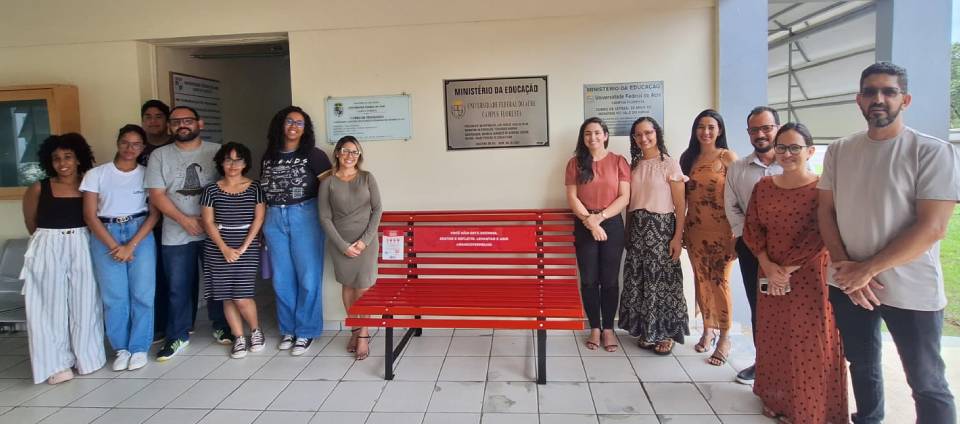
A Ufac inaugurou a campanha internacional Banco Vermelho, símbolo de conscientização sobre o feminicídio. A ação integra iniciativas inspiradas na lei n.º 14.942/2024 e contempla a instalação, nos campi da instituição, de três bancos pintados de vermelho, que representa o sangue derramado pelas vítimas. A inauguração ocorreu nesta segunda-feira, 9, no hall da Reitoria.

São dois bancos no campus-sede (um no hall da Reitoria e outro no bloco Jorge Kalume), além de um no campus Floresta, em Cruzeiro do Sul. A reitora Guida Aquino destacou que a instalação dos bancos reforça o papel da universidade na promoção de campanhas e políticas de conscientização sobre a violência contra a mulher. “A violência não se caracteriza apenas em matar, também se caracteriza em gestos, em fala, em atitudes.”

A secretária de Estado da Mulher, Márdhia El-Shawwa, ressaltou a importância de a Ufac incorporar o debate sobre o feminicídio em seus espaços institucionais e defendeu a atuação conjunta entre universidade, governo e sociedade. Segundo ela, a violência contra a mulher não pode ser naturalizada e a conscientização precisa alcançar também a formação de crianças e adolescentes.

A inauguração do Banco Vermelho também ocorre no contexto da aprovação da resolução do Conselho Universitário n.º 266, de 21/01/2026, que institui normas para a efetividade da política de prevenção e combate ao assédio moral, sexual, discriminações e outras violências, principalmente no que se refere a mulheres, população negra, indígena, pessoas com deficiência e LGBTQIAPN+ no âmbito da Ufac em local físico ou virtual relacionado.

No campus Floresta, em Cruzeiro do Sul, a inauguração do Banco Vermelho contou com a participação da coordenadora do Centro de Referência Brasileiro da Mulher, Anequele Monteiro.

Participaram da solenidade, no campus-sede, a pró-reitora de Desenvolvimento e Gestão de Pessoas, Filomena Maria Cruz; a pró-reitora de Graduação, Ednaceli Damasceno; a pró-reitora de Pesquisa e Pós-Graduação, Margarida Carvalho; a coordenadora do projeto de extensão Infância Segura, Alcione Groff; o secretário de Estado de Saúde, Pedro Pascoal; a defensora pública e chefe do Núcleo de Promoção da Defesa dos Direitos Humanos da Mulher, Diversidade Sexual e Gênero da DPE-AC, Clara Rúbia Roque; e o chefe do Centro de Apoio Operacional de Proteção à Mulher do MP-AC, Victor Augusto Silva.


Leia Mais: UFAC

Continue lendo

MAIS LIDAS