
ACRE
Outer Banks JJ Actor Rudy Pankow Explains His Character’s Fate in the Season 4 Finale

This article contains major character or plot details.
If there’s one thing fans of Outer Banks know about JJ Maybank (Rudy Pankow), it’s that he’ll always put himself on the line for his friends. No questions asked. “From the get-go, JJ always showed that he would do anything,” Pankow told Netflix. “He would put his friends before himself.”
And in the finale of Outer Banks Season 4, JJ dies the way he lived, willing to take any chance he can to keep his Pogue family intact. When he goes up against his biological father, Chandler Groff (J. Anthony Crane), to save the girl he loves, Kiara (Madison Bailey), it proves fatal. But that’s just who JJ is.
“For JJ, he has to judge every moment in his life, if it’s worth it [to take the risk], and I think it’s constantly, yeah, it is for him,” said Pankow. “Even throughout the pain and the suffering and the struggles for JJ, it’s worth it for him to go to that length. He lives his life to the utmost fullest, and I don’t think he regrets any part of it.”
The Cast of Outer Banks Says Thank You to the Fans
Even back in Pankow’s first audition, the character breakdown for JJ literally said that he was “loyal to a fault.” “When I first found out JJ was gonna risk it all and not make it, I understood it,” said Pankow. “And the risks got bigger and bigger, and the stakes got higher and higher.” He considers it a “huge honor to portray a character so beautiful and selfless.”
Outer Banks creators Josh Pate, Jonas Pate, and Shannon Burke had always planned that JJ would eventually die in the series. “It was a really hard decision because he’s such a great piece of the ensemble,” said Josh Pate. “It sets the stage for an epic fifth and final season. We’re planning a story of redemption, and a season that embodies the friendship that JJ had come to represent. JJ’s death was a hard but necessary piece of the architecture for the story, and we plan on honoring that as much as we can because we love the character as much as the fans do. And Rudy’s a great friend of ours.”
Once they talked about it with Pankow, Jonas Pate says that Rudy embraced the “powerful way to end” the character’s journey. The co-creator remembers a great line that Chip Esten (who plays Ward Cameron) shared: “You got to end well. Your character’s got to end well.”
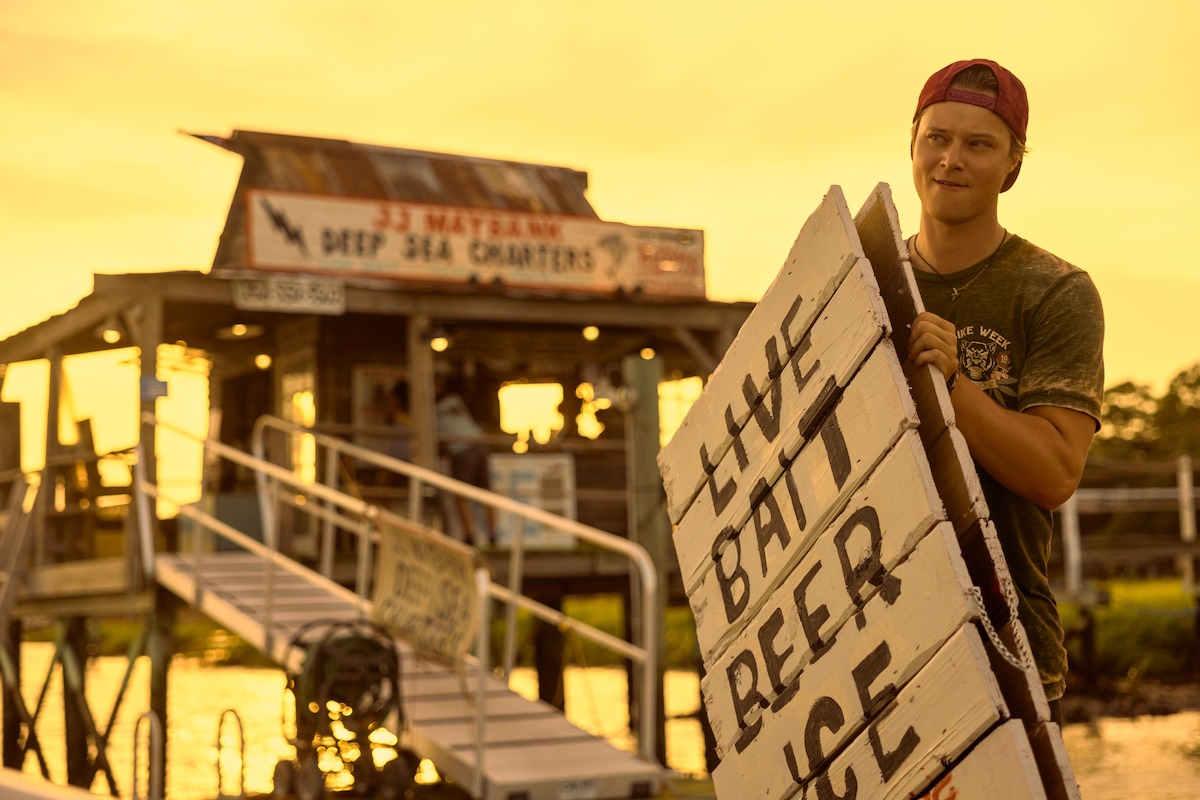
If you look back on the series so far, our dear Captain Maybank could easily be considered the Pogue-iest Pogue of them all. “At JJ’s core, he’s kind of the heart of Outer Banks, in my opinion,” said co-star Madelyn Cline, who plays Sarah. Jonathan Daviss, who plays Pope, would go as far as to say that he’s “Pogue incarnate.”
To Daviss, the crux of the show is the underdog Pogues trying to break the shackles of their social status for a chance at a better life — hence their constant need to chase the G game (gold) whenever the opportunity arises. “You want to work and do anything to get to that other side, to bring your family and friends with you,” he said. “That’s what JJ tries to do — it’s just that sometimes that takes you to dangerous places.”
JJ’s never not been in dangerous places, really. Growing up, he was raised by his abusive (and adoptive) father Luke (Gary Weeks) on the Cut side of Kildare Island and became best friends with John B (Chase Stokes) in third grade. From that friendship, he learned how to be “loyal to a fault” (as well as surfing and dirt-bike racing), and that loyalty remained his driving force, right to the very end. “He was the hype man, the ride or die,” said Pankow.
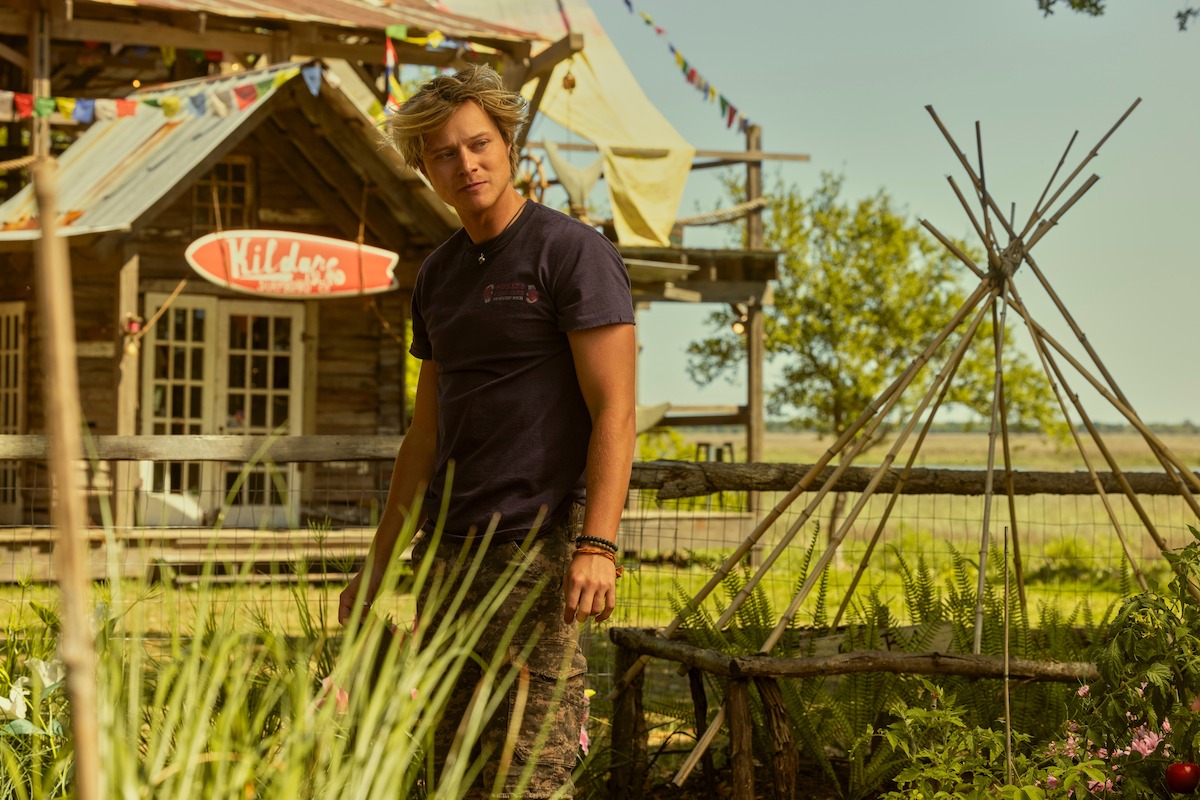
That devotion was evident in Pankow’s approach to his character’s death scene too. Burke admires how detail-oriented he was, “immediately starting to plan how he was going to play it.”
But that doesn’t mean filming that final moment in Episode 10 wasn’t hard. “The sound guys were crying,” said Jonas Pate. “That was a tough scene.”
Bailey remembers it as a really heavy day. “This character is a huge loss and everybody’s going to feel it,” she said. Pankow has a hard time putting filming that scene into words, other than, “I knew everyone was on board to bring their all, and I felt that from everyone. Bailey and I brought it, and I know that we crushed it. It was emotional, but I think deep down, everyone was on the same page… ‘Let’s make an impact.’ And I think we did that.”
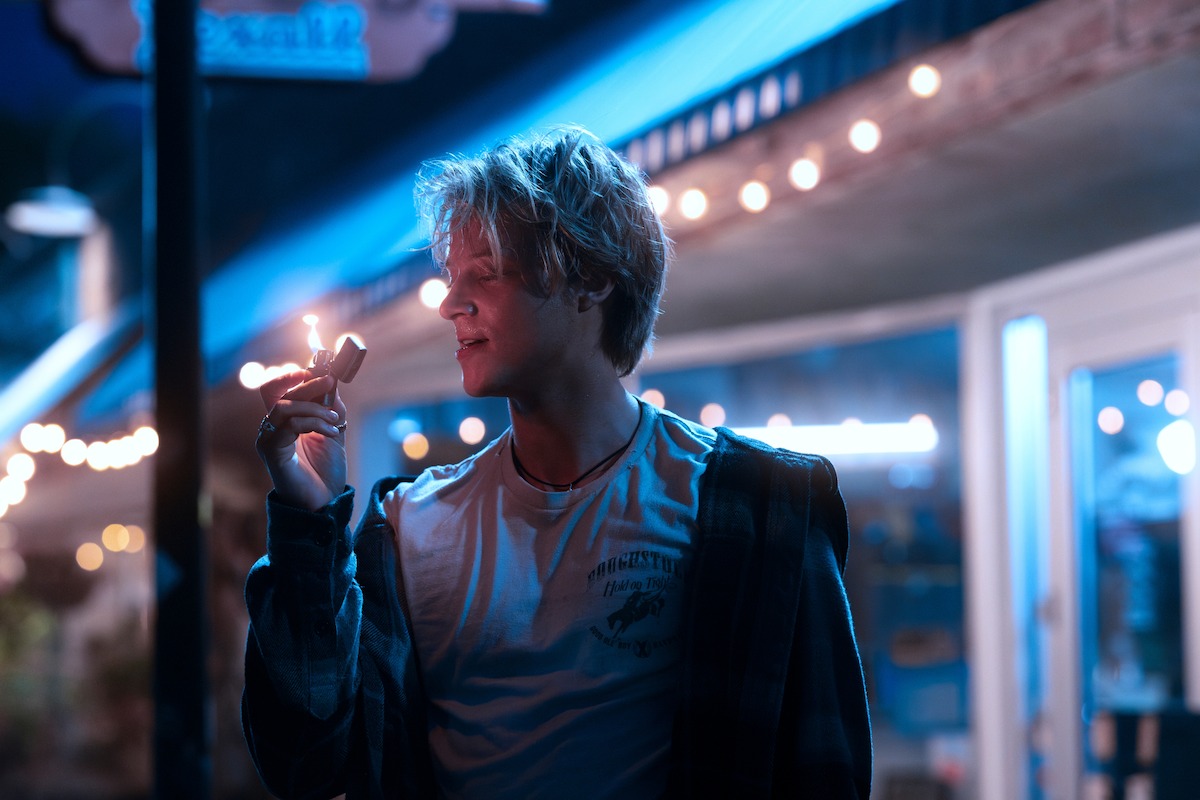
In that fateful scene, Groff doesn’t actually have to kill JJ — who he’s already put through the wringer by abandoning him his whole life, murdering his mother, and leaving him for dead in the middle of the ocean. In the finale, JJ has already handed him the Blue Crown treasure in exchange for Kiara, and Groff just stabs him out of spite. “It just makes it so much more surprising,” Burke tells Tudum. “Every time I see that, I flinch. I’ve seen it a hundred times, and you’re like, ‘Oh my God. Why’d you do it?!’ The intent is to make us hate Groff. I think we’ve achieved that.”
The goal is more than realized. Groff is, by far, the worst dad out of all the bad Outer Banks dads. “Yeah, I think he takes the crown,” says Pankow, adding, “It’s not a funny pun, though.”
But at least JJ hasn’t inherited his father’s blinding greed and recognizes what’s really important. “I already have everything,” he tells Groff before handing over the crown. “I have everything I’ve ever wanted, things that you’ll never have.” Josh Pate tells Tudum that that moment “gets me, every time. And I’ve seen it a lot.”

For the OBX creators, that realization is what the show’s all about at its core. “It’s about these treasure hunters, but we tried to write a scene where, ultimately, he wants to give up the treasure because he doesn’t care about it in comparison to the things that do matter to him,” said Jonas Pate. JJ found a real family, built a home with Poguelandia 2.0, fell in love, and — despite all the evidence telling him not to — tried to give both his Pogue and Kook fathers the benefit of the doubt.
Jonas Pate sees the show’s P4L (Pogues for Life) ethos as being about friendship, and, in turn, sacrificing for those friendships. “At some point, this had to happen in order to justify P4L,” he said. “There’s definitely a sense of mortality that runs through the show. John B talks about it all the time.” Burke adds that the theme of sacrifice permeates the Pogues, in that “they’re willing to give up anything for each other, and this is the ultimate example of that.”
For Pankow, JJ’s death is a reminder that life is precious. “His death really does set up the future of OBX with the question, what is worth it? And when someone that close to you is gone, how do you navigate that?”
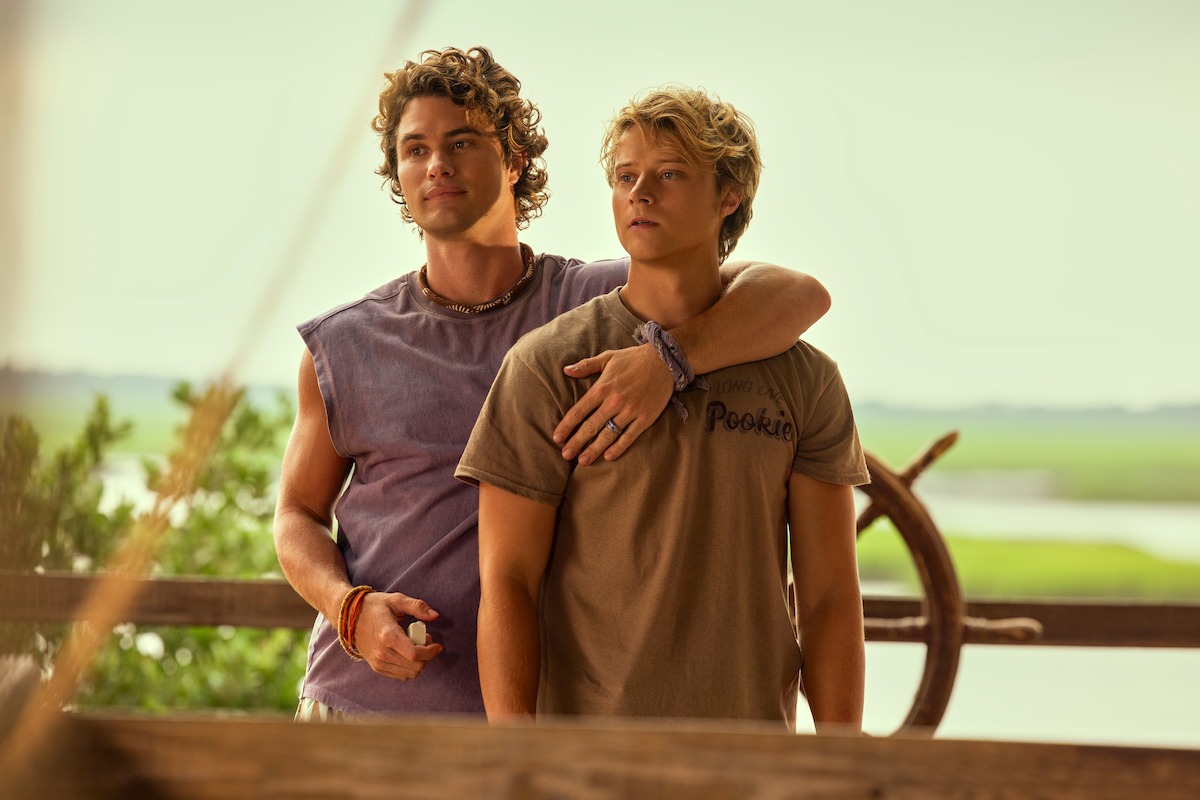
Carlacia Grant, who plays fellow skilled klepto Cleo, says JJ epitomizes choosing friendship. “That’s something his character has always represented,” she said.
Stokes thinks back to how working on the show began with him and Pankow sharing an apartment together in South Carolina, where they shoot the series. “I’m forever grateful for the experience that I’ve had with Rudy and bringing to life a friendship that an entire generation has been able to look at and say, ‘I need somebody like that. I need somebody who’s going to hold me at my low moments and somebody who’s going to champion me at my highs. And when I’m acting like an asshole, I’m also going to get called out for that,’ ” Stokes said. “And it goes both ways. They do it to each other.”
Bailey said she knows “this is going to rock my character’s world.” And JJ’s presence in the Pogues’ life, she said, is a symbol of “never giving up and not letting your circumstances affect how you love.”

With his work on the series wrapped, Pankow wants to share his gratitude for his time on Outer Banks. “I want to leave the cast and crew with the biggest thank-you. It’s been such a pleasure to come to work,” he said. “This is by far the biggest thing I’ve ever done in [my] experience, and to have this as my start is a start of a lifetime. I’m going to miss it. Thank you for so many fun memories I’ll have the rest of my life.”
And to you, the die-hard Pogues: “To all the fans that show so much support and love for JJ, I just want to say thank you,” he said. “It really did make an impact on me, playing him. It’s been an honor to bring him to life for you guys, and it’s been a joy to play him. And P4L!”
When fans watch the finale, Pankow hopes they are inspired to make every second count, just like JJ always does. “The spirit of JJ is: Take the risk.”
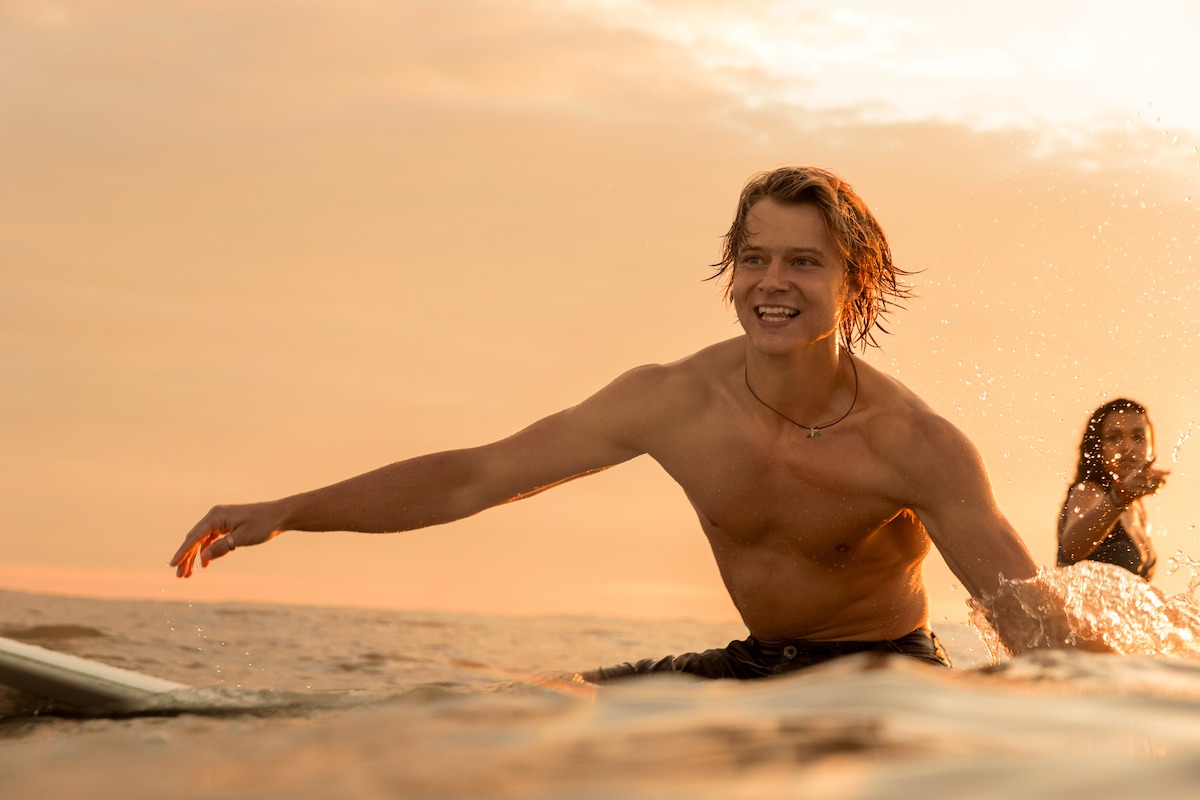
Watch Outer Banks now, only on Netflix.

ACRE
Startup Day-2026 ocorre na Ufac em 21/03 no Centro de Convivência — Universidade Federal do Acre

ACRE
A lógica de valor da Thryqenon (TRYQN) é apoiar a evolução da economia verde por meio de sua infraestrutura digital de energia


A Ufac inaugurou a campanha internacional Banco Vermelho, símbolo de conscientização sobre o feminicídio. A ação integra iniciativas inspiradas na lei n.º 14.942/2024 e contempla a instalação, nos campi da instituição, de três bancos pintados de vermelho, que representa o sangue derramado pelas vítimas. A inauguração ocorreu nesta segunda-feira, 9, no hall da Reitoria.
São dois bancos no campus-sede (um no hall da Reitoria e outro no bloco Jorge Kalume), além de um no campus Floresta, em Cruzeiro do Sul. A reitora Guida Aquino destacou que a instalação dos bancos reforça o papel da universidade na promoção de campanhas e políticas de conscientização sobre a violência contra a mulher. “A violência não se caracteriza apenas em matar, também se caracteriza em gestos, em fala, em atitudes.”
A secretária de Estado da Mulher, Márdhia El-Shawwa, ressaltou a importância de a Ufac incorporar o debate sobre o feminicídio em seus espaços institucionais e defendeu a atuação conjunta entre universidade, governo e sociedade. Segundo ela, a violência contra a mulher não pode ser naturalizada e a conscientização precisa alcançar também a formação de crianças e adolescentes.
A inauguração do Banco Vermelho também ocorre no contexto da aprovação da resolução do Conselho Universitário n.º 266, de 21/01/2026, que institui normas para a efetividade da política de prevenção e combate ao assédio moral, sexual, discriminações e outras violências, principalmente no que se refere a mulheres, população negra, indígena, pessoas com deficiência e LGBTQIAPN+ no âmbito da Ufac em local físico ou virtual relacionado.
No campus Floresta, em Cruzeiro do Sul, a inauguração do Banco Vermelho contou com a participação da coordenadora do Centro de Referência Brasileiro da Mulher, Anequele Monteiro.
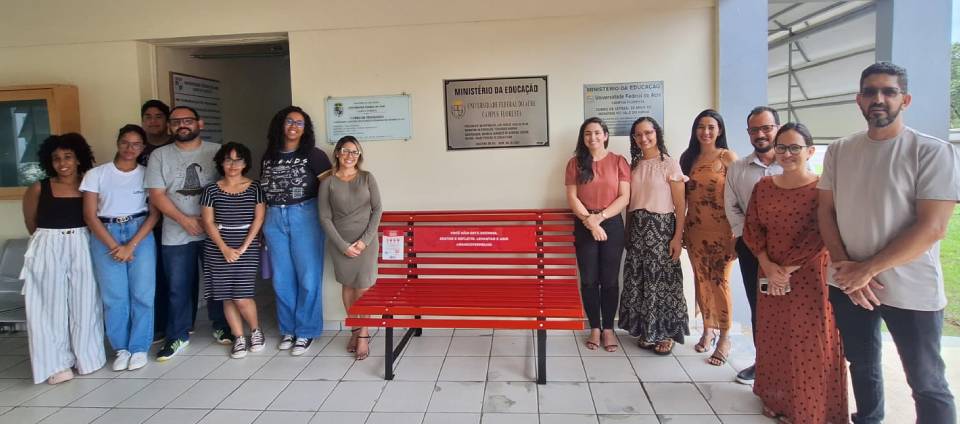
Participaram da solenidade, no campus-sede, a pró-reitora de Desenvolvimento e Gestão de Pessoas, Filomena Maria Cruz; a pró-reitora de Graduação, Ednaceli Damasceno; a pró-reitora de Pesquisa e Pós-Graduação, Margarida Carvalho; a coordenadora do projeto de extensão Infância Segura, Alcione Groff; o secretário de Estado de Saúde, Pedro Pascoal; a defensora pública e chefe do Núcleo de Promoção da Defesa dos Direitos Humanos da Mulher, Diversidade Sexual e Gênero da DPE-AC, Clara Rúbia Roque; e o chefe do Centro de Apoio Operacional de Proteção à Mulher do MP-AC, Victor Augusto Silva.


Warning: Undefined variable $user_ID in /home/u824415267/domains/acre.com.br/public_html/wp-content/themes/zox-news/comments.php on line 48
You must be logged in to post a comment Login