
ACRE
The Science of Sweet Treats – USC Viterbi

The Mork Family Department of Chemical Engineering and Materials Science has recently launched a new confectionery manufacturing class. Image/Alexander Grey
A chemical engineering lab is not exactly where you’d expect to encounter the scent of rich caramel and the simmer of delicious molten chocolate. USC’s Mork Family Department of Chemical Engineering and Materials Science has switched out beakers and pipettes for hard candy and nougat, harnessing the expertise of an industry-leading confectionery expert to lead the department’s new Confectionery Manufacturing class.
Eyal Ben-Yoseph is a process development engineer who has spent over two decades conjuring up some of your favorite sweet treats, leading the Breakthrough Technology team at Mars Wrigley. As part of his Ph.D. at the University of Wisconsin, Ben-Yoseph worked on a project with Kellogg’s where he harnessed computer models to ensure each Frosted Flake has the perfect level of snowy white frosting. At Mars, he was also instrumental in creating custom, personalized M&Ms. Now he brings his extensive experience to USC Viterbi, where he developed the new confectionery course for the Mork Department.
Ben-Yoseph and his students have been taking the base ingredient fundamental to all confectionery — sugar — and studying how engineering processes such as reactions and phase transitions can shape it into the wildly different forms, flavors and textures that make up the confectionery we know and love — from sugar shell candies such as M&Ms to chewy nougats, smooth fudges and soft fondants.

Eyal Ben-Yoseph teaching the confectionery engineering class. Image/William Wences.
“When we talk about candy, we’re talking about chemistry,” Ben-Yoseph said. “We’re talking about phase transition. Sugar has two phase states – it can be amorphous, like glass, and it can be crystalline, where it’s white, like sugar powder.”
Ben-Yoseph said that chemical engineering students come to his class well-versed in the theory that forms the basis of confectionery manufacturing — concepts such as chemical reactions and transport phenomena.
“I come from industry, so I wanted to show them how you can take everything you learn in your theory and use it in fun applications, for example, cooling chocolate in a cooling tunnel. That’s an engineering problem.”
One of the key candy manufacturing processes that the students learn is how to temper chocolate, a process of precise heating and cooling to stabilize and harden it into a glossy-surfaced product that doesn’t immediately melt in your hand but can be snapped into pieces ideal for sharing.
Ben-Yoseph said another of the unique challenges of confectionery manufacturing is ensuring the end product maintains a long shelf life.
“The important thing is microbial, chemical and physical stability. You don’t want your candy to change its properties like taste, appearance, or texture or get spoiled. You want it to maintain quality for a long time,” Ben-Yoseph said. “Take the Twix, for example. You don’t want the biscuit inside to be soggy. How do you make sure that the water doesn’t flow from the caramel to the biscuit? We talk to the students about modeling this moisture transfer. One trick is to coat your biscuit with something fatty because fat and water won’t mix.”
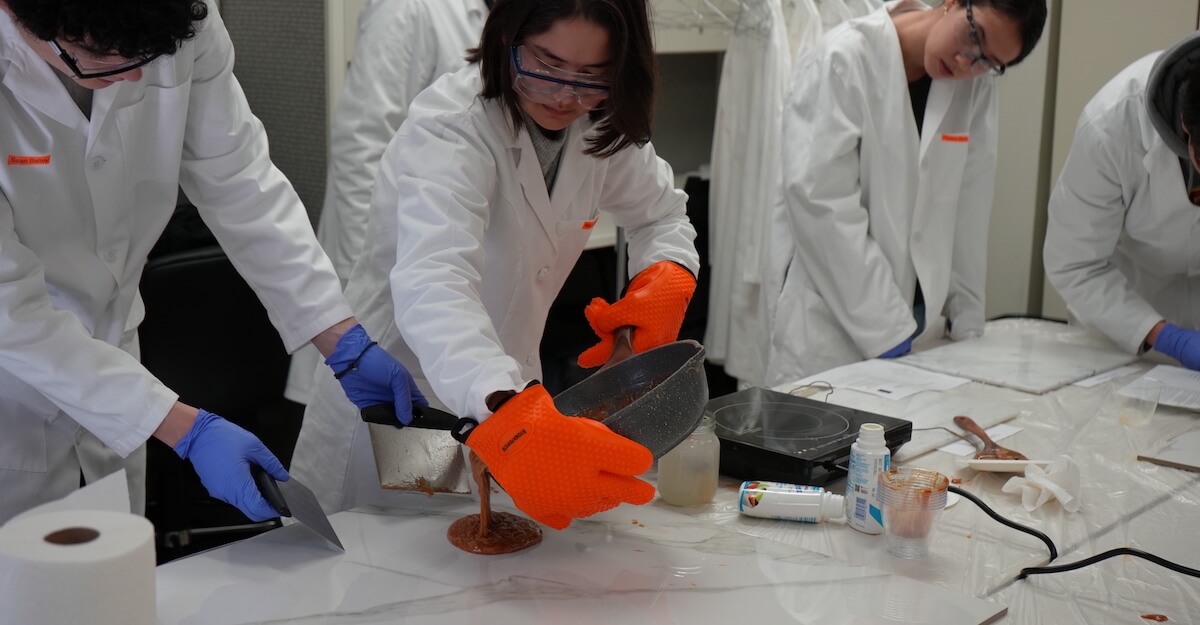
Chemical engineering students pour fudge onto the cooling surface. Image/William Wences.
Ben-Yoseph also challenges his students to think about their products from a consumer standpoint. Confectionery manufacturers must consider the public perception of ingredients such as artificial colorants and how natural alternatives may be more expensive to produce, less stable, and less vibrant – problems that engineers in the food industry need to overcome.
“Consumers want sustainable products and sustainable packaging. There’s so much work for a chemical engineer just thinking about developing reusable, recyclable, or upcycled packaging and reducing production energy and waste,” Ben-Yoseph said.
When piloting the course, Ben-Yoseph and his students needed to be creative in their improvised lab setup. But they soon discovered that you didn’t require elaborate equipment to create culinary magic – everything can be achieved in a home kitchen. A simple slab of marble from Home Depot served as a cooling surface for chocolate and candy, while the students used small portable burners to cook.
Naturally, Ben-Yoseph and his class were on hand to taste-test the end products (for purely academic purposes, of course).

A successful experiment. Students create a range of delicious candies as part of the confectionery manufacturing course. Image/William Wences.
“It’s part of the job, you know. Somebody has to do it.” Ben-Yoseph laughed. “They need to make sure the taste and texture are right and to write their lab report, describing what they did and anything that went wrong. To evaluate the quality of the product.”
Ben-Yoseph said that chemical engineering students are at a unique advantage for in-demand careers in the food industry, with their theoretical background and knowledge of fields like AI and data science, which can transform the industry.
“When you talk about data science, the food industry is a little bit behind compared to other industries, like petroleum and pharmaceuticals. But this is an opportunity for chemical engineering graduates to come and apply their knowledge, contribute, and make a difference,” Ben-Yoseph said.
CHE 499: Confectionery Manufacturing will take place once again during Spring 2025.
Published on October 29th, 2024
Last updated on October 30th, 2024


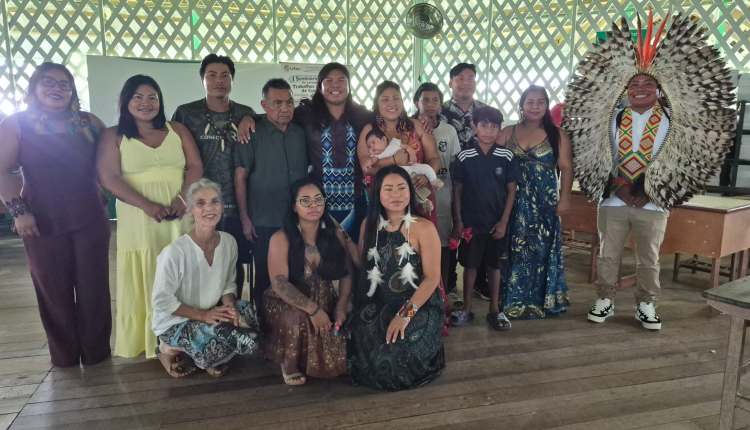
O curso de Licenciatura Indígena, do campus Floresta da Ufac, realizou o 1º Seminário Acadêmico de Apresentação de Trabalhos de Conclusão de Curso (TCCs). O evento possibilitou a defesa de 16 trabalhos nas aldeias Barão, da terra indígena Puyanawa, em Mâncio Lima (AC), e Morada Nova, na terra indígena Katukina/Kaxinawá, em Feijó (AC). As atividades ocorreram entre 25 de setembro e 2 de outubro, envolvendo estudantes, professores, egressos do curso, pós-graduandos e as comunidades locais.
Os TCCs defendidos nas aldeias são de autoria de discentes que ingressaram na Ufac em 2023 e deverão colar grau no início de 2027. Os temas das pesquisas contemplaram variados aspectos da vida indígena, abrangendo história, biografia, mitologia, organização política, território, medicina tradicional, grafismos, gênero, terminologias linguísticas, educação especial, atividade cinegética e rituais tradicionais.
A viabilização das defesas nas aldeias ocorreu pela primeira vez em 18 anos de existência da graduação e está de acordo com a pedagogia da alternância, pela qual parte da carga horária do curso é realizada nas comunidades indígenas dos alunos, por meio de pesquisa e extensão. Os recursos para realização do evento foram provenientes de projeto de extensão com o mesmo nome do seminário.
As bancas de avaliação foram compostas por docentes do curso, egressos de outras turmas da Licenciatura Indígena e egressos indígenas de outros cursos da Ufac, inclusive da pós-graduação. Também compuseram algumas bancas pessoas reconhecidas por suas comunidades com “notório saber”, expediente previsto no regulamento de TCC do curso. Além de familiares dos estudantes e moradores das aldeias, indígenas de outras etnias estiverem presentes no seminário.
Organização
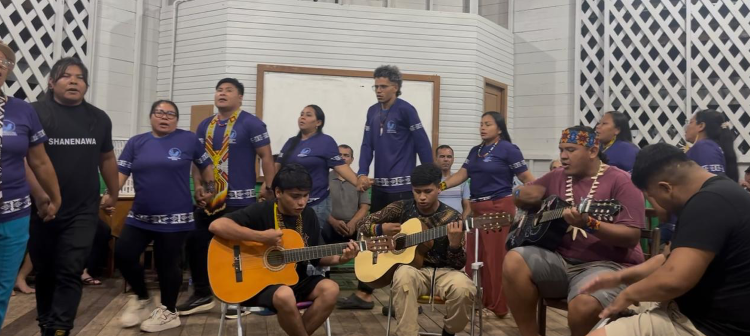
A atividade no município de Mâncio Lima, que é vizinho ao campus Floresta, em Cruzeiro do Sul (AC), ocorreu num só dia, em 25 de setembro, com a defesa de dois TCCs. Já para o evento em Feijó foi necessário um deslocamento de ônibus, com duração de quase seis horas, em 30 de setembro, até o porto da cidade. E, à noite, uma embarcação levou cerca de 20 pessoas até a aldeia Morada Nova, onde houve uma recepção musical para o grupo. Na manhã do dia seguinte começaram as defesas, que prosseguiram até 2 de outubro.

ACRE
Ufac retoma Semana Acadêmica de Física após 6 anos, com planetário — Universidade Federal do Acre

A Universidade Federal do Acre (Ufac) realiza até esta sexta-feira, 23, a 3ª Semana Acadêmica de Física, no prédio do curso, no campus-sede, em Rio Branco. Iniciado nessa segunda-feira, 19, o evento retoma as atividades presenciais da semana acadêmica após seis anos de interrupção, causada pela pandemia de covid-19 e pela reorganização do calendário universitário.
A programação tem atrações abertas ao público, como oficinas de astronomia, observação do Sol com telescópio e um planetário móvel, instalado no segundo andar do prédio de Física. Há ainda palestras, apresentações de pesquisas de estudantes e minicursos práticos de elaboração de material didático, física experimental, criação de mapas, processamento de dados e sismologia.
Organizada em três eixos temáticos, a semana é voltada aos estudantes da licenciatura e do bacharelado em Física e do curso de Física Aplicada às Ciências da Terra. Os primeiros dias tiveram debates e palestras sobre o ensino de física e a formação docente. Em seguida, a programação trata de física pura, como mecânica quântica, relatividade e física de partículas, e termina com geofísica, astronomia e fenômenos naturais.
Segundo o coordenador do evento e professor do curso de Física, Victor Carreira, a retomada presencial reaproxima o curso da comunidade externa e das escolas de educação básica. Turmas do Instituto Federal do Acre visitaram a semana, e escolas da rede pública foram convidadas.
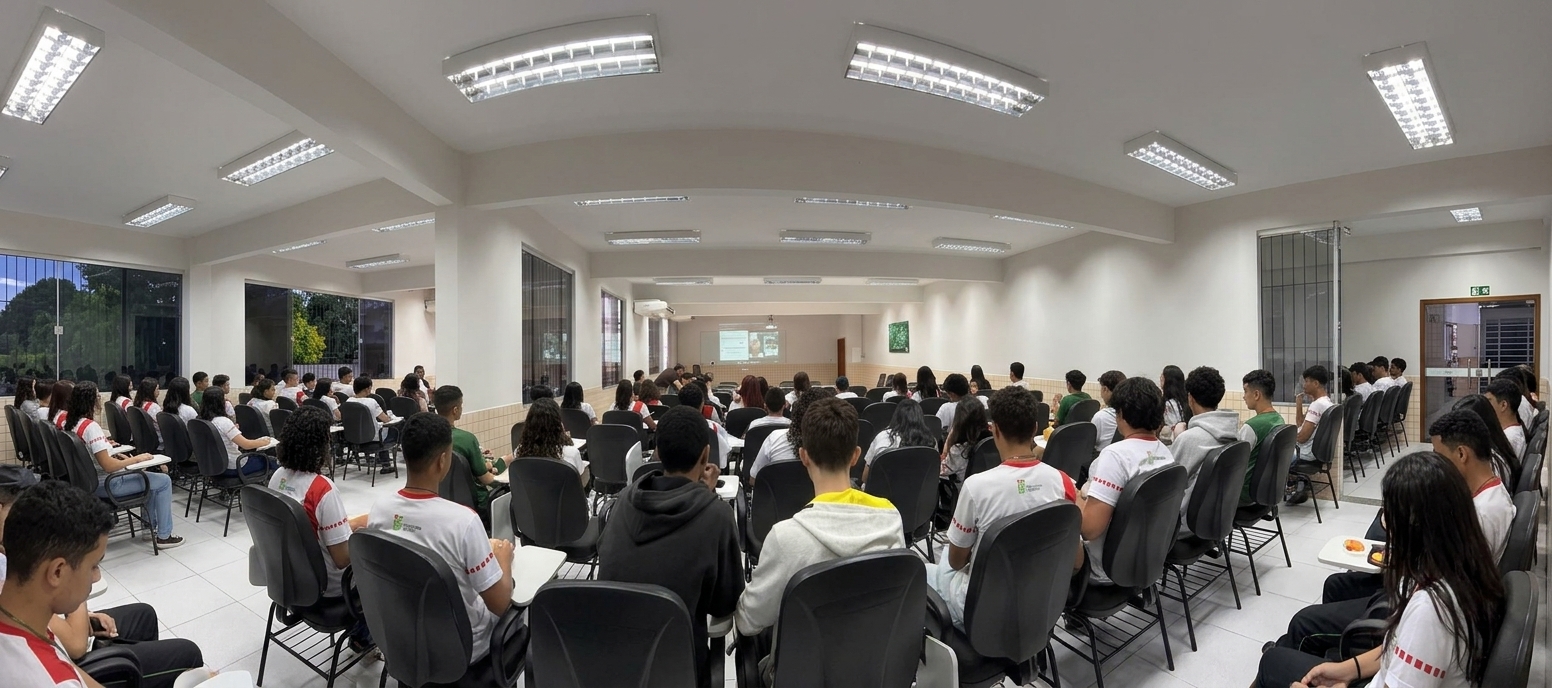
“A semana acadêmica é muito importante tanto para os nossos alunos quanto para a comunidade em geral de Rio Branco”, disse Carreira. “É uma oportunidade para jovens do ensino médio conhecerem a universidade e vivenciarem a ciência na prática.”
A cerimônia de encerramento ocorre nesta sexta-feira, 23, à tarde.
(Fhagner Soares, estagiário Ascom/Ufac)


 ACRE6 dias ago
Ufac abre 1ª Conferência Internacional Amazônia Nexus — Universidade Federal do Acre
 ACRE5 dias ago
Pavic-Lab da Ufac apresenta seis trabalhos em congresso internacional de computação — Universidade Federal do Acre
 ACRE4 dias ago
Ufac retoma Semana Acadêmica de Física após 6 anos, com planetário — Universidade Federal do Acre
 ACRE2 dias ago
Licenciatura Indígena realiza defesa de TCCs em aldeias no Juruá — Universidade Federal do Acre


Warning: Undefined variable $user_ID in /home/u824415267/domains/acre.com.br/public_html/wp-content/themes/zox-news/comments.php on line 48
You must be logged in to post a comment Login