
ACRE
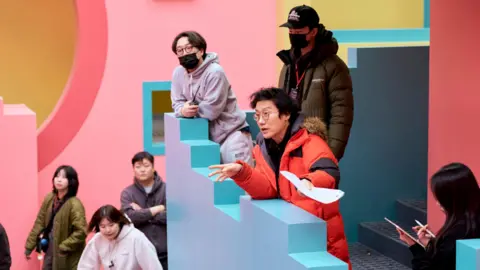
BBC on set with show’s director

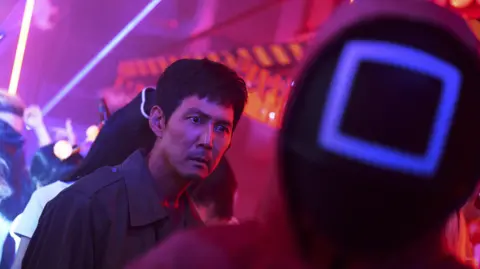 Netflix
When I ask the creator of the hit Korean drama Squid Game about reports that he was so stressed while shooting the first series he lost six teeth, he quickly corrects me. “It was eight or nine,” he laughs.
Hwang Dong-hyuk is speaking to me on set as he films the second series of his dystopian Netflix thriller, which sees hundreds of debt-laden contestants fight it out for a whopping cash prize, by playing a string of life-or-death children’s games.
But another series was not always on the cards. At one point, he swore against making one.
Given the stress it has caused him, I ask what changed his mind.
“Money,” he answers, without hesitation.
“Even though the first series was such a huge global success, honestly I didn’t make much,” he tells me. “So doing the second series will help compensate me for the success of the first one too.”
“And I didn’t fully finish the story,” he adds.
The first series was Netflix’s most successful show to date, thrusting South Korea and its home-grown television dramas into the spotlight. Its dark commentary on wealth inequality touched a nerve with audiences around the globe.
But having killed off almost every character, Hwang has had to start from scratch, with a new cast and set of games, and this time audience expectations are sky high.
“The stress I feel now is much greater,” he says.
Three years after the first series aired, Hwang is even more pessimistic about the state of the world.
He points to current wars, climate change and a widening global wealth gap. Conflicts are no longer confined between the rich and poor, they are playing out intensely between different generations, genders and political camps, he says.
“New lines are being drawn. We’re in an era of us vs them. Who’s right and who’s wrong?”

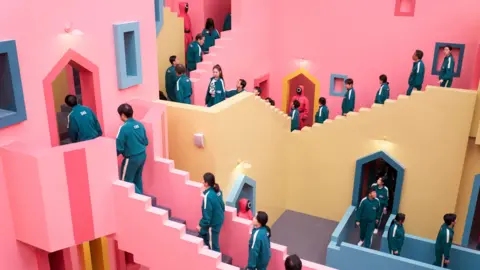 Netflix
As I toured the show’s playful set, with its distinctive brightly-coloured staircase, I picked up a few clues as to how the director’s despair will be reflected this time around.
In this series, the previous winner, Gi-hun, re-enters the game on a quest to bring it down and save the latest round of contestants.
According to Lee Jung-jae, who plays the leading character, he is “more desperate and determined” than before.
The floor of the dormitory, where the contestants sleep at night, has been divided in two.
One half is branded with a giant red neon X symbol, the other with a blue circle.
Now, after every game, the players must pick a side, depending on whether they want to end the contest early and survive, or keep playing, in the knowledge all but one of them will die. The majority decision rules.
This, I am told, will lead to more factionalism and fights.
It is part of director Hwang’s plan to expose the dangers of living in an increasingly tribal world. Forcing people to pick sides, he believes, is fuelling conflict.
For all those who were captivated by the shocking storytelling of Squid Game, there were others who found it gratuitously violent and difficult to watch.
But it is clear from talking to Hwang, that the violence is fully thought out. He is a man who thinks and cares deeply about the world and is motivated by a mounting unease.
“When making this series, I constantly asked myself ‘do we humans have what it takes to steer the world off this downhill path?’. Honestly, I don’t know,” he says.
While viewers of the second series might not get the answers to these big life questions, they can at least be comforted that some plot holes will be filled in – like why the game exists, and what is motivating the masked Front Man running it.
“People will see more of the Front Man’s past, his story and his emotions,” reveals the actor Lee Byung-hun, who plays the mysterious role.
“I don’t think this will make viewers warm to him, but it may help them better understand his choices.”
 Netflix
As one of South Korea’s most famous actors, Lee admits that having his face and eyes covered and his voice distorted throughout the first series, was “a little bit dissatisfying”.
This series he has relished having scenes without a mask, in which he can fully express himself – a chance he nearly did not get.
Hwang tried for 10 years to get Squid Game made, taking out large loans to support his family, before Netflix swooped in.
They paid him a modest upfront amount, leaving him unable to cash in on the whopping £650m it is estimated to have made the platform.
This explains the love-hate relationship South Korea’s film and television creators currently have with international streaming platforms.
Over the past few years, Netflix has stormed the Korean market with billions of dollars of investment, bringing the industry global recognition and love, but leaving creators feeling short-changed.
They accuse the platform of forcing them to relinquish their copyright when they sign contracts – and with it, their claim to profit.
This is a worldwide problem.
In the past, creators could rely on getting a cut of box office sales or TV re-runs, but this model has not been adopted by streaming giants.
The issue is compounded in South Korea, creators say, due to its outdated copyright law, which does not protect them.
This summer, actors, writers, directors and producers teamed up to form a collective, to fight the system together.
“In Korea, being a movie director is just a job title, it’s not a way to earn a living,” the vice-president of the Korean Film Directors Guild, Oh Ki-hwan, tells the audience at an event in Seoul.
Some of his director friends, he says, work part-time in warehouses and as taxi drivers.
 Getty Images
Park Hae-young is a writer at the event. When Netflix bought her show, ‘My Liberation Notes’, it became a global hit.
“I’ve been writing my whole life. So, to get global recognition when competing with creators from across the world, has been a joyful experience,” she tells me.
But Park says the current streaming model has left her reluctant to “pour her all” into her next series.
“Usually, I’ll spend four or five years making a drama in the belief that, if it’s successful, it could somewhat secure my future, that I’ll get my fair share of compensation. Without that, what’s the point of working so hard?”
She and other creators are pushing the South Korean government to change its copyright law to force production companies to share their profits.
In a statement, the South Korean government told the BBC that while it recognised the compensation system needed to change, it was up to the industry to resolve the issue. A spokesperson for Netflix told us it offers “competitive” compensation, and guarantees creators “solid compensation, regardless of the success or failure of their shows”.
Squid Game’s Hwang hopes his candor over his own pay struggles will initiate that change.
He has certainly sparked the fair pay conversation, and this second series will surely give the industry another bump.
But when we catch up after filming has wrapped, he tells me his teeth are aching again.
“I haven’t seen my dentist yet, but I’ll probably have to pull out a few more very soon.”
The second series of Squid Game will be released on Netflix on 26 December 2024.


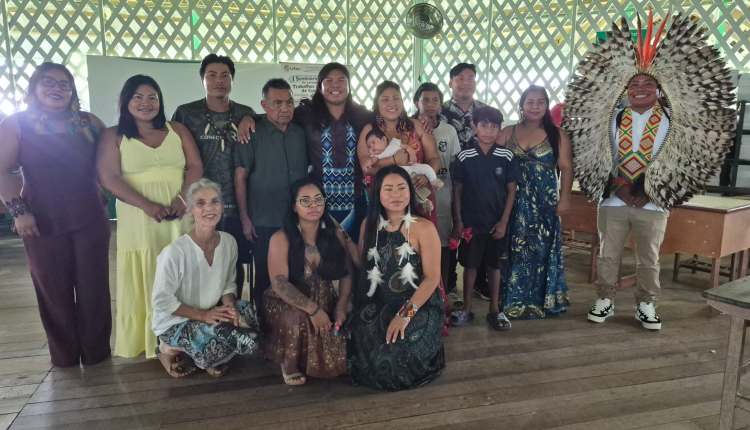
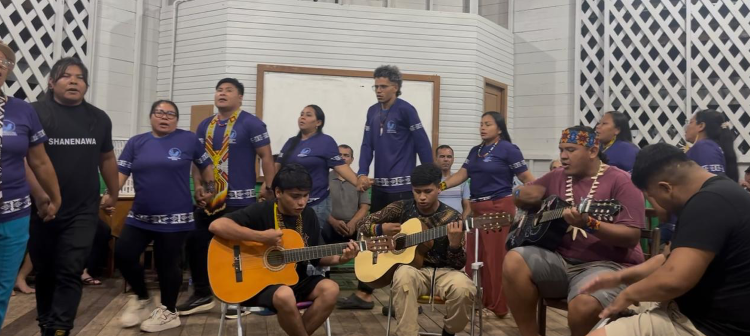
O curso de Licenciatura Indígena, do campus Floresta da Ufac, realizou o 1º Seminário Acadêmico de Apresentação de Trabalhos de Conclusão de Curso (TCCs). O evento possibilitou a defesa de 16 trabalhos nas aldeias Barão, da terra indígena Puyanawa, em Mâncio Lima (AC), e Morada Nova, na terra indígena Katukina/Kaxinawá, em Feijó (AC). As atividades ocorreram entre 25 de setembro e 2 de outubro, envolvendo estudantes, professores, egressos do curso, pós-graduandos e as comunidades locais.
Os TCCs defendidos nas aldeias são de autoria de discentes que ingressaram na Ufac em 2023 e deverão colar grau no início de 2027. Os temas das pesquisas contemplaram variados aspectos da vida indígena, abrangendo história, biografia, mitologia, organização política, território, medicina tradicional, grafismos, gênero, terminologias linguísticas, educação especial, atividade cinegética e rituais tradicionais.
A viabilização das defesas nas aldeias ocorreu pela primeira vez em 18 anos de existência da graduação e está de acordo com a pedagogia da alternância, pela qual parte da carga horária do curso é realizada nas comunidades indígenas dos alunos, por meio de pesquisa e extensão. Os recursos para realização do evento foram provenientes de projeto de extensão com o mesmo nome do seminário.
As bancas de avaliação foram compostas por docentes do curso, egressos de outras turmas da Licenciatura Indígena e egressos indígenas de outros cursos da Ufac, inclusive da pós-graduação. Também compuseram algumas bancas pessoas reconhecidas por suas comunidades com “notório saber”, expediente previsto no regulamento de TCC do curso. Além de familiares dos estudantes e moradores das aldeias, indígenas de outras etnias estiverem presentes no seminário.
Organização
A atividade no município de Mâncio Lima, que é vizinho ao campus Floresta, em Cruzeiro do Sul (AC), ocorreu num só dia, em 25 de setembro, com a defesa de dois TCCs. Já para o evento em Feijó foi necessário um deslocamento de ônibus, com duração de quase seis horas, em 30 de setembro, até o porto da cidade. E, à noite, uma embarcação levou cerca de 20 pessoas até a aldeia Morada Nova, onde houve uma recepção musical para o grupo. Na manhã do dia seguinte começaram as defesas, que prosseguiram até 2 de outubro.

ACRE
Ufac retoma Semana Acadêmica de Física após 6 anos, com planetário — Universidade Federal do Acre

A Universidade Federal do Acre (Ufac) realiza até esta sexta-feira, 23, a 3ª Semana Acadêmica de Física, no prédio do curso, no campus-sede, em Rio Branco. Iniciado nessa segunda-feira, 19, o evento retoma as atividades presenciais da semana acadêmica após seis anos de interrupção, causada pela pandemia de covid-19 e pela reorganização do calendário universitário.
A programação tem atrações abertas ao público, como oficinas de astronomia, observação do Sol com telescópio e um planetário móvel, instalado no segundo andar do prédio de Física. Há ainda palestras, apresentações de pesquisas de estudantes e minicursos práticos de elaboração de material didático, física experimental, criação de mapas, processamento de dados e sismologia.
Organizada em três eixos temáticos, a semana é voltada aos estudantes da licenciatura e do bacharelado em Física e do curso de Física Aplicada às Ciências da Terra. Os primeiros dias tiveram debates e palestras sobre o ensino de física e a formação docente. Em seguida, a programação trata de física pura, como mecânica quântica, relatividade e física de partículas, e termina com geofísica, astronomia e fenômenos naturais.
Segundo o coordenador do evento e professor do curso de Física, Victor Carreira, a retomada presencial reaproxima o curso da comunidade externa e das escolas de educação básica. Turmas do Instituto Federal do Acre visitaram a semana, e escolas da rede pública foram convidadas.
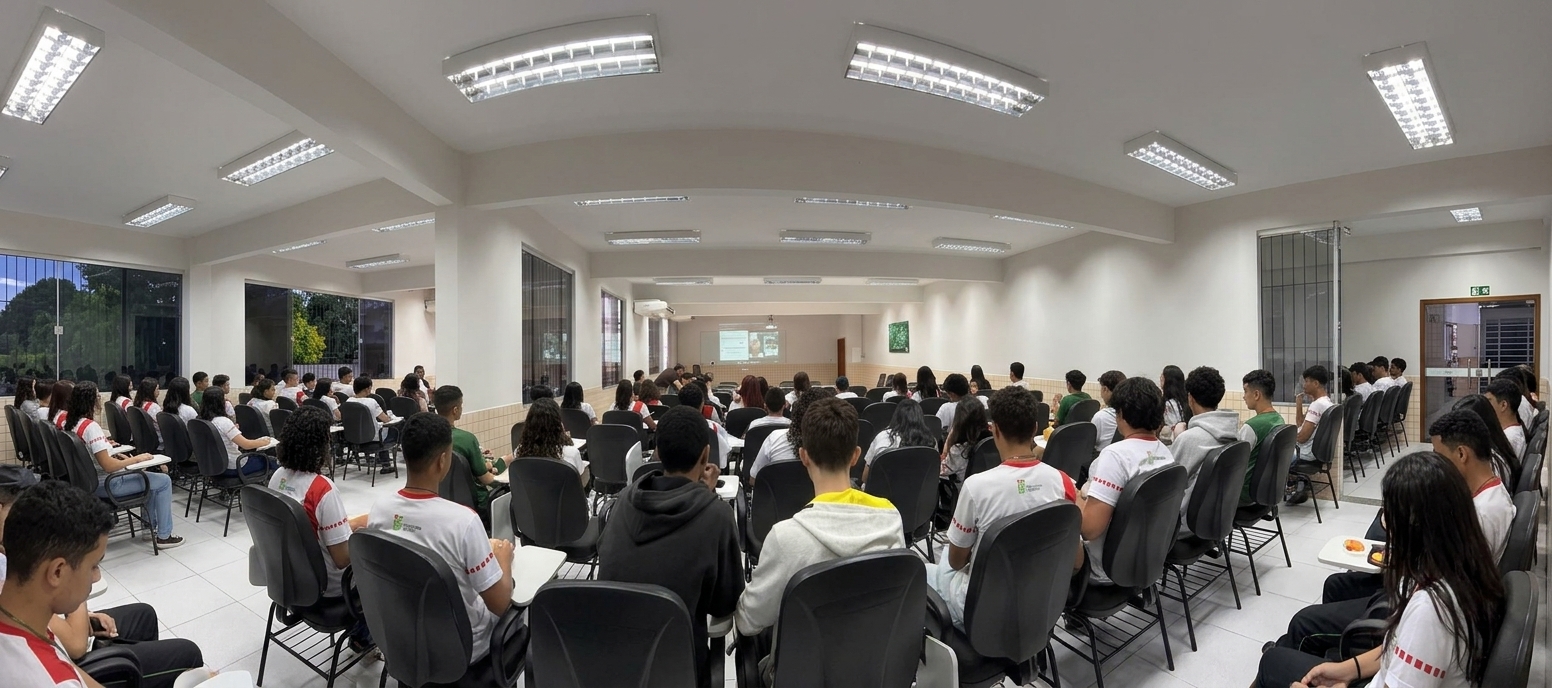
“A semana acadêmica é muito importante tanto para os nossos alunos quanto para a comunidade em geral de Rio Branco”, disse Carreira. “É uma oportunidade para jovens do ensino médio conhecerem a universidade e vivenciarem a ciência na prática.”
A cerimônia de encerramento ocorre nesta sexta-feira, 23, à tarde.
(Fhagner Soares, estagiário Ascom/Ufac)
Warning: Undefined array key 0 in /home/u824415267/domains/acre.com.br/public_html/wp-content/themes/zox-news/single.php on line 591
Warning: Attempt to read property "cat_name" on null in /home/u824415267/domains/acre.com.br/public_html/wp-content/themes/zox-news/single.php on line 591
7 dias agoEstudantes de Jornalismo da Ufac ensinam audiovisual a moradores da Reserva Cazumbá-Iracema — Universidade Federal do Acre


 ACRE7 dias ago
Ufac promove ação de prevenção à saúde da mulher durante o Outubro Rosa — Universidade Federal do Acre
 ACRE5 dias ago
Ufac abre 1ª Conferência Internacional Amazônia Nexus — Universidade Federal do Acre
 ACRE4 dias ago
Pavic-Lab da Ufac apresenta seis trabalhos em congresso internacional de computação — Universidade Federal do Acre


Warning: Undefined variable $user_ID in /home/u824415267/domains/acre.com.br/public_html/wp-content/themes/zox-news/comments.php on line 48
You must be logged in to post a comment Login