
ACRE
Every Episode of Smallville Where Clark Gets a New Power

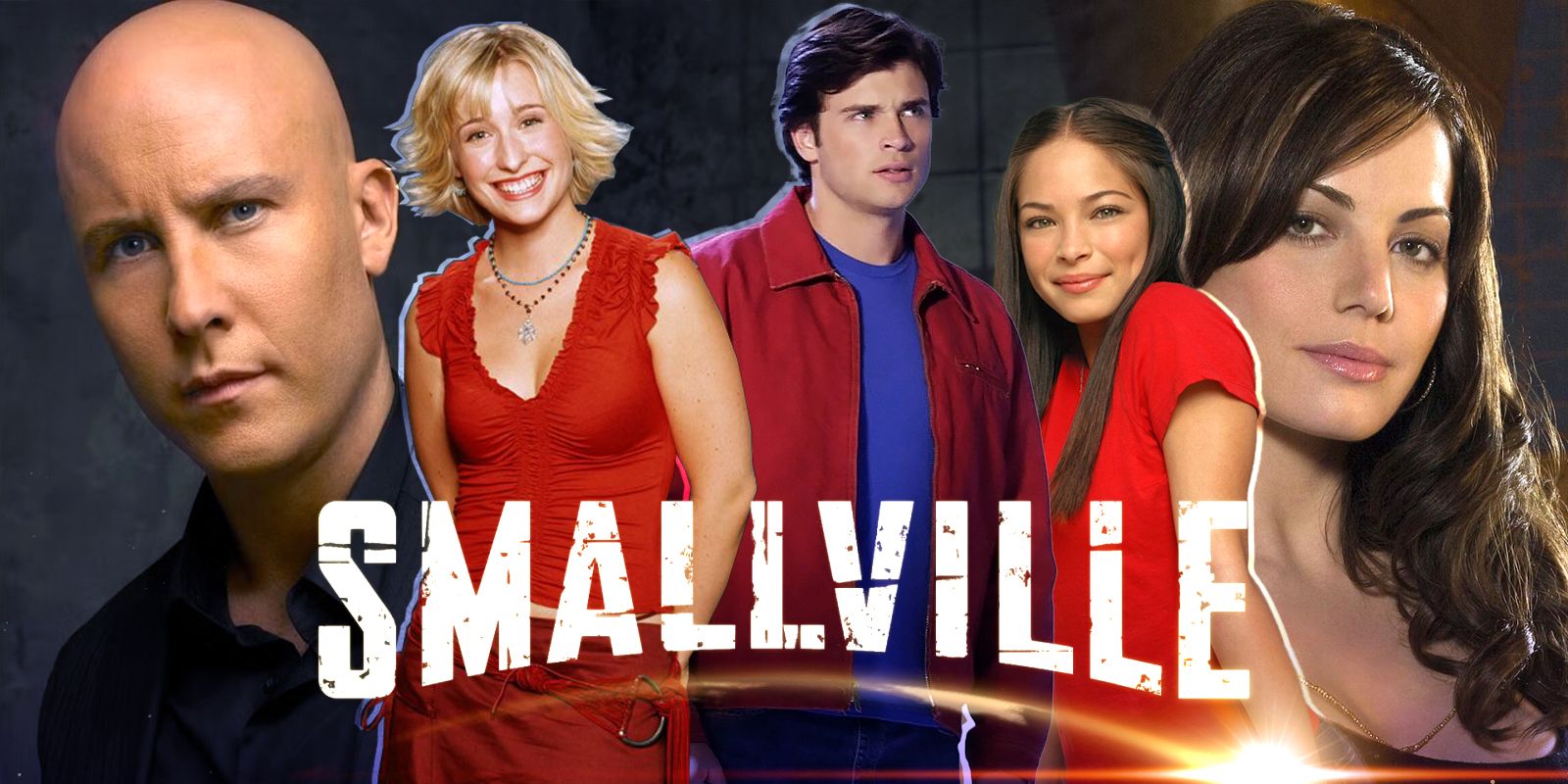
Smallville was the superhero show that started it all, chronicling the life of a young Clark Kent before he became the legendary Superman. The show ran for ten years and followed Clark from his first year in high school and into adulthood. Clark struggles to understand who he is and where he came from as his abilities grow. He deals with first love, complicated friendships and keeping his secret.
When Smallville begins, Clark Kent is a teenager who is only just learning of his alien heritage. He doesn’t initially have all his powers in the pilot episode, infamously only gaining the ability to fly in the finale. Clark’s powers tend to manifest when he needs them most, sometimes triggered by other symptoms—like a sneeze.
9
Clark Kent Started With a Few Powers in the First Episode
“How About This? Is This Normal?”
The pilot episode of Smallville opens with the meteor show that struck Smallville, Kansas, in 1989 before jumping to the present day—or 2001, when the show premiered. Clark Kent is starting high school and desperately trying to understand why he’s so different. When his father tells him he can’t keep his new truck from Lex, it starts an argument that ends with Jonathan showing Clark his spaceship and telling him about the day they found him. The pilot also presented the effect meteor rocks have on humans, introducing the meteor-infected, starting with a guy who gained electrokinesis—the ability to control electricity.
Season | Episode | Title | Air Date |
|---|---|---|---|
1 | 1 | “Pilot” | October 16, 2001 |
The first ability Clark demonstrates is superspeed when he misses the school bus and zips through a cornfield faster than a speeding bullet to get to school on time. His invulnerability is shown in the iconic scene where Clark sticks his arm into a wood chipper during an argument with his dad. When Clark faces off with Jeremy—the meteor-infected guy out for revenge—the audience sees his superstrength in action. Clark also begins the show with accelerated healing, solar radiation absorption, enhanced mental capacity, superhuman stamina, and dexterity—but these powers aren’t as obviously displayed, revealing themselves more subtly as Smallville progresses.
8
X-Ray Vision Manifests in the Fourth Episode
“Sometimes I See Through Things. Other Times It’s Like an X-Ray.”
In the fourth episode of Smallville, titled “X-Ray,” a suspicious bank robbery where Clark is thrown through a window triggers his X-ray vision. A meteor-infected girl, Tina, possesses the ability to shapeshift into other people. She uses her power to turn into Lex Luthor and attempt to withdraw a large amount of money, but when her signature doesn’t match their records, she switches to robbing the bank. Throughout the episode, she shifts into several different people, including Whitney, Lana, and Clark.
Season | Episode | Title | Air Date |
|---|---|---|---|
1 | 4 | “X-Ray” | November 6, 2001 |
Clark’s newly discovered X-ray vision is integral to stopping Tina and saving the day. Tina has a unique bone structure that allows her to shapeshift, and Clark can identify her no matter who she looks like on the outside. At first, Clark had no control over when his X-ray vision activated, leading him to peep, accidentally, into the girls’ locker room. As he learns to control his new power, he can use it to find and catch Tina before she can steal Lana’s life. Clark’s X-ray vision also seems to possess telescopic qualities as it evolves to where he can zoom in on small details, locating people and reading things miles away.
Related
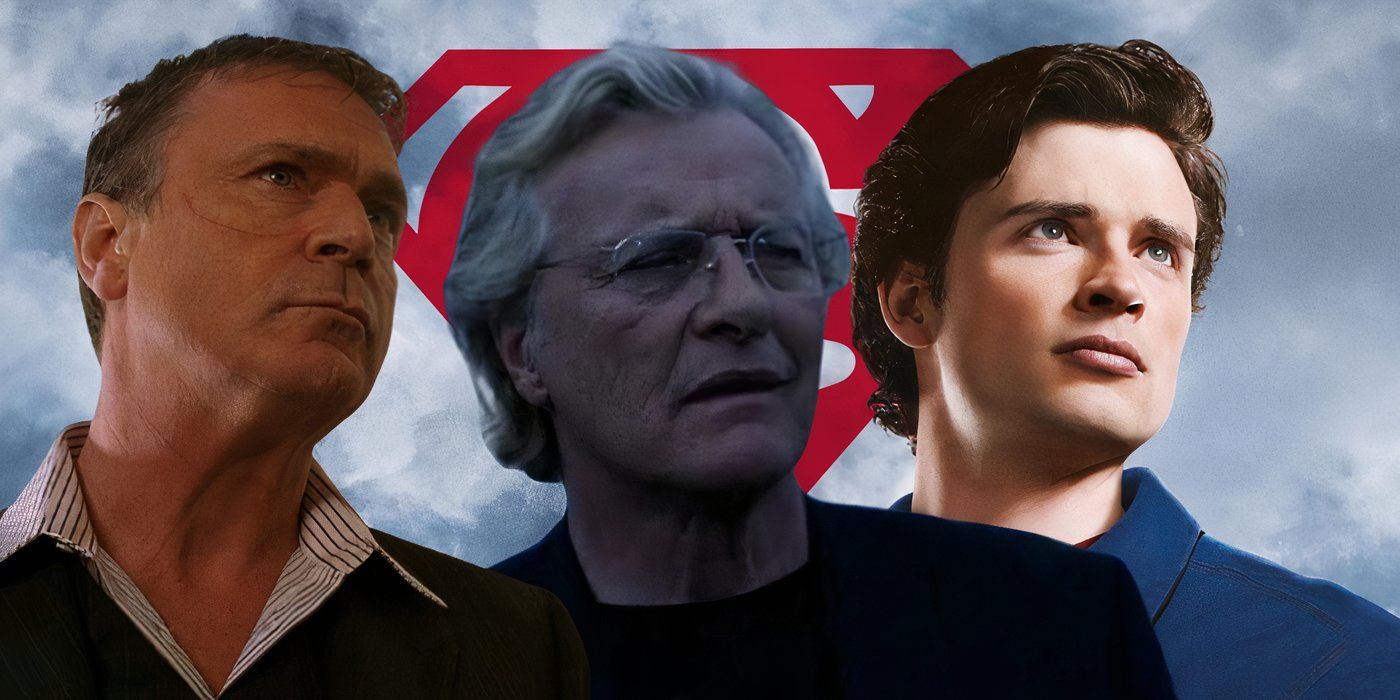
Why Morgan Edge Was Recast in Smallville
Smallville Season 3 booked Rutger Hauer as a recurring villain. The only problem was that he couldn’t commit to all the episodes he should’ve been in.
7
Clark Gets Heat Vision Early in Season Two
“I Started to Feel Hot. And My Eyes Started to Burn. All of a Sudden, the Spot I Was Staring at Burst Into Flames.”

Season two’s “Heat” has a double meaning in the episode, with Clark developing his heat vision and Smallville getting hit by a heat wave. The episode centers around an attractive new substitute teacher, who also happens to be Lex Luthor’s brand-new fiancé, Desirée. Desirée is a meteor-infected black widow who likes to marry rich men and uses the seductive power of her kiss to get one of her students to murder her husband. Unluckily for her, she chooses Clark—who is immune to most meteor powers.
Season | Episode | Title | Air Date |
|---|---|---|---|
2 | 2 | “Heat” | October 1, 2002 |
While Clark’s heat vision doesn’t play a particularly important role in stopping Desiree, it initially manifests because of her. Clark finds himself very strongly attracted to the new teacher, and with his heat vision triggered by sexual desire, he accidentally starts a fire in class. It leads to a hilariously awkward scene between Clark and Jonathan when they work together to figure out his new power. Clark quickly learns to control his heat vision, practicing by lighting candles and, in the final showdown of the episode, vaporizing a bullet in midair.
6
The First Super Leap Is to Save His Mom
“Clark, That Has to Be at Least 300 Feet. You’ll Never Make It.”
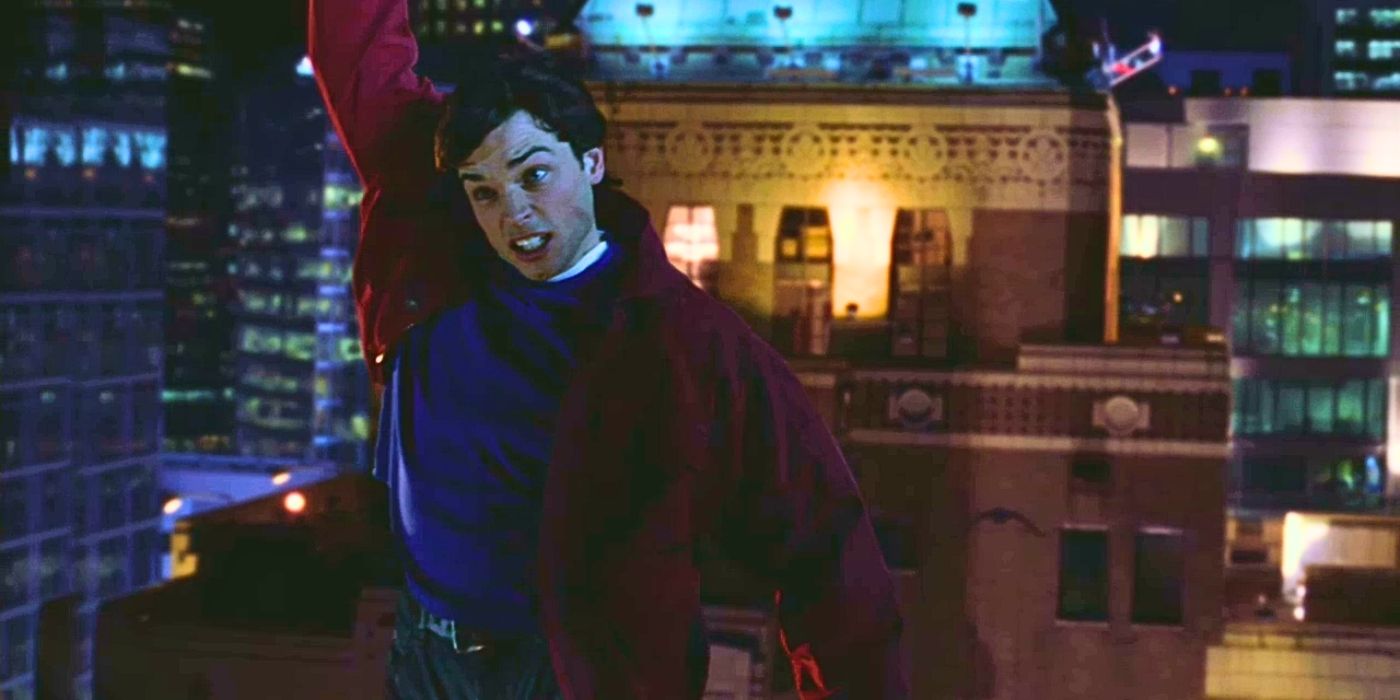
When Martha Kent and Lionel Luthor are taken hostage inside the Luthorcorp building in “Insurgence,” Clark and Jonathan head to Metropolis. The thieves, hired by Lex to plant surveillance in Lionel’s office, hold Martha and Lionel at gunpoint until they can break into his vault, despite Lex’s orders to abort the mission. Determined to help save his mother and hindered by Metropolis police, Clark needs to find a way into the building.
Season | Episode | Title | Air Date |
|---|---|---|---|
2 | 12 | “Insurgence” | January 21, 2003 |
Clark Kent leaps his first tall building in a single bound to help save his mother. During the police standoff, Clark scouts the Daily Planet and decides to try jumping to the Luthorcorp building from the roof of the famed news outlet headquarters. Clark psychs himself up for the super leap and gets a running start before jumping through a Luthorcorp window. The iconic Superman ability uses a combination of two powers—his superspeed and superstrength—to make the 100-yard bound.
5
Clark Gets His Super Hearing When He’s Blinded in Season Three
“It’s Like Someone Turned On a Giant Stereo Full Blast. Suddenly All the Sounds Were Magnified.”

In Smallville season three’s “Whisper,” Clark is blinded in a jewelry store robbery. When Clark tries to use his heat vision to incapacitate one of the robbers, he inadvertently hits a piece of kryptonite, blinding himself. One of the robbers is arrested while his son gets away. Desperate to get his father back, the younger thief kidnaps Pete to blackmail Judge Ross into releasing his father.
Season | Episode | Title | Air Date |
|---|---|---|---|
3 | 10 | “Whisper” | January 21, 2004 |
After losing his sight, Clark’s hearing shifts into overdrive, triggering his latent Superman hearing ability. Clark struggles to control his new power when he desperately needs it to save Pete. Jonathan and Martha help Clark learn to focus on his super hearing to find the sound he needs to locate his kidnapped best friend. His super hearing plays an important role in the episode, and Clark learns the value of using all his senses to help people.

Related
1 of Smallville’s Best Characters Nearly Had a Prequel Series
Smallville fans may surprised to learn that Superman’s love interest, Lois Lane, came close to getting her own spin-off show, not once, but twice.
4
When Clark Gets Sick, His Sneezes Reveal His Super Breath
“Now Huff Puff and Blow That Door Down.”
Smallville season six introduces Clark’s enhanced lung capacity when he gets sick. After the riots at the end of season five, Clark works overtime to clean up Metropolis. When he sneezes for the first time, he blows his barn door seven miles across Smallville. It nearly lands on Lois as she’s out for a jog. Clark’s cold means his powers aren’t at a hundred percent, and it causes destructive sneezes that he can’t control. He plans on resting until the worst of it is over, but when Lex gets kidnapped because of his possession by Zod, Lionel asks him to help find Lex.
Season | Episode | Title | Air Date |
|---|---|---|---|
6 | 2 | “Sneeze” | October 5, 2006 |
Uncovered, Clark’s sneeze was destructive. When he could partially cover his mouth, he still sent a gust of wind through the Daily Planet bullpen with papers flying everywhere. Clark manages to cover his mouth for all future sneezes, but with his abilities at less than full power, Chloe proposes he sneezes to take out a wall that’s hiding important information they need to find Lex. Unable to sneeze on command, Chloe suggests it’s his breath that’s super, not his sneezes, and she tells him to blow the wall down. His super breath is not one of his more commonly used powers, but it certainly comes in handy in “Sneeze.”
3
Arctic Breath Makes Its Debut in Season Nine
“But First, Let’s Give the People of Seattle a Little Surprise.”
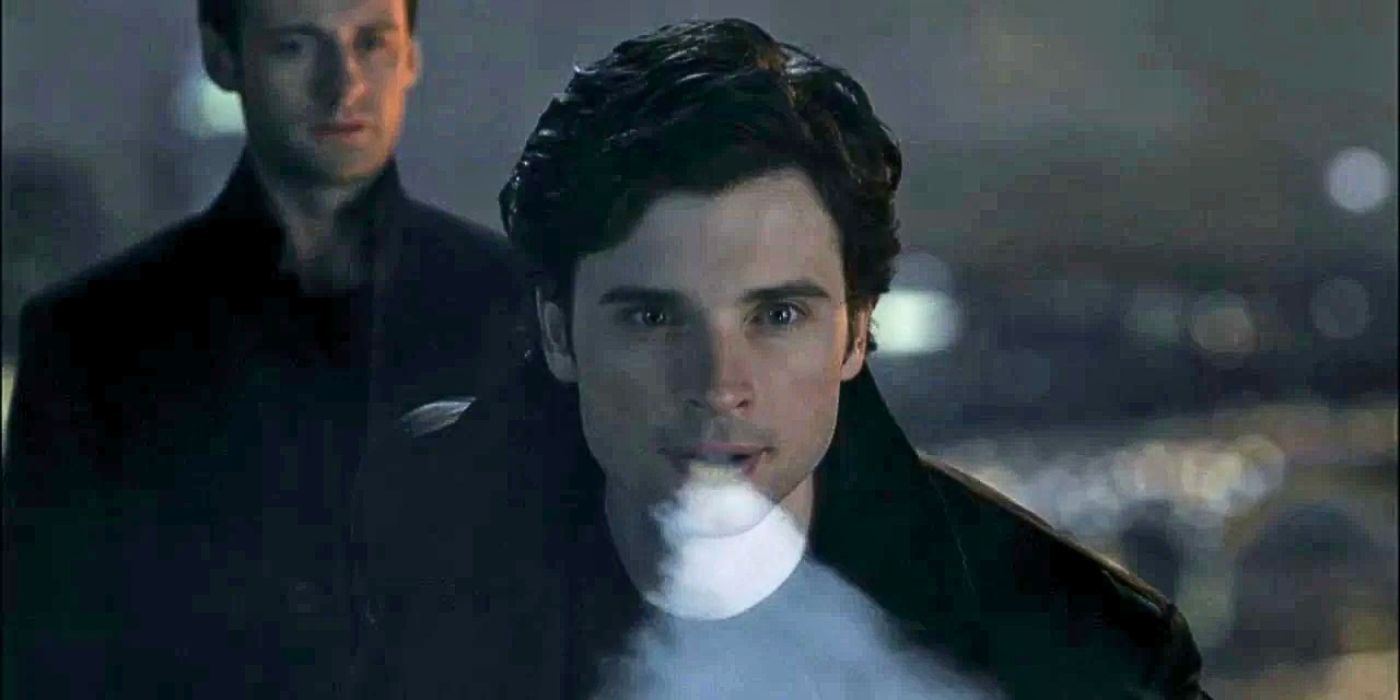
Between seasons eight and nine of Smallville, Clark feels disconnected from humanity after Lois’s disappearance. When she returns, so does he, and he has a few new tricks up his sleeve. In the third episode of season nine, Clark juggles being a reporter with Lois and being The Blur. When they hear a police call about a high-speed chase, Clark debuts one of his new skills: arctic breath. He blows cold air to chill Lois’s coffee down to distract her while he runs off to take care of the motorcyclist police are chasing—who turns out to be none other than Oliver Queen.
Season | Episode | Title | Air Date |
|---|---|---|---|
9 | 3 | “Rabid” | October 9, 2009 |
Clark’s arctic breath is an expansion of his super breath. He presumably picked it up from his training with Jor-El at the fortress. While the new power is first seen in “Rabid,” it’s more notably used in the episode “Upgrade.” When Clark gets overtaken by a cloud of red kryptonite dust, he befriends Zod, and they go on an impromptu trip to Seattle. There, Clark and Zod bond atop the Space Needle, and Clark uses his arctic breath to cause a snowstorm. Later in the episode, Zod and Clark use the ability to encase Corben in ice.
2
Clark Uses Microvision for the First Time in Season Ten
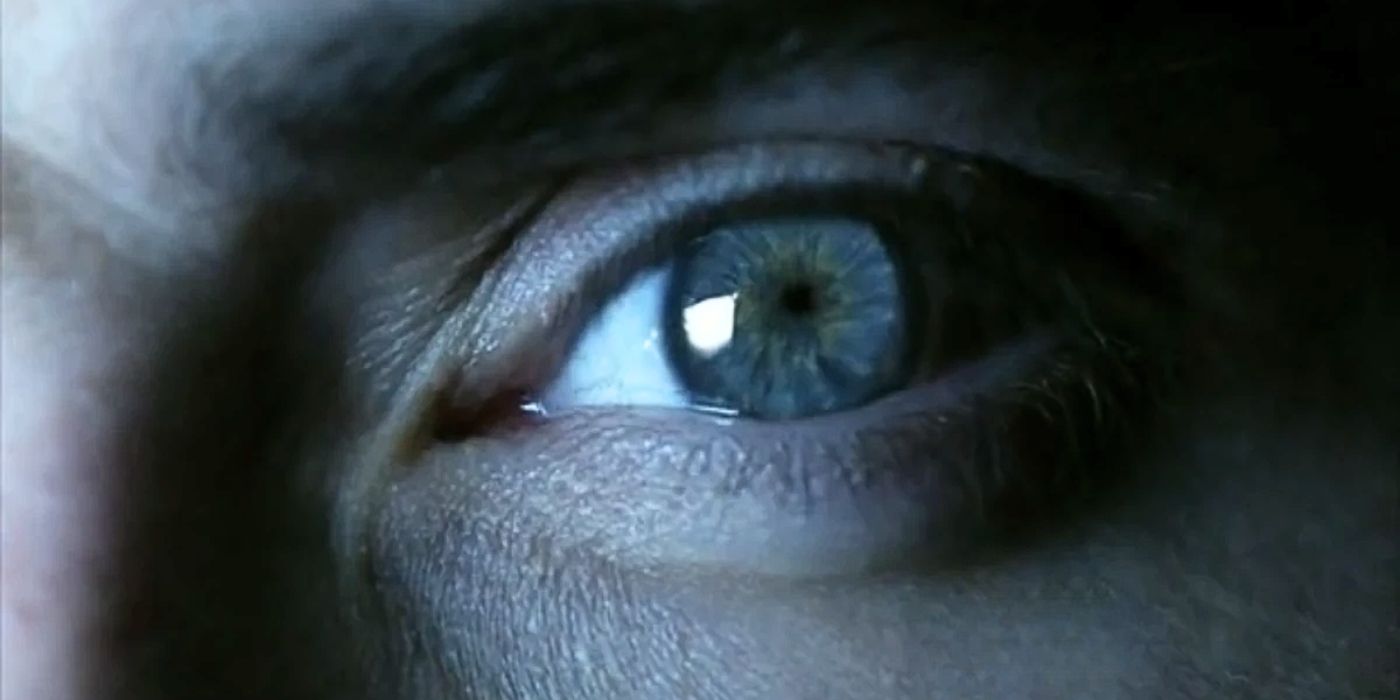
While Clark has often used his X-ray vision to spot details unseen by the naked eye, in season ten of Smallville, Clark expands the ability to include microscopic vision. When Clark investigates several bodies found, Chloe and Oliver are mistaken for FBI agents and kidnapped. The murder victims turn out to be connected to Chloe’s abduction when they realize Desaad is converting people for Darkseid and killing those he cannot tempt to sin.
Season | Episode | Title | Air Date |
|---|---|---|---|
10 | 14 | “Masquerade” | February 18, 2011 |
During the investigation, Clark uses his microvision to spot microscopic dots of ink on one of the victims. This is the first time viewers see his supervision used to zoom in while not using his X-ray vision, making this a separate skill. Spotting the ink on the victim leads Clark to discover the coroner is covering for the killer and leading him to find Chloe before Desaad can kill her.
Related
How Old Was Tom Welling in Smallville? Every Major Character and Their Actor’s Age Throughout the Series
Smallville featured great characters from Clark Kent’s early years; most of them start as teens, but how old were the actors that played them?
1
Flying Marks the Evolution of Clark Kent Into Superman
“I Was Moving Toward the Truck, and It Felt Like I Was Willing Myself to Do It. It Felt Like I Was Flying.”
Smallville had a well-known mandate on the show, “No tights, no flights.” Clark gained new abilities all the time, but he could never fly. It was established as a mental block early on when he was taken over by Jor-El to become the cold and mission-oriented Kal-El in the season four premiere. Other Kryptonians had no trouble flying. This was problematic for Clark when pursuing Brainiac, as he couldn’t follow him and Kara into the sky in season seven. It wasn’t until the Smallville series finale that Clark learned to fly.
Season | Episode | Title | Air Date |
|---|---|---|---|
10 | 21 | “Finale” | May 13, 2011 |
Clark finally overcomes his mental roadblocks when fighting Darkseid. He is thrown through the air and begins to hover there. Clark realizes he’s unlocked his power of flight, and after ten years of challenges and Jor-El’s trials, he can fly. After going to the fortress to consult Jor-El, he dons his red and blue suit to save Lois and the world. Flying was the benchmark for Smallville, marking when Clark Kent truly became Superman. In the flash forward, the show ends with the iconic shot of Clark Kent ripping open his shirt to reveal the Superman suit beneath.

- Release Date
-
October 16, 2001
- Cast
-
Sam Jones III
, Annette O’Toole
, Jensen Ackles
, Eric Johnson
, Erica Durance
, Cassidy Freeman
, Michael Rosenbaum
, Laura Vandervoort
, John Schneider
, Kristin Kreuk
, Sam Witwer
, Aaron Ashmore
, Allison Mack
, John Glover
, Justin Hartley
, Tom Welling
, Callum Blue - Seasons
-
10
- Studio
-
- Characters By
-
Jerry Siegel, Joe Shuster
- Cinematographer
-
Glen Winter, Barry Donlevy
- Creator
-
Alfred Gough, Miles Millar
- Distributor
-
Warner Bros. Domestic Television Distribution
- Filming Locations
-
Vancouver British Columbia Canada
- Main Characters
-
Chloe Sullivan, Clark Kent / Superman, Martha Kent, Oliver Queen, Lionel Luthor, Lois Lane, Jonathan Kent, Lex Luthor, Lana Lang
- Production Company
-
Tollin/Robbins Productions, Warner Bros. Television, Millar Gough Ink, DC Comics
- Sfx Supervisor
-
Michael Walls
- Number of Episodes
-
217


O reitor da Ufac, Josimar Ferreira, entregou a bandeira institucional aos atletas que participarão dos Jogos Universitários Brasileiros (Jubs), que ocorrem de domingo, 23, a 5 de setembro, em Goiânia e Trindade (GO), com organização da Confederação Brasileira do Desporto Universitário. A entrega ocorreu nessa quinta-feira, 20, no hall da Reitoria, campus-sede.
“As oportunidades nascem a partir do momento em que dialogamos e temos compromisso. Quero transmitir a toda a equipe o nosso empenho de trabalhar o fortalecimento do esporte”, disse Josimar. “Eu estou neste momento como reitor por vocês, estudantes, e é com vocês que eu quero honrar esse compromisso todos os dias da minha vida, com o sentimento de união e diálogo.”

Também participaram do ato o pró-reitor de Extensão e Cultura, Marco Amaro; e o diretor de Arte, Cultura e Integração Comunitária, Givanildo Pereira Ortega.
(Fhagner Soares, estagiário Ascom/Ufac)

ACRE
Ufac retoma reuniões presenciais dos conselhos superiores após 6 anos — Universidade Federal do Acre


 ACRE7 dias ago
Podcast da Ufac entrevista novo reitor Josimar Ferreira — Universidade Federal do Acre
 ACRE4 dias ago
Ufac retoma reuniões presenciais dos conselhos superiores após 6 anos — Universidade Federal do Acre
 Economia e Negócios4 dias ago
Estatística aplicada ao esporte: o que os números realmente medem

 ACRE3 dias ago
Participe da Autoavaliação do Curso de ciências contábeis — Universidade Federal do Acre


Warning: Undefined variable $user_ID in /home/u824415267/domains/acre.com.br/public_html/wp-content/themes/zox-news/comments.php on line 48
You must be logged in to post a comment Login