
ACRE
Why the Menendez Brothers Abuse Allegations are Resurfacing

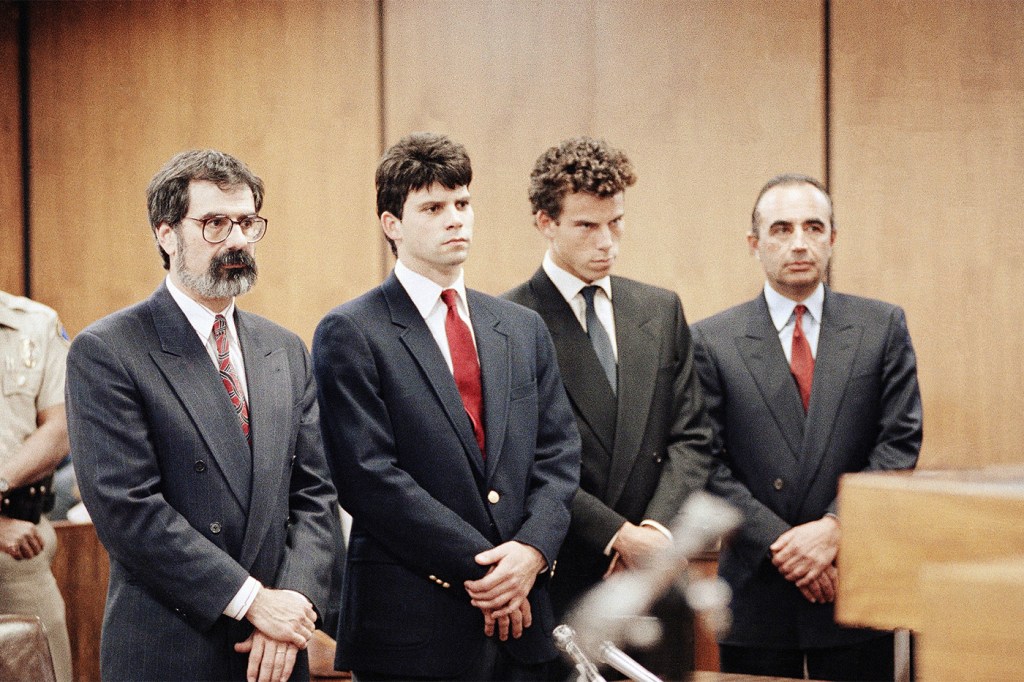
A Northeastern University professor says the case of Lyle and Erik Menendez, who are serving life imprisonment for the shooting deaths of their wealthy parents in 1989, indicates a major societal shift in how male victims of childhood sexual abuse are perceived — and believed.
Around the time they were convicted of first-degree murder for killing Jose and Kitty Menendez, the young men were ridiculed in newspaper columns, talk shows and even “Saturday Night Live” as being motivated by greed.
But 28 years after their sentencing, family members are calling for the brothers’ release, saying they were driven to desperation by longtime sexual abuse at the hands of their father, a well-known executive in the entertainment industry.
Carlos Cuevas, Northeastern professor of criminology and criminal justice, says in the decades since the Menendez sentencing there has been growing recognition that childhood sexual abuse affects boys as well as girls.
Tens of thousands of victims
“As time has gone by, there has been more openness about talking about abuse in general and particularly abuse of boys,” Cuevas says.
Eyes also have been opened by investigations and lawsuits concerning the involvement of powerful institutions in covering up the abuse of boys and young men, with the Boston Globe’s 2002 Spotlight series about the Catholic Church coverup winning a Pulitzer Prize for public service.
In recent years, the Catholic Church and the Boy Scouts of America have paid out billions of dollars to settle cases going back decades involving tens of thousands of victims abused as boys and young men by priests and Scout leaders.
“The Catholic Church scandal probably brought it more to the forefront,” Cuevas says. “But it’s really been sort of a gradual process,” beginning in the 1980s, of recognizing that childhood sexual abuse, including victimization of boys, is a real issue, he says.

The effects of childhood sexual abuse
“But in certain circumstances it is still sort of minimized in a way I don’t think it is minimized when the victim is a girl or a woman,” Cuevas says, adding that might be because of the greater number of girls and women affected by sexual abuse.
According to RAINN, an organization that advocates for victims, one in nine girls and one in 20 boys under the age of 18 experiences sexual abuse or assault.
Whether the survivor is male or female, the repercussions of sexual assault can be severe, including post-traumatic stress disorder, mood disorders, depression, anxiety and substance abuse, Cuevas says.
Survivors may also struggle with dissociative disorders, self harm and panic attacks, says RAINN.
The effects are typical of “the kind of thing you see with individuals who are survivors of sexual abuse,” Cuevas says. “And they can be particularly exacerbated by not being believed, not being supported.”
Extreme physical retaliation or murder is rare, he says. “Most victims of abuse don’t kill their perpetrators. It’s not a common occurrence.”
Northeastern Global News, in your inbox.
Sign up for NGN’s daily newsletter for news, discovery and analysis from around the world.

Victims … and killers
Cuevas says what complicates the Menendez case in the popular imagination is the brothers’ perpetuation of a heinous crime, gunning down their parents as the couple watched TV in their mansion’s den.
“People have a tendency to label you. You’re either a victim or a perpetrator,” he says, adding that in reality you can be both.
“A lot of people who commit offenses and crimes are also victims of abuse or other forms of victimization,” Cuevas says.
“It’s really hard for people to understand the context around that, which is that they committed a serious crime, but they were also victims of abuse.”
Lyle and Erik Menendez, who were 21 and 18, respectively, at the time of the killings, may get a chance to tell their side of the story in court again, since their case is being reviewed for possible resentencing by Los Angeles County District Attorney George Gascón following the emergence of new evidence.
As time has gone by, there has been more openness about talking about abuse in general and particularly abuse of boys.
Carlos Cuevas, professor of criminology and criminal justice at Northeastern
The evidence includes a letter purportedly written by Erik Menendez to his cousin Andy Cano referring to the abuse months before the murders occurred as well as allegations by a member of the boy band Menudo, Roy Rossello, that he was abused by Jose Menendez when he was 14.
During the brothers’ first trials — one for each brother — their cousin Diane Vander Molen testified that when she was a teenager staying at the Menendez home, 8-year-old Lyle told her his father was molesting him.
Vander Molen testified that she told Kitty but never heard what if anything became of the boy’s disclosure. The trials ended in a hung jury.
During the second trial, which ended with the life imprisonment sentencing in 1996, the prosecution alleged the abuse didn’t occur and the judge didn’t allow much evidence of the molestation to be presented, according to defense attorneys.
The fear factor
Even now, some people — including Kitty Menendez’ brother Milton Andersen — do not believe the brothers were molested or that they feared for their lives if they went public with the abuse allegations.
Sexual abuse and physical abuse are ways of controlling victims that can create lasting fear, especially if it starts when the victims are young, Cuevas says.
A family member has said he witnessed Jose Menendez hitting the brothers with a belt, as well as other strange behavior. But even just the threat of violence can instill terror, Cuevas says. “It says, ‘Look how bad it can be. Look what I can do.’”
“You already fear (the perpetrators) because they’ve been doing this a long time,” he says. “Just because you’re older and bigger doesn’t necessarily mean that the fear isn’t still there.”
Where was mom?
The Menendez case has been the subject of a recent fictionalized series, “Monsters: The Lyle and Erik Menendez Story” and documentary, “The Menendez Brothers,” both on Netflix.
One question viewers invariably ask is why the brothers’ mother, Mary Louise “Kitty” Menendez, didn’t intervene to stop the alleged abuse.
It’s a common query in cases of familial abuse, Cuevas says.
He says the abuser’s partner may be fearful of violent retaliation or could just be in denial.
“There’s this aspect of, ‘It happened on your watch and you didn’t protect your children.’ It’s particularly hard if your identity as a parent is that you’re a good parent and you take care of your kids,” Cuevas says. “Something really horrible happened to your kids and you didn’t protect them and keep them safe.”
Supporting those who disclose
People who disclose child sexual abuse within families — whether they are the victims themselves or witnesses — often feel they are responsible for a family’s disintegration, Cuevas says.
He says he tells people in his counseling practice, “The problem isn’t that you opened the can of worms. The problem is who got the worms in there in the first place? The problem is not what you said; it’s what they did.”
No matter who is doing the disclosure, the process is “incredibly taxing and difficult” on an emotional level, Cuevas says.
Victims and witnesses need to know they can rely on a trusted adult who will take their allegations or suspicions seriously, he says.
“False allegations are very, very rare, so believing them, supporting them and keeping them safe are the things to do,” Cuevas says.


Alunas de graduação e mestrado do campus Floresta da Ufac criaram, em 2024, o projeto Biblioteca de Kene, que reúne tecelagem em algodão, pintura corporal, registros audiovisuais e uma plataforma digital acessível por celular. A iniciativa surgiu do trabalho de conclusão de curso de Txima Huni Kuin, em Licenciatura Indígena, e da pesquisa para a dissertação de Alexandra Deitos no programa de pós-graduação em Ensino de Humanidades e Linguagens.
Txima investigou a tecelagem como expressão dos conhecimentos, da arte e da espiritualidade de seu povo, sob orientação do professor Amilton Pelegrino de Mattos. Alexandra, artista visual e atualmente doutoranda, colaborou na construção do projeto por meio de uma pesquisa de autoria coletiva, desenvolvida com as mulheres da comunidade.
Desse encontro surgiu a proposta de criar um espaço onde os mais de 60 grafismos praticados pelas mulheres pudessem ser consultados, ensinados e aprendidos por jovens e mestras tecelãs. O projeto terá uma nova etapa entre 10 e 16 de outubro, com a realização da 2ª Oficina de Kene da Aldeia Arco-Íris, na terra indígena Seringal Independência, no município de Jordão (AC).
Aprendizagem no território
Durante os sete dias de oficina, mestras tecelãs e jovens aprendizes participarão de atividades de preparação de fios, cantos rituais, aplicação do Bawe e tecelagem de painéis com grafismos. Os processos serão documentados para compor o acervo da biblioteca na aldeia e seu site colaborativo, com gestão do conhecimento pelas próprias mulheres.
A proposta dialoga com a expressão “a universidade é na aldeia”, do professor e pesquisador Yube Huni Kuin, também acadêmico da Licenciatura Indígena da Ufac. A experiência reconhece o território e as práticas da comunidade como espaços de produção e transmissão de conhecimento.
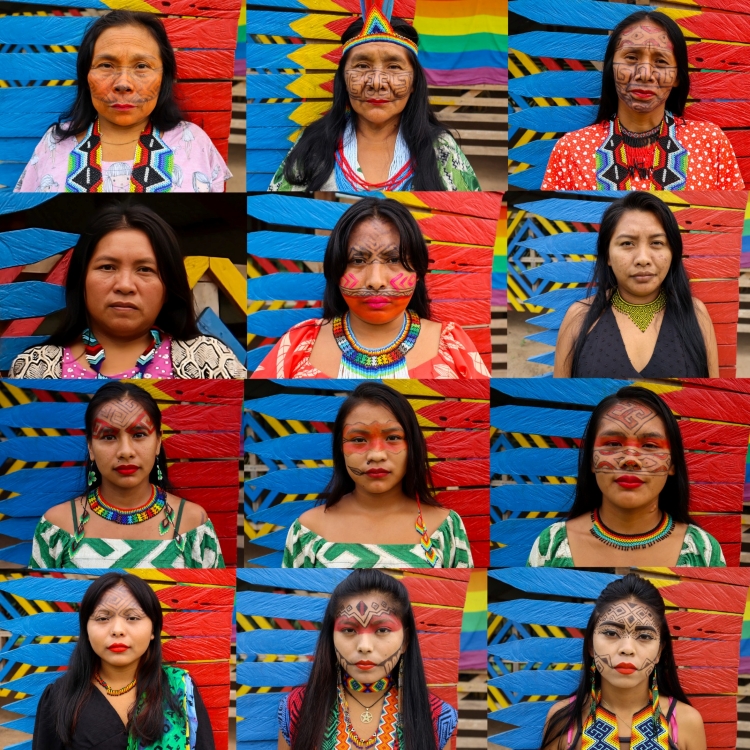
A 2ª Oficina de Kene é realizada por Txima Huni Kuin, Alexandra Deitos e pela Aldeia Arco-Íris, com apoio do curso de Licenciatura Indígena, da Fundação de Cultura Elias Mansour, do governo do Acre, da Política Nacional Aldir Blanc de Fomento à Cultura, do Ministério da Cultura e do governo federal.
ACRE
Ufac sedia encontro regional sobre residência e preceptoria no SUS — Universidade Federal do Acre


Warning: Undefined variable $user_ID in /home/u824415267/domains/acre.com.br/public_html/wp-content/themes/zox-news/comments.php on line 48
You must be logged in to post a comment Login