
ACRE
Bronny James on His NBA Quest, Recovering From Cardiac Arrest, & Playing With His Dad

FROM THE OUTSIDE, it would appear nothing spectacular happens in the two nondescript buildings at the end of a street in Los Angeles. Tall, brown, and mostly glass, the sunlight not bouncing off the windows but kind of lying atop them, sighing through the plainness of their own existence. The street itself might seem nondescript to someone who, in their maneuvering of it, doesn’t notice the expensive cars backed haphazardly into nearly every parking spot.
This is the home of Klutch Sports Group, the powerhouse agency founded by Rich Paul in 2012. Paul, a close friend of LeBron James for more than two decades, has built an enterprise that represents hundreds of athletes across multiple sports. The elevator ascending to Klutch opens its doors and it is, at least a little bit, like a doorway opening to a sports-specific version of an office laid over an amusement park. There’s a sort of sensory overload: a space that resembles a giant ball pit, basketballs and soccer balls and footballs, baseballs and tennis balls piled up and pushed against glass.
Yes, there are rows of cubicles and people in them, diligently typing or urgently scribbling something on paper while listening intently on a phone call. Massive televisions on the walls play ESPN, a screen filling with highlights. Another screen offering updates on clients—Philadelphia Eagles quarterback Jalen Hurts, USC women’s basketball star Juju Watkins. One screen, at the entrance, features a photo. Bronny James, in his number 9 Lakers uniform, arms crossed, a face etched with seriousness, determination. A contrast to the fluorescent language above his head, reading, WELCOME BRONNY! in a font that seems pulled from a birthday card.
Behind yet another door, Bronny James sits in, or rather leans into, a brown leather couch. It’s late morning, and the 20-year-old has the look and feel of someone who spent the hours before our encounter working. He’s got on a Nike white Dri-FIT shirt, basketball shorts with a white leg sleeve. He doesn’t necessarily give off a sense of exhaustion, perking up and extending a hand when I walk in the room. But his body, the full frame stretching out and sliding slightly down, tells the story of what labor might have gone into the hours before this one.

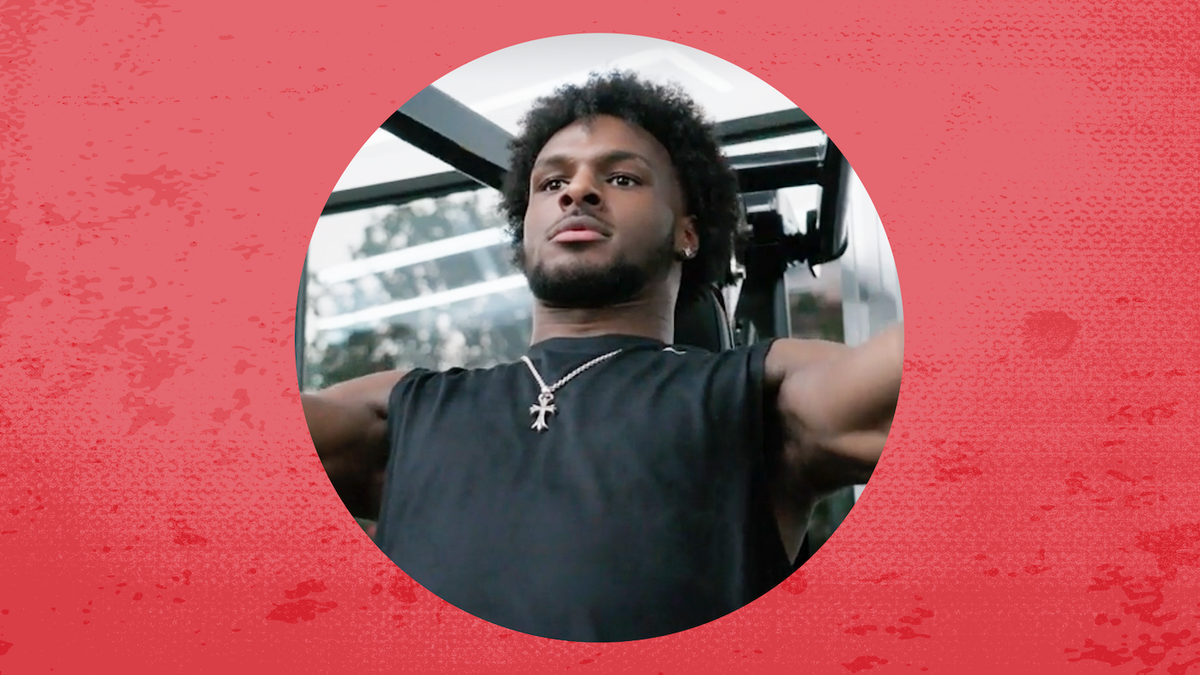
By all accounts, both chatter and actual material evidence, Bronny has, indeed, been working all summer. He is listed as six-two and 210 pounds, but in person what immediately registers is that he’s physically bigger than he was during predraft workouts in the late spring. He’s broader, his arms have more density. The eye test, plainly, suggests he’s been in the gym. But also, in the now-entrenched summertime tradition of NBA players or future NBA players or soon-to-be NBA players in videos in the gym, Bronny has garnered attention (and close scrutiny). There are videos of him shooting on the move, videos of him working on hesitation dribble moves, videos of him working on finishing through contact. On this day, after we speak, there is a new set of videos that emerge, raising some eyebrows: Bronny doing a series of one-on-ones with rising stars Talen Horton-Tucker and Darius Garland and holding his own, particularly on offense, creating separation, getting tough buckets.
There are those who, of course, would be satisfied with Bronny’s failure, whatever failure would look like in those contexts. It’s a broad window. He could be a G-Leaguer, he could be an NBA benchwarmer, he could be out of the league altogether. A cursory glance at social-media nepo-baby discourse and Bronny “isn’t a pro” punditry would suggest there are those who are skeptical about the Bronny James Experience, at best. But what has been less publicly considered is that the versions of potential success are equally broad, though the journey to those versions is steeper and more uphill than the alternatives. Bronny (who doesn’t pay attention to social media, telling me, “I have enough entertainment”) is, it seems, equipped for the work.
What hasn’t been thoughtfully considered in the calculus of a rigid success/failure binary is that this phase of Bronny, as a player, is an unknown quantity. When assessing his single year at USC, and the player he has been since his departure after playing for that one year, what hovers over the statistics and measurables is the very literal question of the heart. In July of last year, during a USC summer practice, Bronny went into cardiac arrest, caused by what was later diagnosed as a congenital heart defect, an abnormality within the heart structure that can be treated. To put this all a different way, Bronny has spent the past year working, and still being an athlete in recovery from an unpredictable and hard-to-define injury.
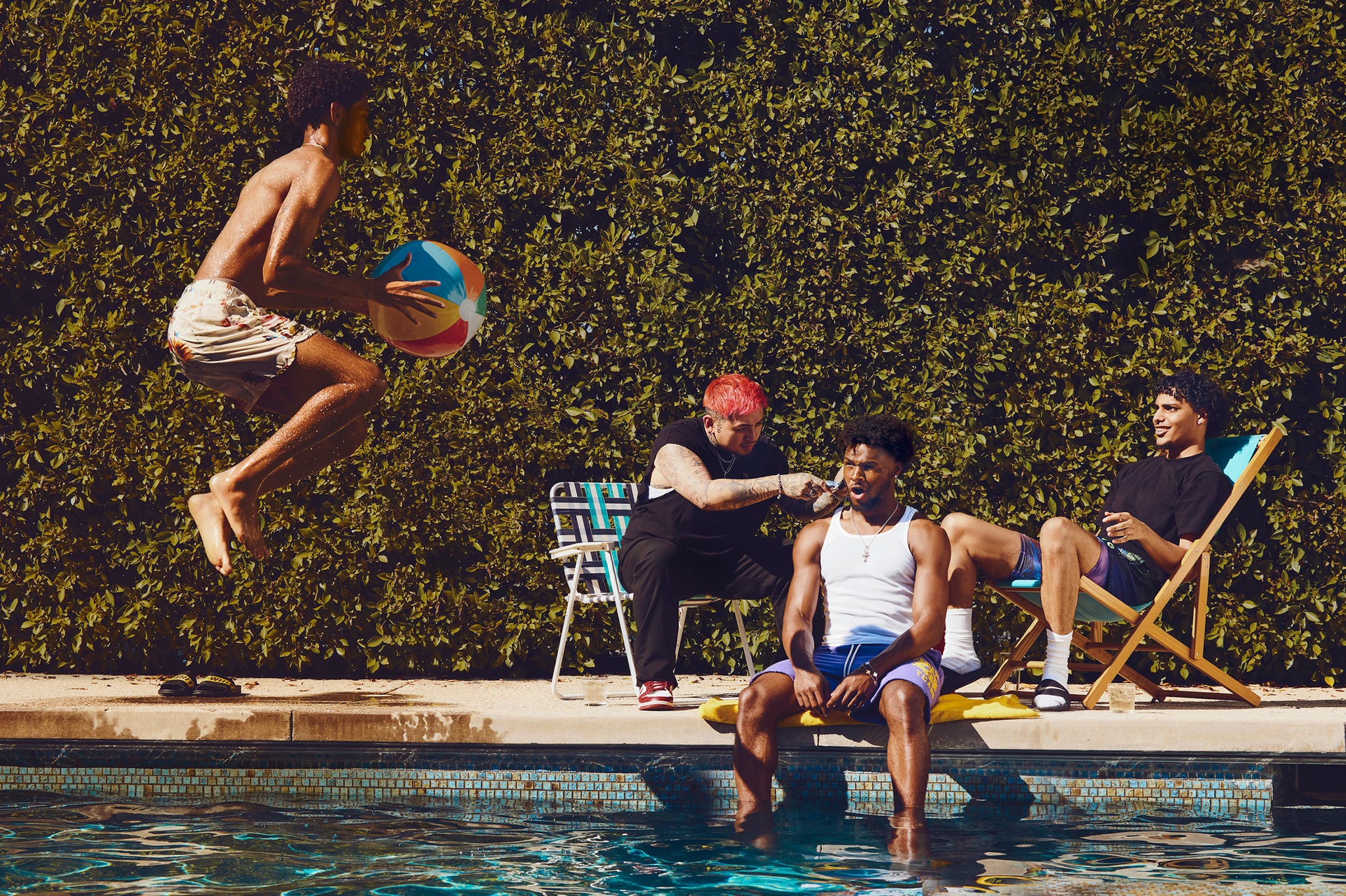
Bronny’s intention, it seems, is to embrace the pressure. He may not be scrolling social media, but he is aware of who his father is in the public eye, just as he is aware of how hard he’s had to work to regain the capabilities and understanding of his own body after a medical detour, just as he is aware of the history he will inevitably make when he steps on the floor in a Lakers uniform for the first time with his father, just as he is—perhaps most important—aware of the fact that an entire career has to come after that moment. A career of accumulating minutes on the floor, each of them anchored by unfair, sometimes unrealistic expectations. He tells me that he is simply eager to play the game he loves at the highest level, is fine with whatever comes after that. But to a sports-watching public, Bronny now represents a question of who does or doesn’t “get” to succeed, or who is or isn’t an underdog.
Yes, there is, of course, much to be gained when simply sharing a name and lineage with arguably the greatest basketball player of all time, but there is also the steadfast weight of expectation. Yes, it is true that fathers and sons play basketball together across the country, all the time. It is true that, perhaps, while you are reading this, a father is ascending to grab the rebound of a son, practicing his jump shot, and that is also not without its magic, its miracle, its own small history. But it is also true, at least to me, that to see Bronny succeed, in any way that we land within the broad spectrum of “success” for a player who was a second-round pick with expectations much higher than a second-round pick, would be a manifestation of a dream that few get to touch. It’s hard to set that aside, independent of all other context. But when I do, it’s an easy narrative to root for.
WHEN BRONNY TALKS about “the heart incident,” as he refers to it, he momentarily tenses up, drops eye contact. He tells me that it just felt like a normal day. He had his smoothie and went to go to a summer workout on USC’s campus before school started and the season kicked off in earnest. Midway through running drills, he says, he blacked out, doesn’t remember anything else. He had suffered a cardiac arrest. When I ask if he was concerned, in the moment, about his ability to play again, he says, “At the point when it happened, there were a whole bunch of categories that what had happened could fall under, so yeah. There were a whole lot of emotions, but . . .”
He trails off here, just for a moment, before snapping back to escape the thought, talking with renewed energy about his recovery. “I got real on top of my routines to get back to where I was. I had to do breathing exercises and stuff. It was a total reset. I have to stay on top of my heart medications, and”—he pauses to laugh a little bit here—“I got my heart pillow.”
A heart pillow?
“When I coughed, it used to hurt a little bit, but you get this pillow, and when you cough you just hold it so it doesn’t hurt.
“My days aren’t normal anymore,” he continues. “I still feel like I’m getting back, I’m getting back to where I was.”

Even before his health scare, Bronny was navigating an uphill battle, the kind of scrutiny that comes with being the first child of LeBron James, and therefore the first child within the James family to attempt to take on the family business. There are now-notable photos of a young Bronny on the court in Cleveland as a child, on his father’s shoulders or in the midst of running around on the floor, wide-eyed, a sense of bewilderment.
When he thinks back on his earliest memories of playing the game, Bronny recalls a rec center in Cleveland, an eight-foot rim, playing with his cousins when he was four years old while his grandmother watched. He remembers being a child in Cleveland and seeing NBA moments up close. “I remember being scared of the fire coming out of the sword,” he laughs, recalling an old arena tradition.
But around his eighth-grade summer, things changed. “I was playing up at Peach Jam with my AAU team, the Strive for Greatness AAU team—I was getting more into it. I was kind of ranked a little bit, and I was playing older guys, so I was trying to just go out there and get better. I got to high school, and then I was with BJ Boston and Ziaire Williams and all those guys, so playing against them kind of made me lock in more.”
Bronny carries his father’s last name but also unmistakably carries his father’s appearance. For those of us old enough—and even more so for those of us old enough and with ties to Ohio—to recall the younger LeBron James is, beyond just the physical attributes that separated him on the court, also to remember aspects of his more youthful personality. His sometimes sly and mischievous smile, his thoughtful and measured and endlessly confident replies to questions. The way he sometimes fumbled with a rubber band on his wrist when he spoke. Bronny is, unmistakably, his father’s child in all of these softer aesthetic ways. But in terms of both size and on-court style of play, he is his own unique player. For those who look at the father and expect the son to be a carbon copy, an adjustment must be made.
Bronny is, by most scouting accounts and by his own assessment, going to find a way to stick in the league as a 3-and-D guard. His greatest on-court strength is his harassing defense, his fearless approach on that end of the floor despite being a guard that many would consider undersized for the league. He’s a streaky shooter, but also a shooter not afraid to keep firing when the shot isn’t falling, until he sees it come around. When asked about the players he watched growing up, Bronny instantly replies with a list: “Jamal Crawford, for sure. Melo, just because he was so close to us. I used to watch old Iverson highlights. And then Gilbert Arenas, because I played with him a bunch in 2K.”
His run in the Summer League, which concluded just about a month before we spoke, saw a roller coaster play out in action. His first two games, he shot 4 for 19 from the floor, and 0 for 11 from three-point range, before he settled into a bit more consistency in the final two games, shooting 2 for 5 from three in one game, and 1 for 3 in the other. But more important, he picked his spots and his shots more carefully, not settling, attacking the rim, being active off the ball.
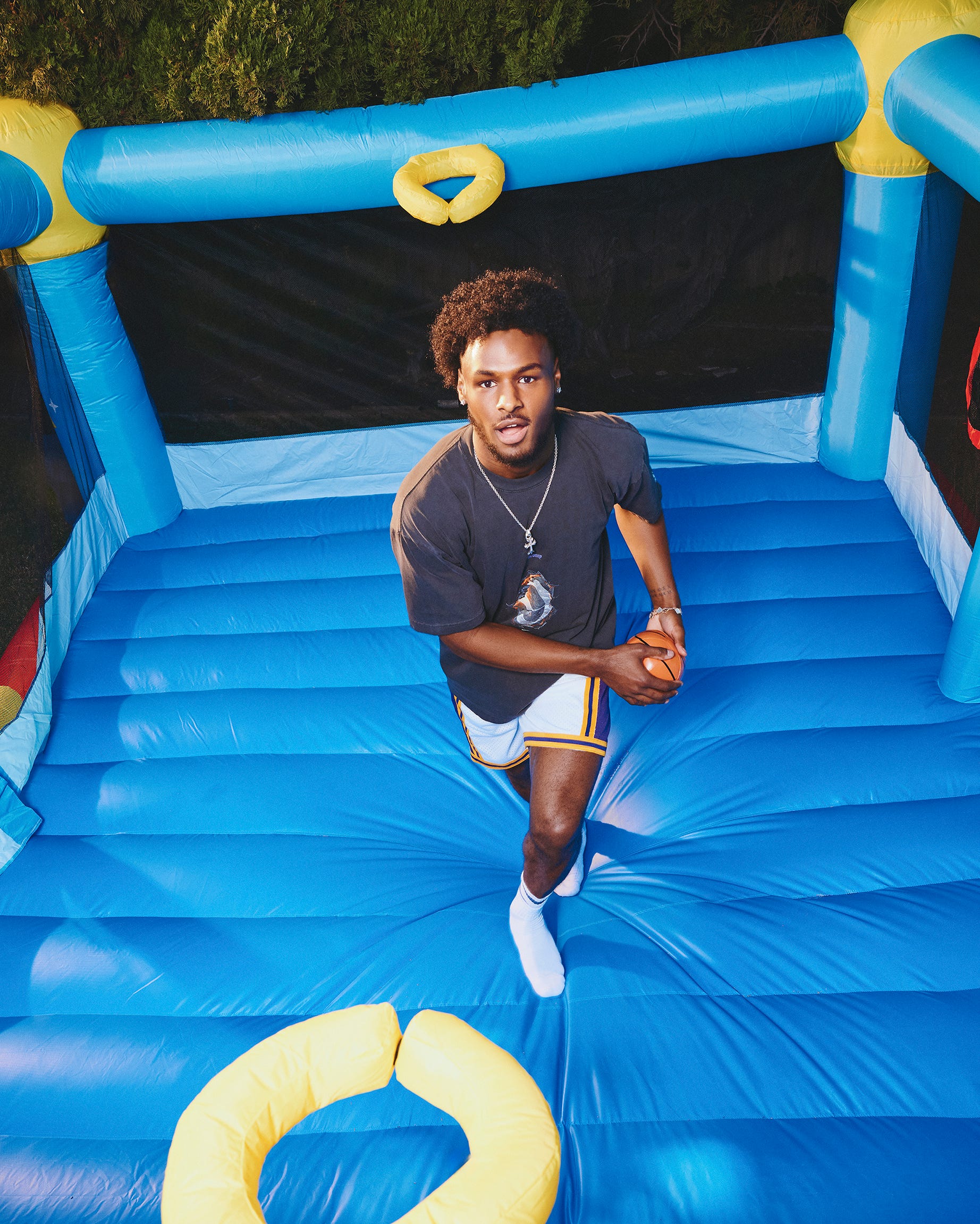
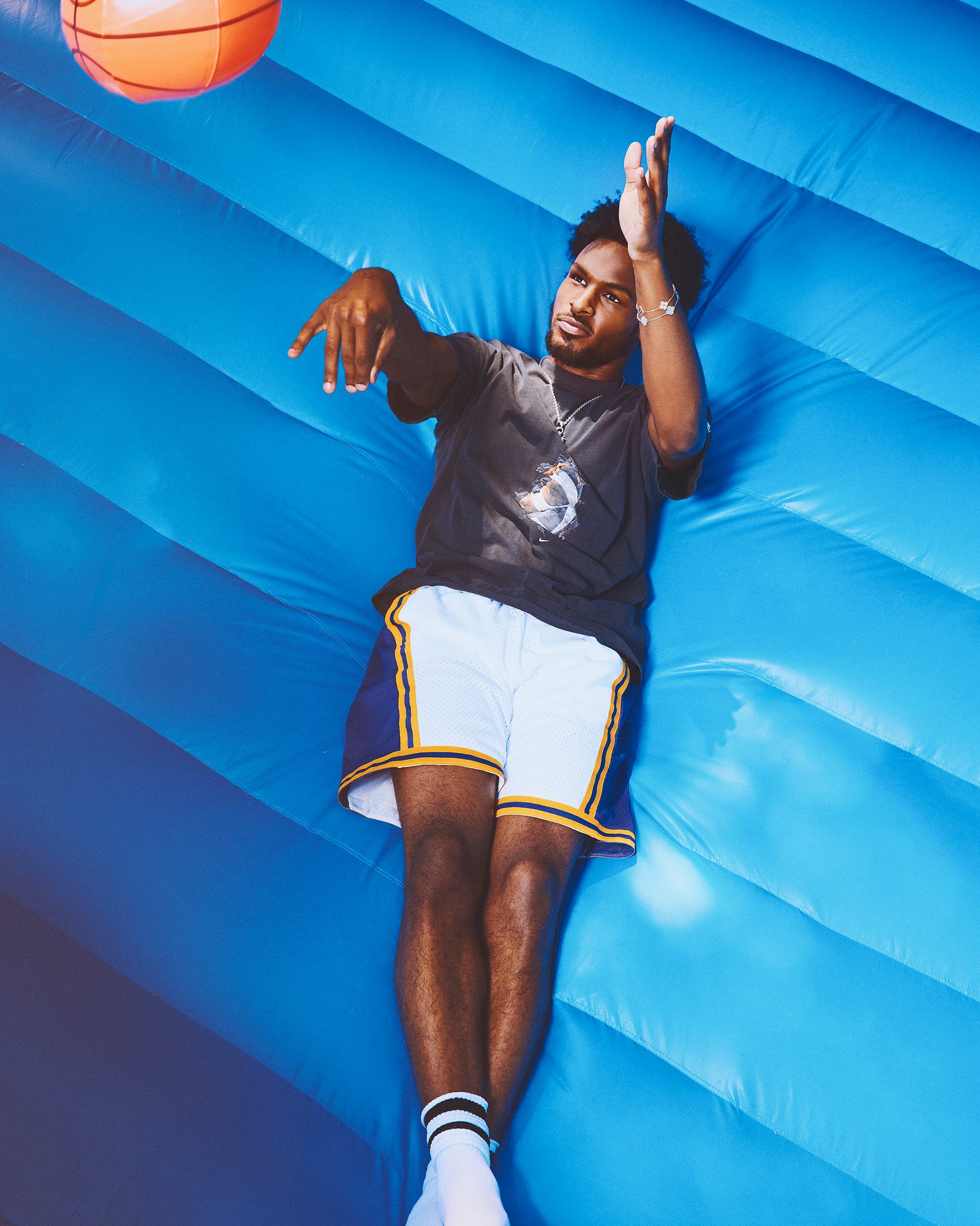
The reality of all this is that Summer League isn’t indicative of much and certainly isn’t indicative of what a player will or won’t become, and the other reality is that Bronny was a late-second-round pick who has the misfortune of being analyzed as if he were a lottery pick. Whether any of this does (or doesn’t) render Bronny James a sympathetic figure is certainly in the eye of the beholder and how their beliefs in sympathy and mercy align with someone who, in this case, is fighting to carve out his own name, identity, and—perhaps most important—career while also standing in an overwhelming and immovable shadow. But whether or not you, individually, are capable of or interested in accessing any sympathetic feelings for Bronny, what stands out most clearly in our time together is (as his father has alluded to many times) his disinterest in outside noise. He maintains an unshakable confidence by simultaneously turning away from it all while keeping it at a low hum in the back of his mind.
“Everything I’ve been through over the years has prepared me for this,” he says, tugging at the white sleeve on his leg. “I really think it just ties back to me experiencing so much negativity and pushing through all of that. I feel like it built me to where any situation that is trying to hold me back or I’m not fighting through at the time, I can sustain my comfortability and belief in myself to keep going. I mean, there might be a couple times that I look at something and it makes me mad, and I go out and play better, but most of the time, it’s in through one, out the other.”
It helps, of course, having a firm grounding in both actual family and chosen family. In some ways, Bronny exists, he says, in a tightly tended-to chamber of people who love him. Yes, his parents have both the affection and the experience to keep him protected, but also, as he tells me, his friends are like his family. When I ask him about what it was like, being a child while his father’s life and career were rapidly accelerating and ascending, Bronny insists that he was aware of it, of course, but he didn’t understand it. He zoned out of it all, in some ways. “Growing up, I didn’t really understand why. Everything was going on. I wasn’t really paying attention to everything, so it was a surprise to me, but not really, because I knew it was happening, but I didn’t know it was going to flood over me like that.” The last part, the “it” being attention, scrutiny, notoriety, Bronny tells me, is the place where his father’s past life (and present life, of course) has begun to, on a different scale, mirror his own. (LeBron and Savannah James declined to be interviewed for this story.)
“IT HAS BEEN a joy to see Bronny evolve into the young man he is today,” says Rich Paul, who’s known all of the James kids since they were babies and who signed Bronny as a client in 2022. “He only tries to be himself. He never leads with this idea of being LeBron James’s son. He’s just a good person, and that’s what is going to translate for him at this next stage in his career—the way he treats his teammates and the people around him.” But also, Bronny is relentless about sinking into his hobbies. He was always an active and eager kid, Paul tells me. Playing everything, trying anything. (“He snowboarded, he loved snowboarding,” Paul says, before quickly adding, “but never football. His parents let him do everything except football.”) When Bronny talks about music, he insists that he’s “always” listening to Juice WRLD, and then, while thinking of other artists, he grins wide and says, “I also go through a Michael Jackson phase every few weeks. Just listening to nothing but Michael Jackson songs.”
Bronny is, now famously, a gamer, something that began for him when he was a kid, fascinated by playing sudoku on his grandfather’s computer, before graduating up to a PSP, and then a Wii (where he was especially into playing the Michael Jackson experience, to bring the phase full circle). “And then the Xbox dropped, and I started playing Call of Duty. And now here I am. . . .” He trails off slightly and laughs, shaking his head, as if he momentarily cannot fathom the realities of linear time “. . . I’m still playing Call of Duty ten years later.” He also mentions the blue-light glasses he’s recently started wearing due to the frequency with which he games.

Bronny perks up when he remembers that a new Call of Duty game is coming out soon, though his free time is increasingly limited. It has been a whirlwind, post-draft. He’s in the gym with his younger Lakers teammates every day. “A lot of teams aren’t in the gym right now,” he says, nodding vigorously. “But me, D.K., Max, and J. Hood getting after it,” referring to fellow rookie Dalton Knecht, Max Christie, and Jalen Hood-Schifino.
One thing that strikes me as refreshing about Bronny is his level of self-awareness. He understands what the pressure is and the expectations are, but he also understands his reality, as a second-round pick with a lot of work to do. He wants to be great, he wants to contribute to the Lakers in whatever way he can, and he also seems to be eager to take on the realities of the process, one that—in his case—might be slower than that of other players who were drafted higher, who are taller or faster. “The game hasn’t slowed down for me on this level yet,” he shares. “But I want to learn everything I can, even if it takes time. So I’m going into every practice with open ears and an open mind.”
Bronny does, of course, make clear that he’s learned from his father. On the court, yes, but Paul insists it will be off the court where the learning will serve Bronny best. “He’s seen professionalism from his dad,” Paul tells me. “It’s not just moves and on-court things; it’s habits. Bronny getting to see someone who is disciplined and detailed. That’s the biggest thing. Bronny didn’t actually get in the gym and work out with his dad until later in life, when he was an older teenager. It was organic. Everyone wanted him to blossom on his own time and see how much he really cared and really wanted it. He took that opportunity head-on.”
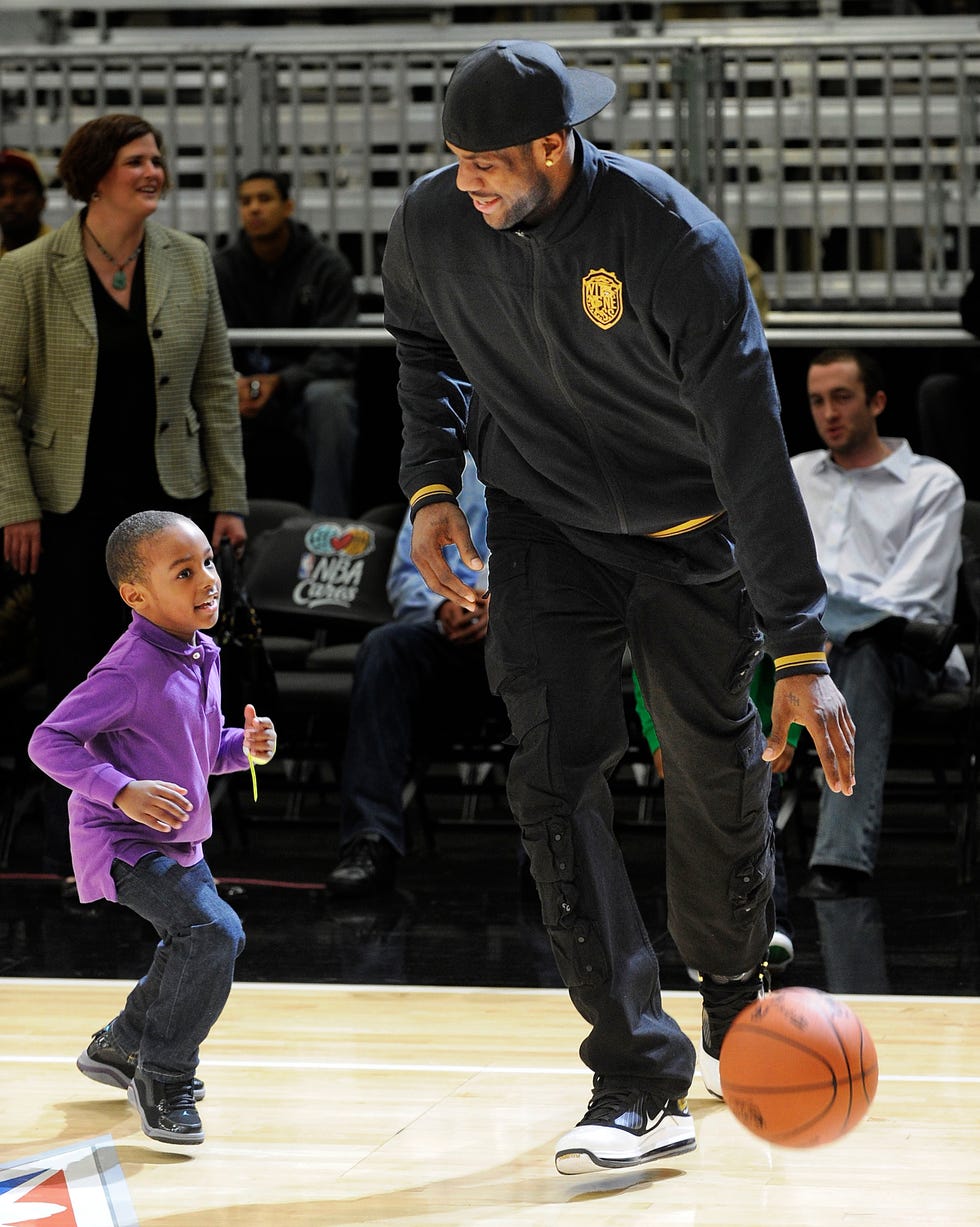
Bronny at five years old on the court at the 2010 NBA All-Star Celebrity Game with his dad, LeBron James.
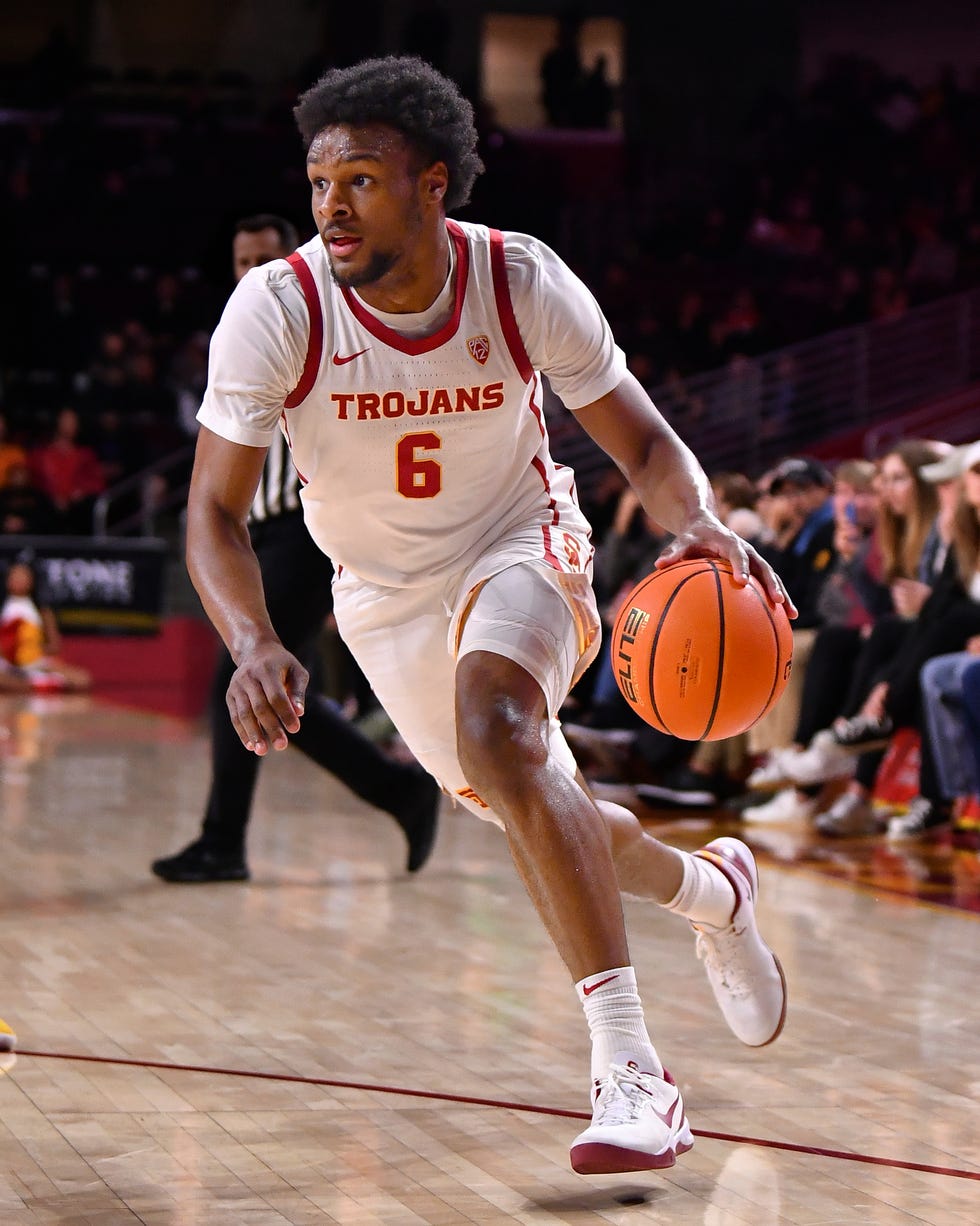
Bronny during his single season as a USC Trojan in March 2024.
Bronny echoes this, insisting he hasn’t learned just the nuances of on-court IQ but also how to take care of himself, how to tend to his body. He lists his rigorous routines carrying a gallon of water, doing his breath work and cardio exercises. But thinking about the realities of time and longevity, Bronny momentarily drifts into a kind of tender existentialism. “It has been cool seeing Dad locked in for so long,” he tells me before his voice drops a little. “It helps me to go in there and lock in and not waste any time, because you never know, especially with me. I got a situation I’m going through. I never know, so just making sure I don’t waste any time.”
Bronny assures me that he’s doing better, he’s lowered the dosage of his heart meds, and he’s optimistic, but—keeping in line with his grounded relationship with self-awareness and reality—he truly does not know. I would also imagine that suffering cardiac arrest while doing the thing you love makes you distinctly aware that what you love may not always be in reach. It forces a day-by-day approach upon you whether you want it or not (though, on a lighter note, when I ask about his father’s longevity and Bronny’s approach to sticking around for multiple decades, he jokes, “I don’t know, man, I be sore right now, so I just . . . I don’t know how my dad does all of that for so long and he isn’t sore all the time?”).
BRONNY BEING ON the floor with his father at some point in this NBA season seems inevitable. A testament to his father’s somewhat miraculous longevity and relative good health throughout his career. LeBron and Paul have both, pretty openly and eagerly, campaigned for this moment, publicly fighting to make it happen. For whatever one may think about the James enterprise and lineage, history is history, and defiance of time is defiance of time, and for a moment—even if that moment is brief—NBA fans will get to watch one familiar version of a player they have known for two decades on the floor with a younger version of himself, the two generations echoing each other. Some might think this specific pursuit of history feels like a somewhat self-serving move on behalf of a loving father, but that would make it no different from so many other, significantly worse historical pursuits.
From Bronny’s perspective, he isn’t too interested in playing it up, but the excitement does fight through, poking holes in the otherwise kind of rehearsed language. He says it’s just the family business—he’s just playing basketball with his dad (though, comically, LeBron insisted that his son could not refer to him as “Dad” while they shared the court) like he has many times before. But then, also, he shakes his head and runs a hand through his hair before saying, “Wow! It’s crazy that it’s gonna happen.”
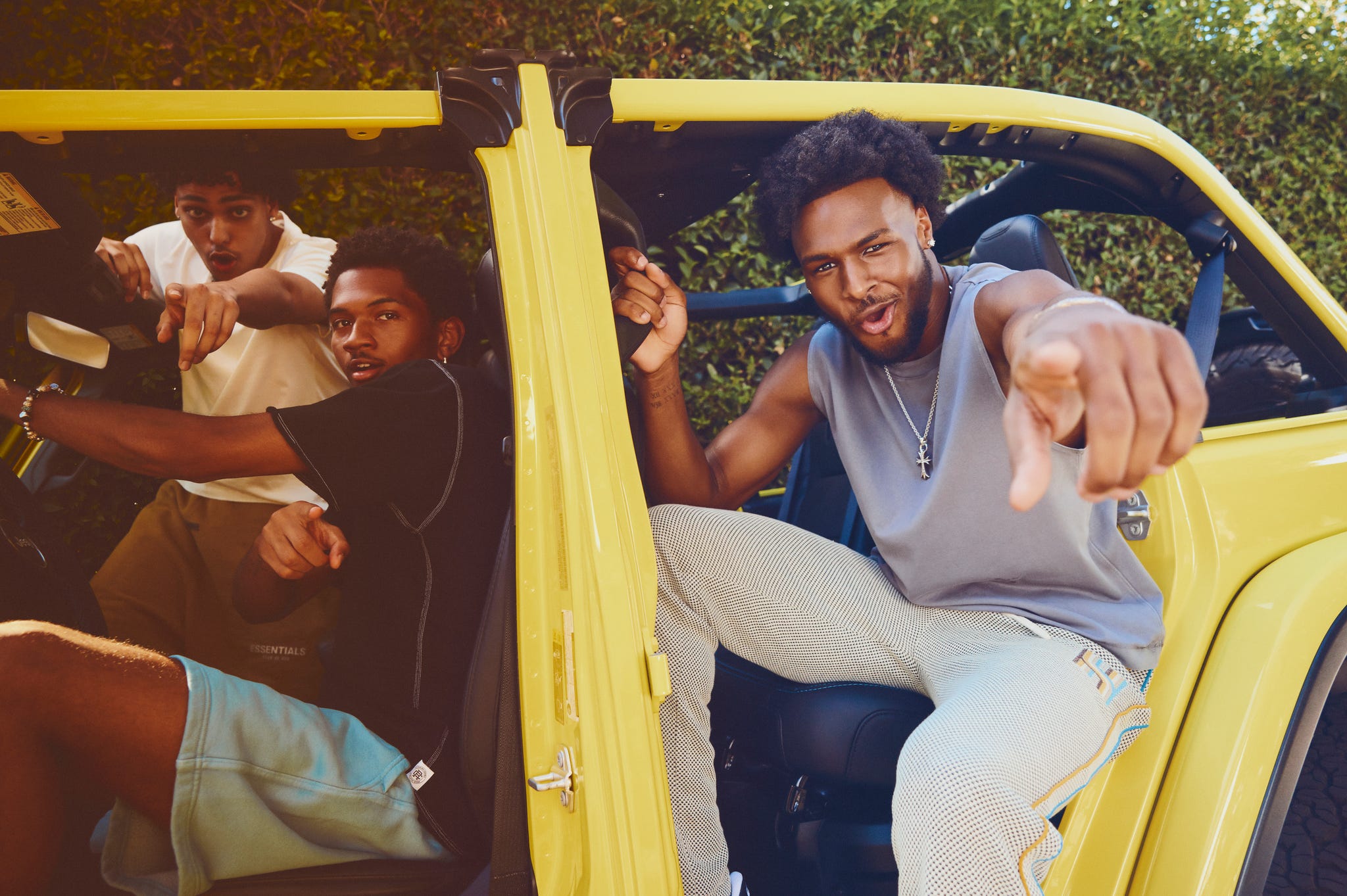
When I ask Paul what his expectations are for Bronny as a player and person, he pauses thoughtfully. “I expect him to approach things the right way,” he begins. “I don’t have any stat line or any average. Build your foundation well. Then decide what kind of house is built atop that foundation. Whatever house he builds, it will be authentic to him.”
The word Bronny keeps returning to is peace. It comes up in several sentences during our talk, often punctuated by him breaking out into a smile. He’s seeking peace, he says. He’s looking for peace on the floor. He’s trying to find peace within himself to be the best possible player he can be. When he’s playing Michael Jackson songs and taking long drives, it’s peace he’s after. He’s constantly trying to realign himself toward this fight for serenity, because it’s all he has to keep himself both driven and focused on the fullest possible version of him that exists: Bronny the basketball player but also the person. Who, yes, does carry the massive weight of a last name and lineage but also happily disappears into video games and silly Internet videos. When I ask him what he does, how he constantly seeks peace, which is both touchable but ever elusive for a young person with the kind of demands he has, Bronny shrugs, as if the answer is simple.
“I like to envision where I’d be if I found complete peace, you know what I’m saying? I like to think about where I would be if I were in this state of mind.” He pauses here, picks his head up, and looks out one of the large glass windows that, from the outside of this building, seemed so unspectacular but now are a portal to elsewhere. He starts talking again.
“I just close my eyes and breathe.”
Styling: Ted Stafford
Styling assistance: Natasha Fomino and Kendrick Jumpierre
Barbering: Kevin Nguyen
Grooming: Omayma Ramzy/Walter Schupfer
Prop styling: Wooden Ladder
Production: Crawford & Co
Executive Producer/Director: Dorenna Newton
DP: Danny Dwyer
Cam Op: Joey Kramer
Sound: Patrick Joyner
Editor (Train Like): James Chupka
Editor (lead loop): Elyssa Aquino
AP: Janie Booth
Car: 2024 Jeep Wrangler Rubicon in High Velocity Yellow
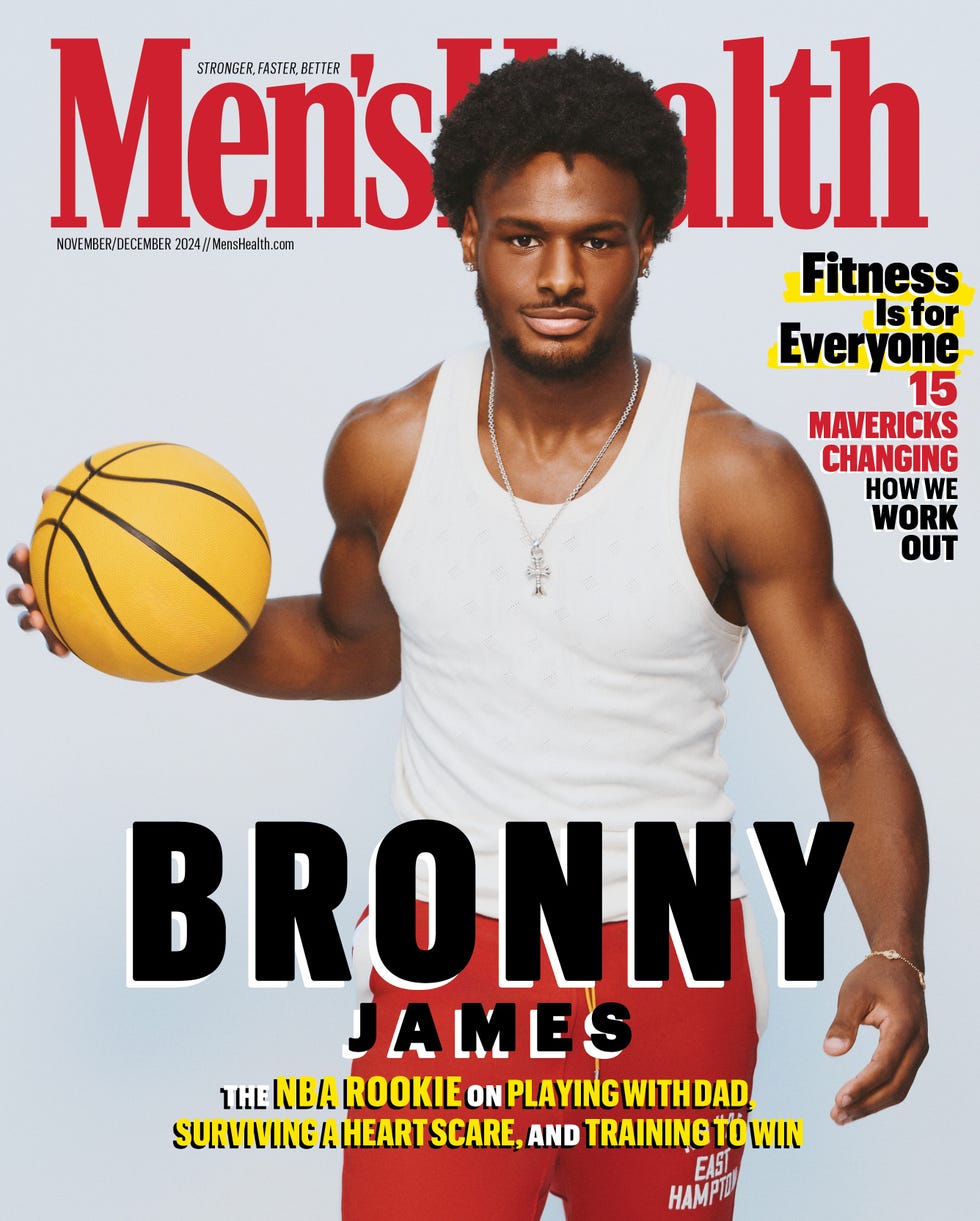
This story appears in the November-December 2024 issue of Men’s Health.
Subscribe


 ACRE7 dias ago
Proaes lança plataforma para cadastro da assistência estudantil — Universidade Federal do Acre
 ACRE6 dias ago
Josimar Ferreira inicia gestão de 4 anos como reitor da Ufac — Universidade Federal do Acre
 ACRE2 dias ago
Podcast da Ufac entrevista novo reitor Josimar Ferreira — Universidade Federal do Acre


Warning: Undefined variable $user_ID in /home/u824415267/domains/acre.com.br/public_html/wp-content/themes/zox-news/comments.php on line 48
You must be logged in to post a comment Login