
ACRE
TikTok aware of risks kids face on its platform, lawsuit alleges


ACRE
Estudantes de Jornalismo da Ufac ensinam audiovisual a moradores da Reserva Cazumbá-Iracema — Universidade Federal do Acre

Estudantes do curso de Jornalismo da Universidade Federal do Acre (Ufac) realizaram oficinas de audiovisual na Reserva Extrativista Cazumbá-Iracema, em Sena Madureira. A iniciativa ensinou técnicas de produção de vídeos a moradores da reserva, com atividades de roteiro, gravação e edição, para incentivar o registro da história, da cultura e do cotidiano das comunidades.
As oficinas começaram em 6 de outubro e ocorreram em duas escolas: José Siqueira dos Santos, na comunidade Cazumbá, e Francisco Siqueira Moura, no Seguro. As atividades tiveram duração de um dia e meio em cada local e reuniram 20 participantes por comunidade, entre crianças, adolescentes e adultos.
Estudantes do ensino médio, professoras, funcionárias e bolsistas participaram da capacitação na escola José Siqueira dos Santos, localizada no núcleo da reserva.
- Foto: Beatriz Guedes
A formação foi ministrada por sete estudantes do 4º período de Jornalismo da Ufac, que desenvolveram atividades teóricas e práticas de produção audiovisual. Durante as aulas, os participantes aprenderam técnicas de elaboração de roteiros, captação de áudio e imagem, gravação e edição de vídeos. Na etapa prática, dividiram-se em grupos para produzir conteúdos sobre temas relacionados à comunidade.
A equipe foi formada pela professora Aleta Dreves e pelos estudantes Beatriz Oliveira, Islana Wiciuk, Railan Costa, Gabriela Guedes, Lauana Brito, Beatriz Guedes e Joás Linhares.

A atividade integra uma ação de extensão do curso de Jornalismo, desenvolvida em parceria com o projeto Tecendo Teias de Aprendizagem e o Instituto Chico Mendes de Conservação da Biodiversidade (ICMBio).
Demanda da comunidade
A oficina surgiu a partir de uma solicitação dos próprios moradores da reserva. Segundo a professora Aleta Dreves, responsável pela ação de extensão, a proposta inicial era oferecer uma atividade voltada à fotografia, mas a comunidade manifestou interesse em aprender também técnicas de produção audiovisual.
A intenção é ampliar o acesso ao conhecimento na área e incentivar os moradores a produzir registros sobre a própria realidade. A formação também busca contribuir para a criação de agentes comunicadores na reserva, capazes de compartilhar histórias, tradições e experiências sem precisar sair do território para adquirir esse conhecimento.
“Os objetivos são qualificar a população da Resex para despertar conhecimento nessa área, para que, somada a outras qualificações, possamos formar agentes comunicadores, visando à possibilidade de esses jovens e adultos não precisarem sair de dentro da reserva para obter o conhecimento”, explicou Aleta.
Para adaptar as aulas à realidade dos participantes, a equipe priorizou conteúdos básicos e ferramentas acessíveis, como celulares e tablets.


- Foto: Beatriz Guedes
A proposta também considerou a possibilidade de os moradores utilizarem a internet para aprimorar o aprendizado e divulgar as próprias produções.
Durante as oficinas, os estudantes da Ufac utilizaram exemplos próximos da rotina dos participantes para facilitar a compreensão das técnicas. A produção dos vídeos também permitiu que os moradores escolhessem temas ligados à cultura, ao trabalho e às experiências vividas na reserva.
Beatriz Guedes, uma das universitárias que ministraram as aulas, explicou que o foco foi ensinar a produção de vídeos curtos, desde a gravação até a edição. A proposta é que os participantes utilizem o conhecimento para registrar acontecimentos do cotidiano e desenvolver novas produções por conta própria.
“Estamos trabalhando com produção de audiovisual e tendo uma troca de conhecimento com os alunos. Ensinamos outros modelos, mas o nosso foco é vídeos curtos, para que eles registrem o seu cotidiano e publiquem nas redes sociais”, explicou Beatriz.
Entre os temas escolhidos pelos grupos estão a castanha e as lendas da comunidade. A estudante afirmou que a escolha de assuntos conhecidos pelos moradores ajuda a aproximar o conteúdo das oficinas das experiências de cada participante.
Um dos participantes da oficina é Kairo Siqueira, de 17 anos, que integra um grupo responsável pela produção de um vídeo sobre a seringueira, o látex e o artesanato. Para ele, a oficina permitiu conhecer novas técnicas de gravação e pensar em outras possibilidades de produção de conteúdo.
“Está sendo engraçado e bem produtivo. Nós estamos aprendendo mais sobre as filmagens, sobre as nossas formas de filmagem e sobre várias outras coisas”, relatou o estudante.
Kairo Siqueira, de 17 anos, participou da oficina de audiovisual e pretende utilizar o aprendizado para produzir vídeos próprios.

Kairo pretende aproveitar o aprendizado para criar vídeos sobre jogos, experiências pessoais e atividades realizadas na floresta. Segundo ele, a vontade de gravar já existia, mas a oficina apresentou conhecimentos que podem ajudar a desenvolver essas produções.
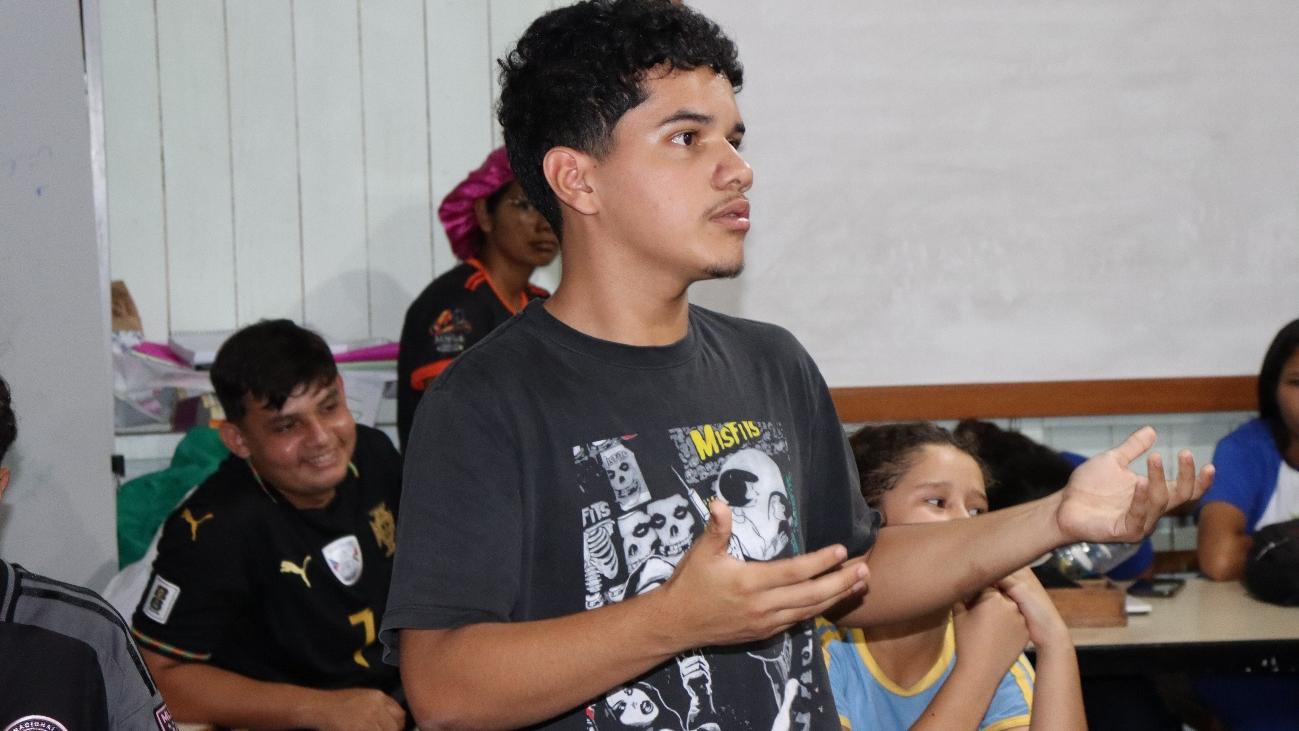
A experiência também pode ampliar o uso do audiovisual por quem já tinha contato com a fotografia e a gravação de vídeos. Keven dos Santos, de 19 anos, conta que acompanha registros da reserva desde a infância, quando o pai participava de projetos com fotógrafos de Brasília. Com o tempo, ele próprio passou a gravar momentos do cotidiano e publicar vídeos em uma conta privada.
Para Keven, o audiovisual também pode ajudar a apresentar diferentes perspectivas sobre a vida na comunidade, especialmente as diferenças entre as gerações.

- Foto: Beatriz Guedes
Troca de experiências
Além dos moradores, os estudantes da Ufac também aproveitam a experiência para colocar em prática os conhecimentos adquiridos durante a graduação. Para Railan Costa, as oficinas aproximam os conteúdos teóricos das situações que os futuros jornalistas encontram fora da universidade.
“A gente espera que fiquem boas sementes, pessoas interessadas em ser comunicadoras na questão de reproduzir tudo aquilo que a comunidade tem a oferecer. E que, assim como nós viemos ensiná-los a fazer, eles também possam ensinar as outras crianças, os outros jovens, que também possam somar junto com eles aqui na comunidade”, declarou.
A ação também prevê novas etapas de formação. Segundo Aleta Dreves, estão planejados um curso mais aprofundado de audiovisual em Rio Branco, oficinas de podcast e fotografia, além de uma atividade de fotografia na comunidade, voltada ao registro do artesanato local e à produção de fotografia artística.
Tecendo Teias de Aprendizagem
A oficina de audiovisual faz parte de uma iniciativa mais ampla de extensão universitária desenvolvida na Reserva Extrativista Cazumbá-Iracema. O projeto Tecendo Teias de Aprendizagem surgiu a partir de demandas da própria comunidade por ações nas áreas de educação, saúde e oportunidades para jovens e trabalhadores extrativistas.
Segundo a pedagoga Socorro Siqueira, que atua na coordenação local, o projeto foi elaborado em 2025 e assumido pela Ufac no fim do mesmo ano, como um programa de extensão. As ações começaram a ser executadas no início de 2026 e incluem atividades de apoio à educação, preparação para o Exame Nacional do Ensino Médio (Enem) e produção de materiais pedagógicos para as escolas da reserva.
Para Socorro, a oficina de audiovisual contribui para aproximar os jovens da comunidade dos universitários e incentivar a expressão de suas próprias ideias. A convivência entre os grupos também permite a troca de conhecimentos entre pessoas com experiências diferentes.
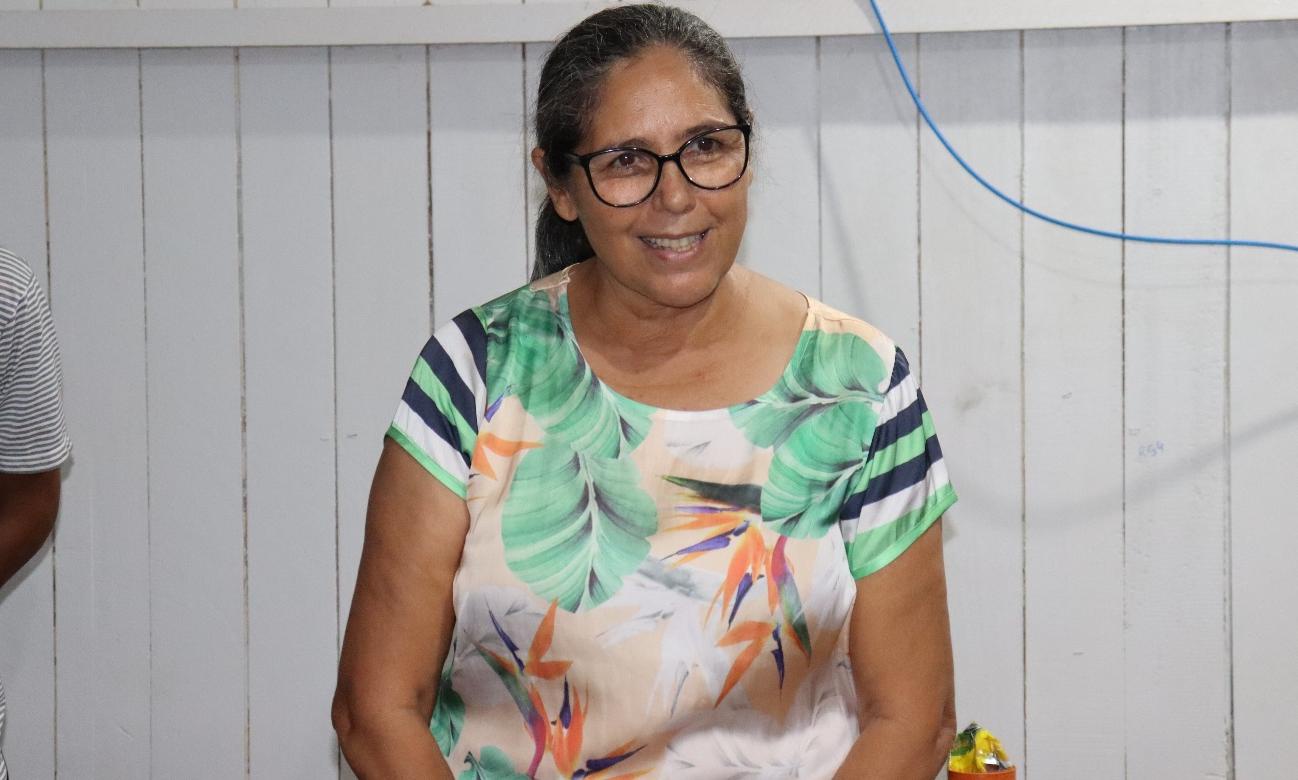
“Um dos objetivos é fazer com que os jovens da comunidade se sintam em pé de igualdade, apesar de terem saberes diferentes. Perder a timidez, conseguir expressar-se como eles querem. Então, a comunicação é de fundamental importância para eles poderem conquistar os objetivos que têm”, afirmou a pedagoga.
A pedagoga Socorro Siqueira destaca a importância da comunicação para que os jovens da comunidade expressem suas ideias.

- Foto: Beatriz Guedes
Participantes da primeira etapa do projeto na escola Francisco Siqueira Moura.

ACRE
Ufac promove ação de prevenção à saúde da mulher durante o Outubro Rosa — Universidade Federal do Acre

ACRE
Ufac e SEE discutem disponibilização de produtos educacionais para professores da rede estadual — Universidade Federal do Acre


 ACRE3 dias ago
Ufac inaugura núcleo de apoio administrativo às coordenações de curso — Universidade Federal do Acre
 ACRE2 dias ago
Ufac e SEE discutem disponibilização de produtos educacionais para professores da rede estadual — Universidade Federal do Acre
 ACRE10 horas ago
Ufac promove ação de prevenção à saúde da mulher durante o Outubro Rosa — Universidade Federal do Acre
 ACRE8 horas ago
Estudantes de Jornalismo da Ufac ensinam audiovisual a moradores da Reserva Cazumbá-Iracema — Universidade Federal do Acre


Warning: Undefined variable $user_ID in /home/u824415267/domains/acre.com.br/public_html/wp-content/themes/zox-news/comments.php on line 48
You must be logged in to post a comment Login