
ACRE
Xiaomi 14T vs. 14T Pro

You are in the market for an upper-midrange phone or just a solid all-rounder, and you are boujnd to find this year’s Xiaomi 14T Series enticing. But it’s hard to tell the Xiaomi 14T and the Xiaomi 14T Pro apart, which makes it even harder to decide which one to get.
And yet, the 14T Pro asks for a serious price premium over the vanilla 14T. At the time of writing, the price difference is around €150-200. A non-trivial difference, we’d say. So let’s see what it has to offer on top of the already excellent Xiaomi 14T.
Table of Contents:
For starters, you can compare the complete specs sheets or directly continue with our editor’s assessment in the following text.
The spec sheets alone can’t tell the whole story, so let’s take a deeper dive and see what’s beneath the surface.
Size comparison
Xiaomi
14T
160.5 x 75.1 x 7.8 mm
(6.32 x 2.96 x 0.31 in)
Size-wise, the 14T and 14T Pro are basically twins. They’ve got the same screen diagonal, height and width. The vanilla 14T is ever so slightly thinner, probably due to it missing a wireless charging coil, but it is more than ten grams lighter.
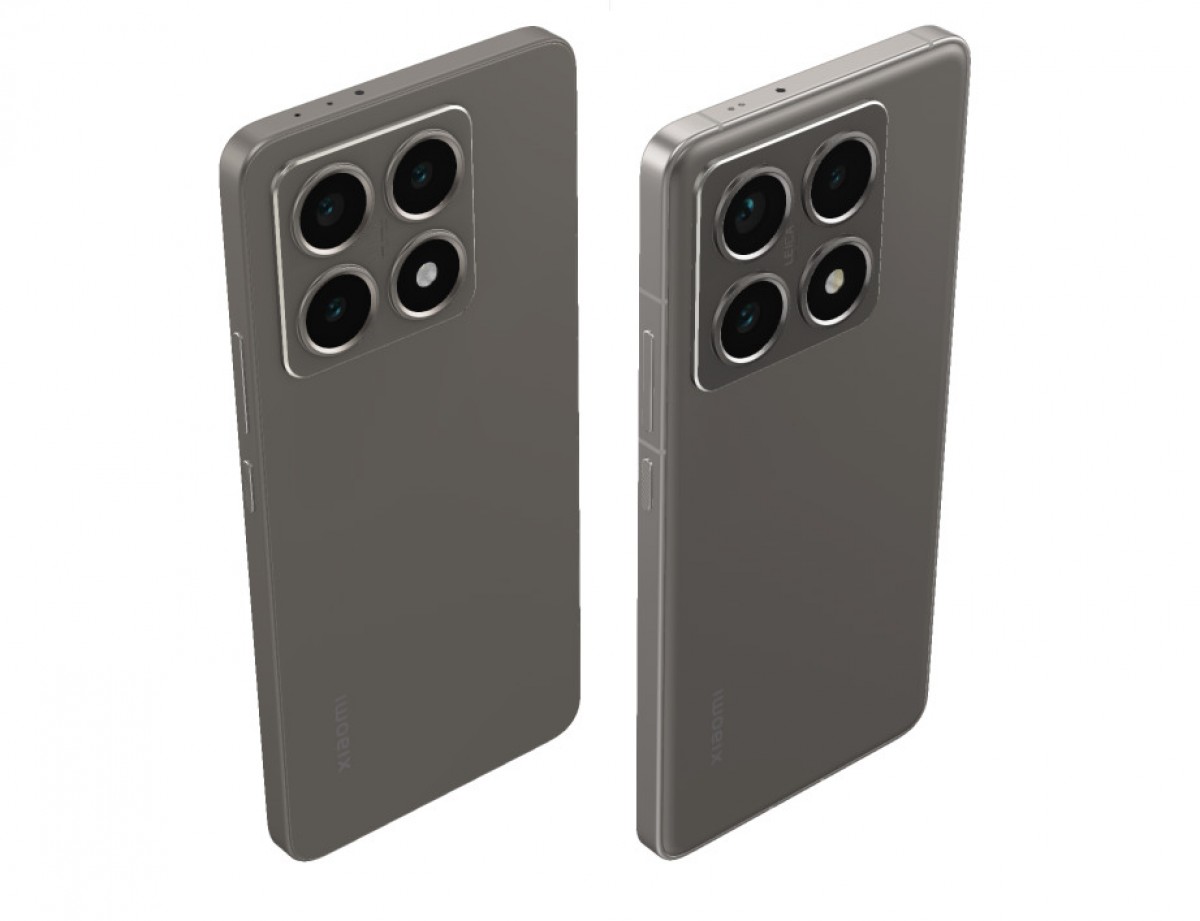
The difference in weight could probably be mainly attributed to the fact that the 14T Pro has an aluminum frame, whereas the 14T settles for an all-plastic one.
Still, that doesn’t mean the 14T feels cheap. Both devices have very nice builds and the matte glass-like surface on the standard 14T is pretty nice to touch. Some may even find the boxy frame with straight sides more appealing and providing a more secure grip.
Display comparison

Xiaomi
14T
AMOLED
144Hz
1220×2712
pixels
446
ppi
The 14T and 14T Pro share the same display – 6.67-inch with all the bells and whistles like HDR10+ support, 16-bit color depth and 144Hz refresh rate.
The tests show it too. Both panels reach 1,200-1,300 nits, ensuring a comfortable viewing experience outdoors.
Battery life
When it comes to battery life, the 14T Pro is the clear winner here, although not by much. The 14T Pro consistently beats the 14T in all tests except in the 4G call scenario, but it only edges out its cheaper sibling. Nevertheless, going for the 14T Pro will likely give you some extra runtime regardless of whether you are web browsing, gaming or watching streaming videos.
Since the two devices run on the same HyperOS software and share the same battery and display, this leaves the Dimensity 9300+ SoC as the only variable adding some extra hours to the battery endurance.
Charging speed
Charging is one of the reasons you might want to shell out some extra money for the 14T Pro. It supports Xiaomi’s proprietary 120-watt fast charging standard, while the 14T proper settles for 67W. Unfortunately, neither retail box provides the appropriate charger, so you will have to buy those separately.
Making use of the maximum 120W charging capability will reward you with full charge in merely 23. That’s blazing-fast and significantly outpaces the 14T with its 67W.
Furthermore, only the 14T Pro supports 50W wireless fast charging with Xiaomi’s proprietary wireless charging stand. Another reason to get the 14T Pro.
Speaker test
Looking at the results from the speaker test alone, we can conclude that the 14T has somewhat better speakers. They are slightly louder while having similar frequency response curve.
Subjectively speaking, some may find the 14T Pro’s speakers nicer as it has a bit fuller, warmer sound with more pronounced bass. That doesn’t mean the 14T has no bass, but the boost in the highs results in more pronounced vocals and toned-down lows.
Performance
CPU performance is the other reason you might want to opt for the 14T Pro. It runs on a more powerful, flagship MediaTek chipset – the Dimensity 9300+ chipset compared to the Dimensity 8300 Ultra inside the 14T.
The Dimensity 9300+ graphics chip is also considerably more powerful. The benchmark results are here to attest.
Xiaomi
14T
Dimensity 8300 Ultra
4 nm
256GB 12GB RAM
base config
There’s no difference in the memory configurations. Both devices offer the same memory options, while the storage chips are both UFS 4.0. The only difference is that the Pro has one extra configuration with 1TB storage and 12GB of RAM if you really want to splurge.
Benchmark performance
Xiaomi
14T
AnTuTu 10
1,334,481
Geekbench 6
4,333
3D Mark
10,791
The performance difference between the 14T and 14T Pro is huge and the Pro outperforms its sibling by as much as 77% in multi-threaded CPU tasks (Geekbench 6) and is 60% better in its overall performance when combining CPU, GPU, memory and storage (AnTuTu 10). The graphics-heavy 3DMark Wild Life benchmark shows that the 14T Pro’s GPU is 33% faster.
This performance gap is hard to ignore, especially by users looking for a more powerful device.
Camera comparison
The Xiaomi 14T and 14T Pro share largely similar camera hardware, but there are a few differences to keep in mind. For instance, the 50MP f/1.7 camera on the 14T uses a smaller 1/1.56″ sensor, while the Pro gets a 50MP 1/1.31″ sensor paired with f/1.6 aperture. In theory, the 14T Pro should produce slightly better photos, but in reality, the difference is rather negligible.
The zoom cameras are also different. The 14T proper gets a 50MP unit with 2x optical zoom, while the 14T Pro extends that to 2.6x. The ultrawide and the selfie cameras are all identical – 12MP f/2.2 ultrawide and 32MP f/2.0 selfie shooter.
Image quality
Photo quality-wise, the differences are even smaller. The ultrawide cameras achieve identical results during the day and at night and we can say the same for the main camera too.
The 14T Pro has a slight advantage during the day with slightly crispier pictures, resolving finer detail but you have to look closely to find the difference. It can be seen mostly in the foliage and fine-detail building facades. It’s even hardware to spot the difference at night.




Xiaomi 14T: 0.6x • 1x • 2x • 4x





Xiaomi 14T Pro: 0.6x • 1x • 2x • 2.6x • 5x
The 14T’s 2x zoom camera has a small advantage over the 2x zoom crop from the 14T Pro.
But the 2.6x zoom camera on the 14T Pro is really sharp, offering superior image quality in daylight and about the same in low-light.
Both phones perform equally well in their respective 4x and 5x zoom modes too even if they are digital zooms.




Xiaomi 14T: 0.6x • 1x • 2x • 4x





Xiaomi 14T Pro: 0.6x • 1x • 2x • 2.6x • 5x
Video quality
In the video department, the two devices trade blows. While 14T and 14T Pro produce similarly-looking videos with their ultrawide and main cameras, the 14T’s 2x zoom camera offers considerably better zoom video. It’s just noticeably sharper.
Below we have a few framegrabs from the videos taken by the two phones at each focal length so it’s easier to compare to one another.




Xiaomi 14T: 0.6x • 1x • 2x • 1x




Xiaomi 14T Pro: 0.6x • 1x • 2.6x • 1x
One could make an argument that the 14T Pro’s main and ultrawide cameras produce slightly sharper videos with more accurate color temperature, but you have to look really close to spot the difference. Moreover, some may like the 14T’s slightly warmer and cozy-looking video rendering.
However, the nighttime capabilities of the 14T Pro are sensibly better. The video sample we took has a wider dynamic range, is sharper, is less noisy, and has better contrast and more accurate colors.
Verdict
Going only by the specs sheet, the 14T Pro looks to be the less practical choice. Even after exploring the nuances further, one could make a case that the Xiaomi 14T is good enough and will get you more than halfway there for a lot less. The two devices are around €150-200 apart, after all.
On the other hand, the 14T Pro will justify the price difference for users looking for better performance and faster charging. This is where the 14T Pro pulls ahead of the 14T and edges it out in our battery endurance tests and camera comparison.
There’s no easy answer to the dilemma for most of you, so weigh your priorities and decide if the 14T Pro is worth the price premium depending on whether you value the extra features it provides.
- The considerably lower price tag.
- The better zoom videos.
- The boxier design.
Get the Xiaomi 14T for:

- The slightly longer battery life.
- The tougher build.
- The much faster charging.
- The much higher performance.
- The better overall camera experience.
Get the Xiaomi 14T Pro for:


 ACRE7 dias ago
Curso de Música divulga chamada para Jornada Acadêmica — Universidade Federal do Acre


 ACRE6 dias ago
NAI da Ufac realiza evento cultural sobre arte, corpo e inclusão — Universidade Federal do Acre
 ACRE6 dias ago
Membros da Academia Acreana de Letras visitam a Ufac — Universidade Federal do Acre
 ACRE6 dias ago
Gestão da Ufac realiza visita ao laboratório Charles Mérieux — Universidade Federal do Acre


Warning: Undefined variable $user_ID in /home/u824415267/domains/acre.com.br/public_html/wp-content/themes/zox-news/comments.php on line 48
You must be logged in to post a comment Login