
ACRE
Voting with your pocketbook: Inflation also sneaks into the ballot box | Elections 2024

The buoyant optimism in the air at the Democratic Victory Campaign Center in northern Manhattan, one of the many party offices scattered around the country with that name, disappears when the word inflation is mentioned. A majority of Americans feel that they and their family are worse off today than they were four years ago, and the latest Economic Confidence Index established monthly by Gallup remains negative at -26. This indicator summarizes both the current situation compared to the 2020 elections, and the future prospects, and 52% of those surveyed say they are very or quite pessimistic about it. Their discomfort, and the theoretical flow of votes for Donald Trump, has a name: inflation. The rise in prices that followed the Covid pandemic, with the Consumer Price Index reaching 9.1% in June 2022 — today close to the Federal Reserve’s 2% target — has left a stubborn mark on supermarket shelves and tenants’ rent payments.
“The residents who come here are not concerned about the big-issue debates, the risks to democracy or polarization, or even the ban on abortion. What they are concerned about is the price of groceries, rent, health care and the cost of medicine,” explains Steve Max, coordinator of the campaign center. “Very few people know about the Inflation Reduction Act, one of the main achievements of Joe Biden’s presidency, and the few who have heard about it believe that it refers only to infrastructure and green energy, without knowing that it has also served to cap the prices of many medicines… In this neighborhood, the majority are baby boomers, with their ailments and chronic illnesses. But most people don’t know anything about this or, worse, they think that Trump and Biden are the same, especially the younger ones, who are very poorly informed. That’s why we are here, to educate,” he adds.
Americans who vote with their pocketbook can reason one of two ways. They can argue that inflation was caused by a perfect storm of post-pandemic mass consumption fueled by government stimulus programs, with supply strained by demand, disrupted by the supply chain blockage, and aggravated by the impact of the Russian invasion of Ukraine on the commodities and energy market. Or they can simply opt for a more instant explanation: that Biden is to blame for inflation, as Trump keeps hammering home at his rallies.
M.A.S.V.
Because, “although Kamala Harris does a good job of explaining what she has achieved in the last four years, I fear that her arguments do not have the reach of Trump’s lies,” Max admits with a look of discouragement. Especially for broad layers of the electorate, such as African Americans and Latinos, who voted Democratic in previous elections but now give credence to Trump’s simplistic message. Brenda, a 64-year-old African-American clinic assistant and resident of Harlem, voted “enthusiastically” for Barack Obama in 2009, “and somewhat less enthusiastically in 2012,” but this year she is going to opt for Trump. “Inflation has eaten up the few savings I had for retirement, now I will have to wait until I am 70 or older. My landlord raised my rent by $400 all at once, I have cut back on my health insurance coverage and I have had to modify my diet because of the prices: there are foods that I no longer eat. Prices went up and up and up, and they have stayed up there, without going down. “At least there was no inflation under Trump,” says Brenda, repeating one of the Republican’s favorite arguments.
Nearly three in four African Americans rate the state of the economy as fair or poor, according to a recent Siena College poll for The New York Times of potential Black voters, a group that tends to prioritize economic issues when considering whether and for whom to vote. Their support for Democrats has fallen to 78% from 90% in 2020, when they helped propel Biden to the White House. By contrast, support for Republicans has grown from 7% eight years ago to 15% today, the poll found.
Christopher Towler, a professor at California State University in Sacramento and director of the Black Voter Project, confirms the slight shift toward Trump. “Yes, we have seen economic hardship cited as a reason why Black voters choose to support Trump. However, our research suggests that this is only a small percentage of the Black community (approximately 11%-13%), and most of those who are swayed by this argument tend to be less politically knowledgeable and less likely to vote overall.”
But the replacement of Biden by Harris, he stresses, has re-engaged many who showed signs of detachment from the current president, according to a survey representative of the 50 states, including the seven swing states, of which the first two waves have been carried out, out of a total of four, always with the same sample. “Overall, the percentage of Black Americans who rated the Democrats as a favorable option has increased by 19%, from 43% in the first wave [March] to 62% in the second [first half of August],” explains Towler. Exactly the period that elapsed from Biden’s candidacy to Harris’. Another recent survey of African Americans by NORC for the Associated Press shows a tie between the candidates. For the Hispanic community, according to the Voto Latino 2024 survey published on Monday, inflation and the cost of living are the greatest concern (54% of responses).
Comparing the economic performance of the Trump and Biden administrations is risky, as well as imprecise, due to the great disruption of the pandemic in 2020 and the turbulent recovery, with inflation leaving its mark. The Trump administration benefited from a timely boost, that of the healthy labor market left by the Obama administration. Unemployment soared in 2020, Trump’s last year in the White House, due to the coronavirus, but four years later it has not only recovered, but the market is showing signs of good health, with an unemployment rate close to full employment. “Unemployment is not among the concerns of those who come to ask us about the [electoral] program, not at all,” confirms Max at the Democratic office.
Hunger lines and soup kitchens
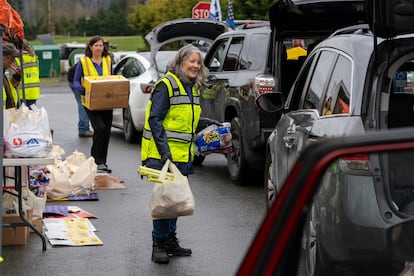
The hunger lines of the pandemic have returned to some neighborhoods in New York, one of the most expensive cities in the United States, and have done so in recent months due to the cumulative effect of rising food prices and rent. The number of supermarkets that accept EBT cards, or food stamps, has also increased, allowing almost two million beneficiaries of this federal program—in a city of eight million—to buy food. Food banks that after the lockdown only distributed food have recently set up soup kitchens for residents over 60 years of age. “When you suffer from food insecurity, the last thing you think about is voting, much less who to vote for,” summarizes Sultana Ocasio, director of the Harlem branch of the Food Bank for New York City, whose fleet of 30 trucks travels daily through the five boroughs to supply nearly 800 locations of the NGO and partners.
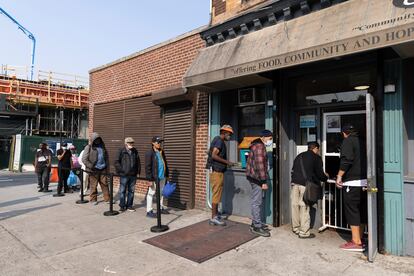
“Here we obviously don’t talk about politics, nor do we ask the beneficiaries what they think of the candidates, but we do encourage them to register to vote, something that for many is completely secondary. We are talking about people who are theoretically integrated into society, with jobs, but who nevertheless do not have enough to eat. Because first they pay the rent, then the telephone [on which they receive the aid coupons], the electricity and lastly, food. Let’s say that food is the fourth priority for tens of thousands of New Yorkers, something they deal with day by day, without any perspective,” adds Ocasio while supervising the movement of volunteers with wheelbarrows full of sacks of potatoes and onions.
One among those who will hypothetically not vote is Telma, a native of Guatemala who arrived in the U.S. 45 years ago and says she does not know who to vote for, if she finally decides to do so. “I have not registered to vote; years ago I voted for the Republicans, because I am a devout Christian and I do not like abortion, but then I changed to Obama because he seemed capable of changing things. I did not vote again. Now I would not know who to vote for, because they seem the same to me, they only care about the stock market, not about those of us who are lining up for a plate of food,” adds this woman in her sixties who only aspires to string together contracts in cleaning companies.
That’s why the Food Bank stresses the need to empower voters. “Voting is a powerful tool for change, especially for communities facing food insecurity, who are often underrepresented in political decisions that directly affect their ability to access essential resources,” says Leslie Gordon, president of the NGO. “By increasing voter turnout in these communities—through outreach—we can get lawmakers to pay attention to the issues that matter most to the people we serve. An informed voter is a more likely voter, and the more we vote, the more we help push for policies that enable all New Yorkers to achieve food security forever.”
At the headquarters of Palante (People Against Landlord Abuse and Tenant Exploitation), an NGO also based in Harlem, workers confirm the general lack of interest in the election displayed by many residents. “When you don’t know how you’re going to pay next month’s rent, or you’re forced to go without food to be able to do so, I assure you that the last thing you think about is voting: besides, voting means having confidence in the future, and these people don’t expect anything, because they’re not going to do better no matter wins in November,” says Jakob, a spokesperson for the NGO who declined to give his last name. Telma is one of the beneficiaries of the association’s legal advice department, which she contacted to avoid eviction from the small old-rent apartment where she has lived for more than 30 years. “We have been avoiding eviction, but it will come eventually,” she laments.
Trump blames Biden for the scourge of inflation, but his proposals to clean up the economy are nothing if not inflationary: higher tariffs, mass deportation of immigrant workers, cheap labor, lower taxes: all of this would trigger inflation, as a letter signed by 16 Nobel Prize-winning economists warned in June. Meanwhile, the dollar has strengthened in October in anticipation — judging by the latest polls — of a possible Trump victory. “Trump’s economic policy favors a strong dollar,” a Wall Street analyst told MarketWatch last week. The idea that Trump, who spent much of his first term complaining that weak foreign currencies were undermining U.S. competitiveness, is the candidate for the strong dollar is a noteworthy turn of events.
Last month, the Peterson Institute for International Economics (PIIE) predicted that Trump’s policies would lead to a sharp rise in the CPI two years into his second term. The analysis concluded that inflation, which would otherwise be 1.9% in 2026, could reach a range of 6% to 9.3% if Republican economic proposals are adopted, including Trump’s attempts to undermine the independence of the Federal Reserve. Economists are also unconvinced by Harris’s economic agenda, although they do not see her proposals as particularly likely to inflate prices. Deprived of the degree of knowledge that experts possess, the American middle class, and especially the one most exposed to the ups and downs of the economy, seems like a sale garment being tugged at from all sides, before finally being left where it was. Shaken.
Sign up for our weekly newsletter to get more English-language news coverage from EL PAÍS USA Edition


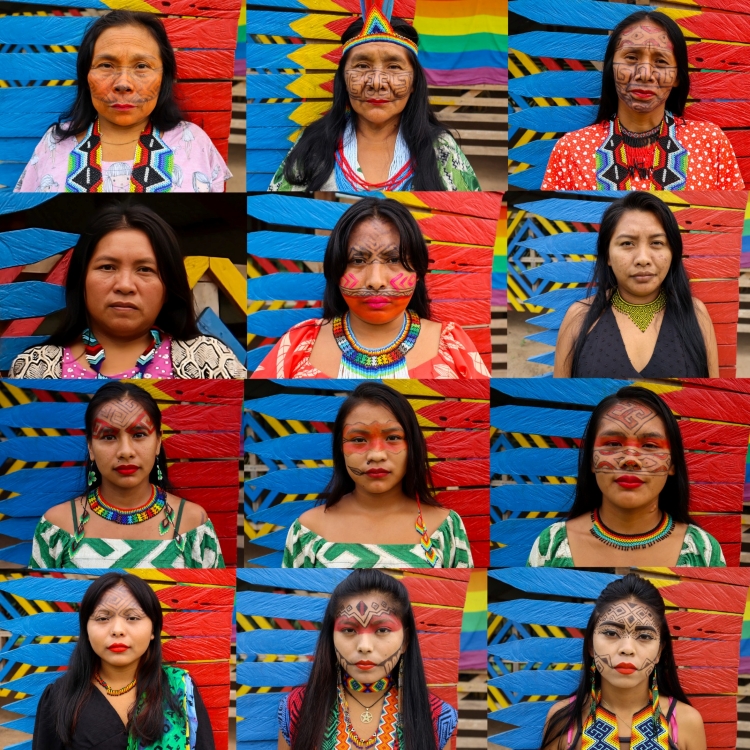
Alunas de graduação e mestrado do campus Floresta da Ufac criaram, em 2024, o projeto Biblioteca de Kene, que reúne tecelagem em algodão, pintura corporal, registros audiovisuais e uma plataforma digital acessível por celular. A iniciativa surgiu do trabalho de conclusão de curso de Txima Huni Kuin, em Licenciatura Indígena, e da pesquisa para a dissertação de Alexandra Deitos no programa de pós-graduação em Ensino de Humanidades e Linguagens.
Txima investigou a tecelagem como expressão dos conhecimentos, da arte e da espiritualidade de seu povo, sob orientação do professor Amilton Pelegrino de Mattos. Alexandra, artista visual e atualmente doutoranda, colaborou na construção do projeto por meio de uma pesquisa de autoria coletiva, desenvolvida com as mulheres da comunidade.
Desse encontro surgiu a proposta de criar um espaço onde os mais de 60 grafismos praticados pelas mulheres pudessem ser consultados, ensinados e aprendidos por jovens e mestras tecelãs. O projeto terá uma nova etapa entre 10 e 16 de outubro, com a realização da 2ª Oficina de Kene da Aldeia Arco-Íris, na terra indígena Seringal Independência, no município de Jordão (AC).
Aprendizagem no território
Durante os sete dias de oficina, mestras tecelãs e jovens aprendizes participarão de atividades de preparação de fios, cantos rituais, aplicação do Bawe e tecelagem de painéis com grafismos. Os processos serão documentados para compor o acervo da biblioteca na aldeia e seu site colaborativo, com gestão do conhecimento pelas próprias mulheres.
A proposta dialoga com a expressão “a universidade é na aldeia”, do professor e pesquisador Yube Huni Kuin, também acadêmico da Licenciatura Indígena da Ufac. A experiência reconhece o território e as práticas da comunidade como espaços de produção e transmissão de conhecimento.
A 2ª Oficina de Kene é realizada por Txima Huni Kuin, Alexandra Deitos e pela Aldeia Arco-Íris, com apoio do curso de Licenciatura Indígena, da Fundação de Cultura Elias Mansour, do governo do Acre, da Política Nacional Aldir Blanc de Fomento à Cultura, do Ministério da Cultura e do governo federal.
ACRE
Ufac sedia encontro regional sobre residência e preceptoria no SUS — Universidade Federal do Acre


Warning: Undefined variable $user_ID in /home/u824415267/domains/acre.com.br/public_html/wp-content/themes/zox-news/comments.php on line 48
You must be logged in to post a comment Login