
ACRE
Netanyahu’s appeal to the Lebanese people falls on deaf ears in Beirut

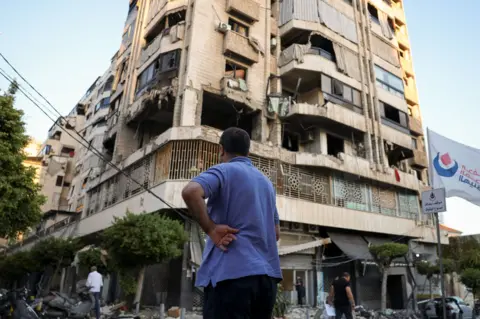 Reuters
Israel’s Prime Minister Benjamin Netanyahu appealed directly to the people of Lebanon in a video published on Tuesday, telling them to turn against the Iran-backed Shia group Hezbollah or risk destruction on the scale of Gaza.
“Christians, Druze, Muslims Sunni and Shia, all of you are suffering because of Hezbollah’s futile war against Israel,” he said. “Stand up and take your country back.”
But in Shia, Sunni and Christian neighbourhoods of Beirut on Wednesday morning, Netanyahu’s appeal was falling largely – if not entirely – on deaf ears.
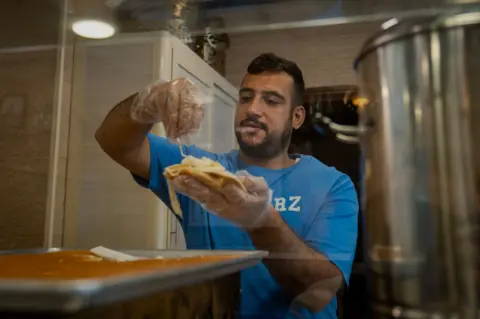
“Yes we heard the address but nobody here listens to Netanyahu,” said Yusuf Habbal, 31, as he cut pieces of the traditional Lebanese sweet Kunafah in his shop in Tariq El Jdideh, a Sunni area.
“Nobody told Netanyahu to occupy Palestine, nobody told him to occupy Lebanon. It is the Israelis who are driving this conflict.”
But Habbal and his fellow Sunnis “also do not accept what Hezbollah is doing”, he said.
“Before Netanyahu ever spoke about Hezbollah, we were against them. Beiruti people know that Hezbollah has their own agenda. And now they are driving us into a war we do not want.”

 Joel Gunter/BBC
Hezbollah, which is a better-armed and more powerful force in Lebanon than the country’s own military, began firing rockets into northern Israel a year ago, in support for Hamas the day after the brutal 7 October attack.
The Hezbollah rockets signalled the beginning of a new phase of its clash with Israel. Last month, Israel escalated that simmering conflict when it expanded its bombing campaign of Lebanon, including in Beirut, before launching a ground invasion in the south of the country.
“They are striking very close to us now and it is terrifying,” said Mohammed Khair, 43, as he had his hair cut in a barber shop in Tariq El Jdideh.
“Nobody here wants this war, but nobody is going to be turned against Hezbollah by something Netanyahu said in a video,” he said.
Netanyahu was “always talking to the Palestinians, to the Lebanese,” said Tarraf Nasser, a 76-year-old retiree who was passing by the barber shop. “Nobody listens to Netanyahu,” he said. “He is not really talking to us.”
 Joel Gunter/BBC
In Achrafieh, Beirut’s main Christian neighbourhood, there was a sense of futility at the Lebanese people’s ability to heed Netanyahu’s advice, even if they wanted to.
Antoine, a 75-year-old Catholic retiree, who asked to be identified only by his first name, was smoking a cigarette outside the neighbourhood’s Brewholic Café.
“Benjamin Netanyahu is the prime minister of Israel, not Lebanon. He should take care of his people, not ours,” Antoine said.
“At the same time, it is true that we have to do something to be free from the influence of Iran. But we don’t have weapons and we don’t have politicians who can be truly Lebanese. All our politicians are affiliated to other states or groups, mostly Iran.”
Nobody in Lebanon was going to have domestic conflict because Netanyahu instructed them to, Antoine said. “We will do that on our own.”
Across the road in her shoe shop, Maya Habib, 35, gave a tired shrug at the Israeli prime minister’s video appeal. “Everyone here knows that Israel lies,” she said. “But listen, maybe he has a point. He warned everyone – don’t attack us, don’t come close to us, and it won’t be your war. Now it is.”
Among the Christians of Achrafieh, “people are paying attention” to Netanyahu, Habib said. “But nobody can do anything anyway,” she said, shrugging again. “We don’t even have a president. Netanyahu is saying all the weapons should go to the Lebanese army, but how?”
 Joel Gunter/BBC
Hezbollah can still rely on staunch support in the neighbourhoods where it is the dominant force in political and social life, and among the Shia communities of mixed areas. Several Shia residents of the Mar Elias neighbourhood said they stood completely behind the group.
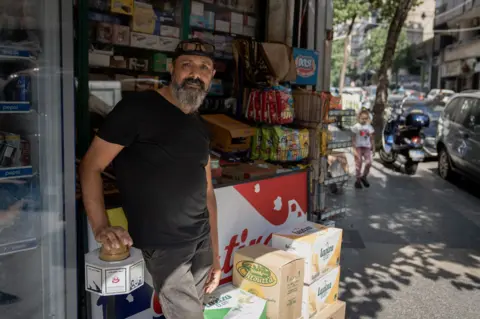
“We are all Hezbollah here, whatever Hezbollah does we will support them,” said Fadi Ali Kiryani, a 52-year-old corner shop owner. Like other people in Mar Elias, Kiryani said he was not concerned by Netanyahu’s threat that Lebanon would suffer the same destruction and suffering as Gaza.
“Even if it becomes worse here than Gaza, we will still fly the flag,” he said.
“My house in Dahieh has already been destroyed. I would rather my house was gone than the shoe on the foot of one Hezbollah fighter was damaged.”
Sitting behind the desk of her 40-year-old towel and bedlinens shop, 75-year-old Fany Sharara said that Hezbollah was the only force defending the people of Lebanon.
“Nothing Netanyahu could say could change my mind,” she said. “He is a criminal, an assassin, he cannot leave one child alive.”
Israel had “all of Europe and all of America” on its side, Sharara added. “We are with Hezbollah because they are the only ones defending us. Not the Lebanese government.”
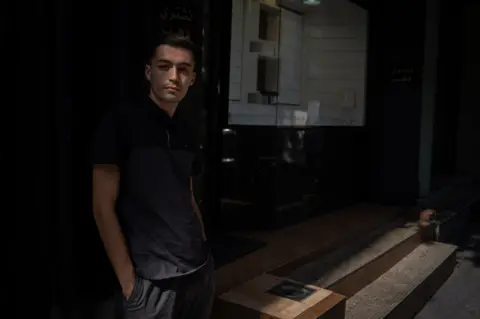
A few doors down, and a few years younger, 24-year-old jewellery shop owner Ali Shoura was simply weary of everyone involved, he said. “Nobody really cares – the politicians, the people in power, the Lebanese government, Iran, Israel, America, Hezbollah too.”
He shook his head. “It’s all just theatre,” he said. “And we are all the victims.”
Joanna Mazjoub contributed to this report.


Alunas de graduação e mestrado do campus Floresta da Ufac criaram, em 2024, o projeto Biblioteca de Kene, que reúne tecelagem em algodão, pintura corporal, registros audiovisuais e uma plataforma digital acessível por celular. A iniciativa surgiu do trabalho de conclusão de curso de Txima Huni Kuin, em Licenciatura Indígena, e da pesquisa para a dissertação de Alexandra Deitos no programa de pós-graduação em Ensino de Humanidades e Linguagens.
Txima investigou a tecelagem como expressão dos conhecimentos, da arte e da espiritualidade de seu povo, sob orientação do professor Amilton Pelegrino de Mattos. Alexandra, artista visual e atualmente doutoranda, colaborou na construção do projeto por meio de uma pesquisa de autoria coletiva, desenvolvida com as mulheres da comunidade.
Desse encontro surgiu a proposta de criar um espaço onde os mais de 60 grafismos praticados pelas mulheres pudessem ser consultados, ensinados e aprendidos por jovens e mestras tecelãs. O projeto terá uma nova etapa entre 10 e 16 de outubro, com a realização da 2ª Oficina de Kene da Aldeia Arco-Íris, na terra indígena Seringal Independência, no município de Jordão (AC).
Aprendizagem no território
Durante os sete dias de oficina, mestras tecelãs e jovens aprendizes participarão de atividades de preparação de fios, cantos rituais, aplicação do Bawe e tecelagem de painéis com grafismos. Os processos serão documentados para compor o acervo da biblioteca na aldeia e seu site colaborativo, com gestão do conhecimento pelas próprias mulheres.
A proposta dialoga com a expressão “a universidade é na aldeia”, do professor e pesquisador Yube Huni Kuin, também acadêmico da Licenciatura Indígena da Ufac. A experiência reconhece o território e as práticas da comunidade como espaços de produção e transmissão de conhecimento.
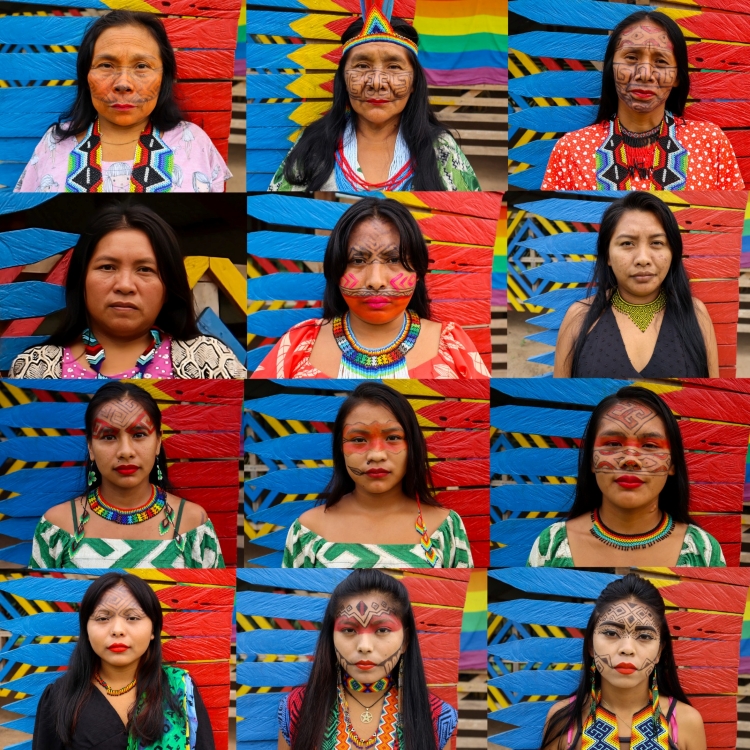
A 2ª Oficina de Kene é realizada por Txima Huni Kuin, Alexandra Deitos e pela Aldeia Arco-Íris, com apoio do curso de Licenciatura Indígena, da Fundação de Cultura Elias Mansour, do governo do Acre, da Política Nacional Aldir Blanc de Fomento à Cultura, do Ministério da Cultura e do governo federal.
ACRE
Ufac sedia encontro regional sobre residência e preceptoria no SUS — Universidade Federal do Acre


Warning: Undefined variable $user_ID in /home/u824415267/domains/acre.com.br/public_html/wp-content/themes/zox-news/comments.php on line 48
You must be logged in to post a comment Login